The Power of Iyengar Yoga Props
Props like blocks, belts, and chairs are not shortcuts. They are scientific tools used to align your body precisely. When you are misaligned, your energy leaks out like water from a broken vessel. We use these tools to fix your alignment and conserve that energy.
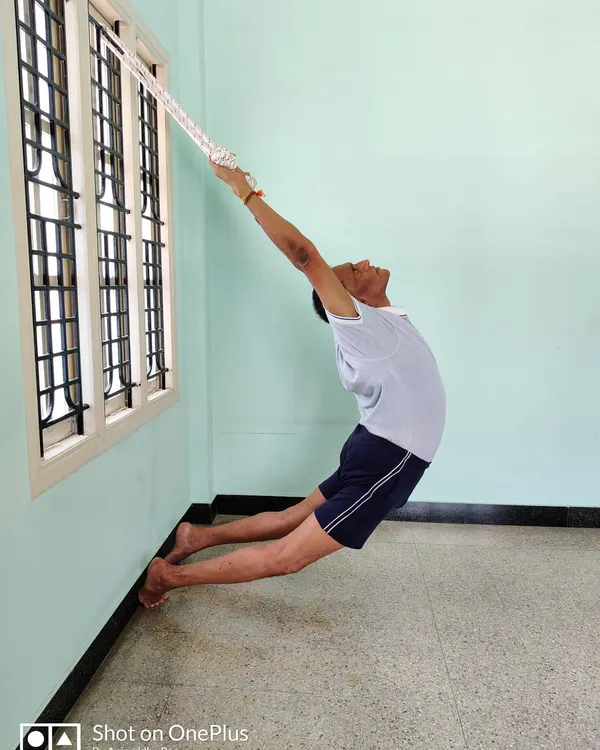
The rope wall is a phenomenal tool for opening the chest and releasing stored emotions. It provides resistance that your own body cannot, forcing the dorsal spine to move towards the sternum. This is how you work on blockages that you have held for years.
Every stretch tells a story of resilience. Here, a student uses the rope wall to achieve a deep, supported split. This prop allows her to work on her flexibility safely, without compromising the alignment of her pelvis and spine.
Sometimes you need support to discover your full potential. This student is using a chair and blocks to work on a deep forward bend. The props help support her body, allowing her to stay in the pose longer and work on releasing stiffness without strain.
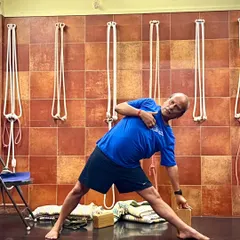
Here, we are using a chair, blocks, and a belt to help a student with a supported spinal twist. This intricate setup ensures the twist originates from the correct place, providing therapeutic benefits for the spine and internal organs.
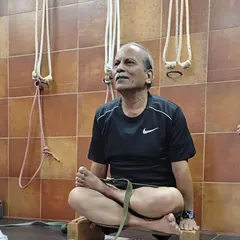
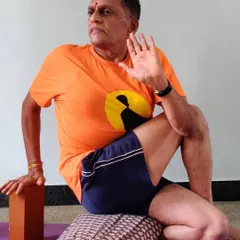
Patanjali says a posture should be comfortable and steady. Props help us achieve this. This student is using a chair and blocks to find stability in a seated twist, allowing her to cease effort and experience the pose on a deeper level.
This is Supta Padangusthasana II, a reclining hand to big toe pose. Using a belt, chair, and bolster allows the student to work on opening the hip joint without creating tension elsewhere. The props gently support the journey.
The Iyengar yoga belt is more than a prop. It is a teacher. It helps deepen stretches, supports restorative practices, and aids those with physical limitations. Here, it is used to extend the leg while keeping the shoulders and back relaxed on the floor.
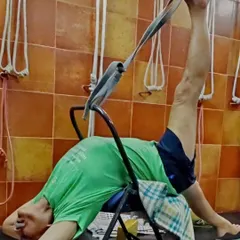
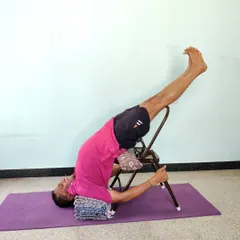
This supported inversion using a chair and bolster is an excellent example of how props make challenging poses accessible. It provides all the benefits of an inversion, like improved circulation and a calm mind, without any pressure on the neck or shoulders.
"Never perform the asanas mechanically, the body stagnates." This quote from B.K.S. Iyengar is why we use props. They force you to be mindful and intelligent in your practice, whether using a block for support or a chair for a twist.
"Our body is the bow and the asanas are the arrows to hit the target, the soul." Props are what help us aim the arrow correctly. Whether it's a chair, a rope wall, or a simple block, each prop helps align the body to connect with the soul.
About The Power of Props
Many students think props are for beginners who cannot do a pose. This is a misunderstanding. Using a rope wall, a chair, or a brick forces your body into an alignment that your muscles cannot yet sustain on their own. I see students struggle for years to reach a pose, but with the right prop, the spine lengthens and the chest opens instantly. It is about intelligence, not physical force.
In the Iyengar method, props are intelligent extensions of the teacher. They create the resistance or support necessary to educate your body.
Why We Use Props
- Precision: A belt helps you extend the leg while keeping the shoulder girdle grounded, preventing compensation.
- Depth: A chair allows a student with stiff hips or a bad back to perform a twist safely, reaching the target muscles without straining the lumbar spine.
- Emotional Release: The rope wall, in particular, is phenomenal for opening the dorsal spine. It provides a resistance you cannot generate alone, allowing you to access and release deep-seated emotional blockages that manifest as physical stiffness.
The Science of Alignment
When you force a pose without stability, you create 'traffic jams' in your body. Props clear these jams. Whether you are using a bolster to support a restorative backbend or a teak brick to steady your standing pose, you are training your nervous system to stay calm under pressure. We do not use these to make yoga easy. We use them to make yoga effective. If you are ready to stop mechanical movement and start practicing with intention, these tools will become your most reliable teachers.
Similar work from other experts
Browse through Curated picks from other experts on mytribe
The Iyengar Method: Using Props for Precision
 100
100
Precision Iyengar Yoga Classes with Props
Yoga Alignment and Support: The Art of Using Props
 22
22
Iyengar Yoga with Props: Precision and Alignment
The Science of Asana: Prop-Based Practice
 4
4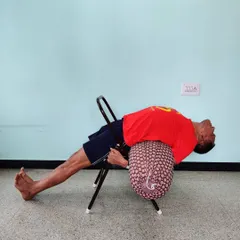
Iyengar Yoga Props for Precision
More from Iyengar Yoga Classes (All Levels) by Nivedita Joshi
More services by Nivedita Joshi