Precision Iyengar Yoga Classes with Props
Discover the Iyengar method, where props act as tools for anatomical precision and deeper alignment, making the profound benefits of yoga accessible to every body.
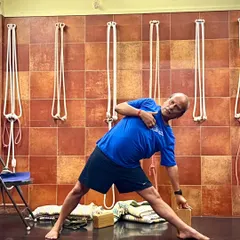
Using a stool in Parivrtta Trikonasana helps establish a firm foundation. As Guruji taught, when the base is correct, the asana is correct. This prop allows the student to focus on the spinal twist and horizontal extension of the chest, teaching the body stability and balance.
Here, I demonstrate Savasana on the Simhasana Box. This prop gently arches the upper back to open the chest, enhances lung capacity, and supports the natural curves of the spine. It elevates Savasana to a deeply therapeutic and restorative practice, calming the entire nervous system.
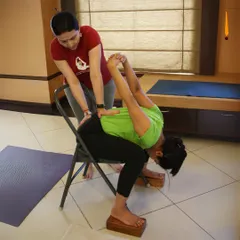
This supported forward bend on a chair with bolsters allows the practitioner to hold the pose without strain. It facilitates the surrender of the mind and body, which is the essence of Isvara pranidhana, or dedication to a higher principle. The props help in achieving physical quietude, which is a prerequisite for mental stillness.
This video demonstrates the correct and incorrect way to enter Setubandha Sarvangasana on a bolster. Precision is key. By sliding down smoothly, we lengthen the anterior spine and create space in the neck, allowing the nervous system to calm and the organic body to soften.
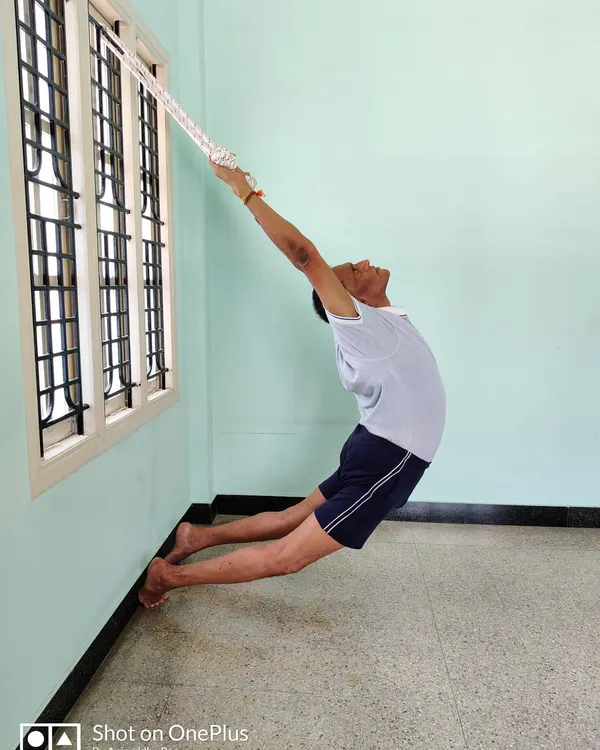
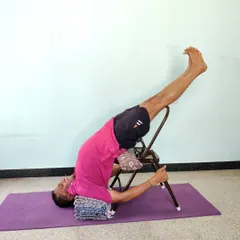
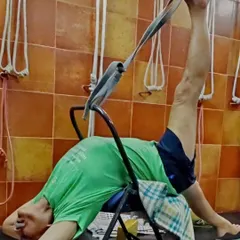
Using a chair and wall-mounted belt, I demonstrate a variation of Setu Bandhasana. This setup provides traction to the spine and opens the chest, allowing the mind and intelligence to turn inwards. The practice of asana is a process of drawing the outer body towards the inner self.
The use of a belt around the calf in Ardha Chandrasana has several effects. It grounds the foot, lifts the quadriceps, and helps the femur bone settle into the hip socket. This allows for a longer hold and a deeper, more intelligent extension in the pose.
A student shares his experience of using a brick against the wall for a supported headstand. The prop helps to take the dorsal spine in, widen the shoulder blades, and lengthen the neck. This is not just a physical adjustment; it is a way to bear the pain of practice and transform it into understanding.
In this Uttanasana variation, the bar of a chair is used to lift the quadriceps and create space in the back of the knees. This conscious action helps soften the stiff muscles of the back, improving circulation and allowing for a deeper surrender in this forward bend.
Here, I demonstrate Ardha Chandrasana using the yoga wall. The ropes provide support for both the lifted leg and the torso, allowing for a precise and sustained exploration of the pose. This is how we use props to understand the magnificent device that is the human body.
This supported Paschimottanasana uses foam blocks to create a deep, passive forward bend. The props allow the spine to lengthen and the mind to quiet, illustrating how we can use external support to facilitate an internal journey.
About The Iyengar Method: Precision with Props
In my practice, props are never a shortcut. Whether it is a wooden brick against the wall to lift the dorsal spine in a headstand or a belt to align the femur in a standing pose, these tools provide essential physical feedback. They allow us to work with structural limitations safely, enabling the mind to settle while the body learns to hold the asana with intelligence.
The Philosophy of Props in Iyengar Yoga
In the tradition of B.K.S. Iyengar, props such as belts, blocks, bolsters, and the rope wall are not crutches. They are sophisticated instruments designed to help the practitioner understand the 'how' and 'why' of a pose. When the body is supported, the mind can move away from struggling with physical discomfort and begin to observe the alignment and breath. This is how we cultivate precision.
Why We Use Apparatus
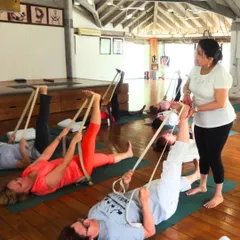
- Rope Wall (Yoga Kurunta): Used for spinal elongation and inversions. It helps in decompressing the spine, allowing for safe traction that is difficult to achieve on the floor.
- Wooden Props: Bricks and chairs provide stability and height, correcting the anatomical structure of the body in forward bends and backbends without overstraining joints.
- Belts: These are essential for maintaining the integrity of the limbs. By using a belt to hold the calf or shoulder in place, we can lengthen the muscle fibers and create the necessary space for the joints to align correctly.
Adapting for Your Body
My classes at the Katwaria Sarai studio in Delhi are designed to provide these tools to everyone. If you are a beginner, these props ensure you are not merely 'stretching' but learning the mechanics of your body. If you are an experienced practitioner, they allow you to go deeper into the subtle aspects of the asana. For those joining my live online sessions, I guide you on using household items like chairs, books, and walls to replicate the studio setup, ensuring that the therapeutic benefits of the Iyengar method remain available regardless of your location.
Similar work from other experts
Browse through Curated picks from other experts on mytribe
 4
4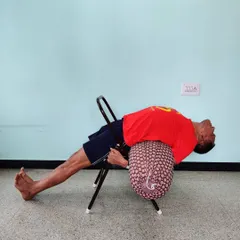
Iyengar Yoga Props for Precision
The Iyengar Method: Precision, Props & Practice
Yoga with Props: Precision, Support, and Alignment
The Iyengar Method: Using Props for Precision
Iyengar Yoga: The Art of Alignment
Precision in Practice: Iyengar-Inspired Prop Yoga
More from Iyengar Yoga Classes (Online & In-Studio) by Amina Sarkar Bharat Ram
More services by Amina Sarkar Bharat Ram