Iyengar Yoga Props for Precision
Props are not a crutch. They are tools for intelligence, helping you achieve correct alignment and depth in your asana practice.
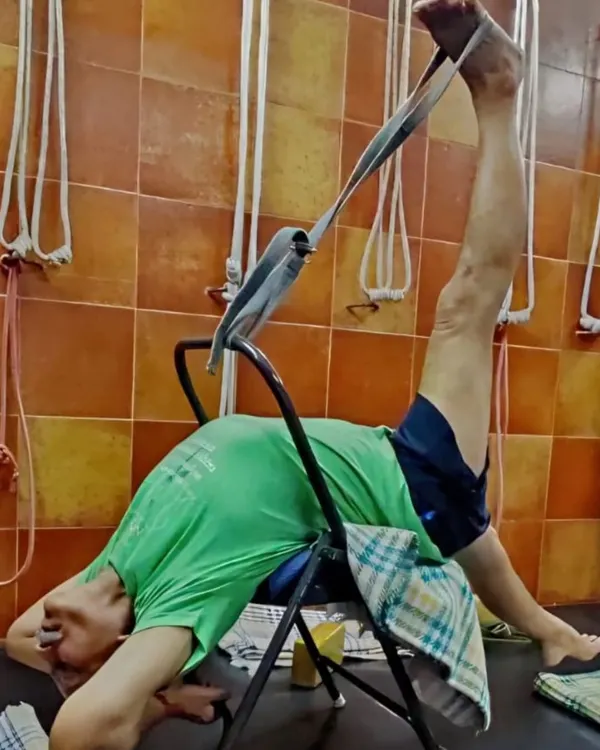
Using a rope to achieve spinal elongation. This technique, which I often instruct as "Hagga hidibeku!" (Hold the rope!), creates space between the vertebrae and is excellent for back health.
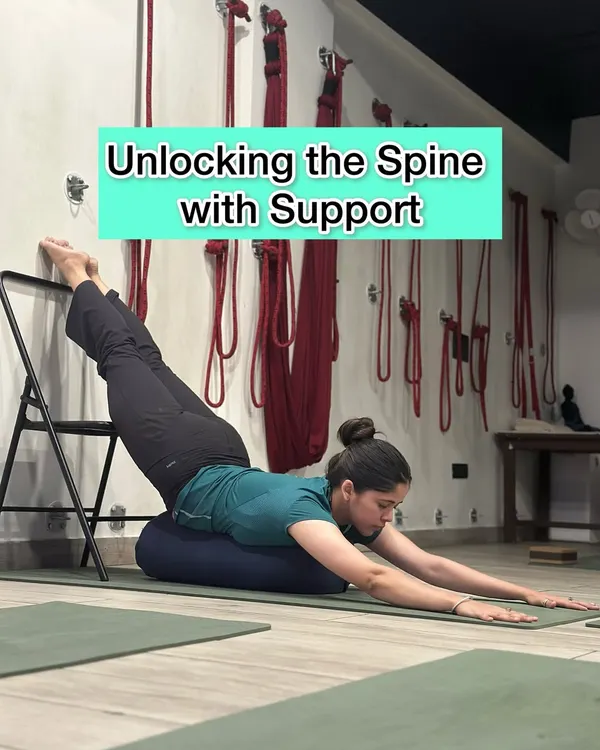
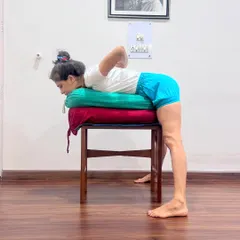
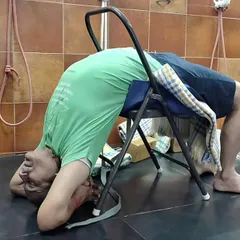
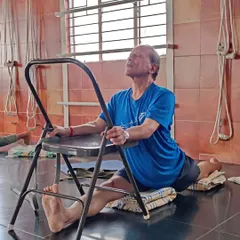
A supported backbend on a chair with a bolster. This setup allows for a deep, passive opening of the chest, which is highly beneficial for improving breathing capacity.
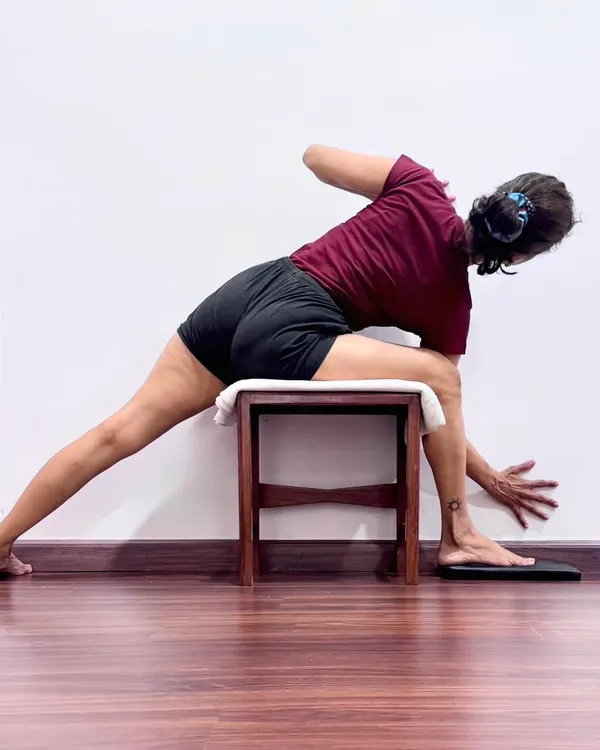
Here, a block and bolster are used in a seated twist. The block provides leverage for the hand, and the bolster elevates the hips, allowing for a deeper and more anatomically correct twist.
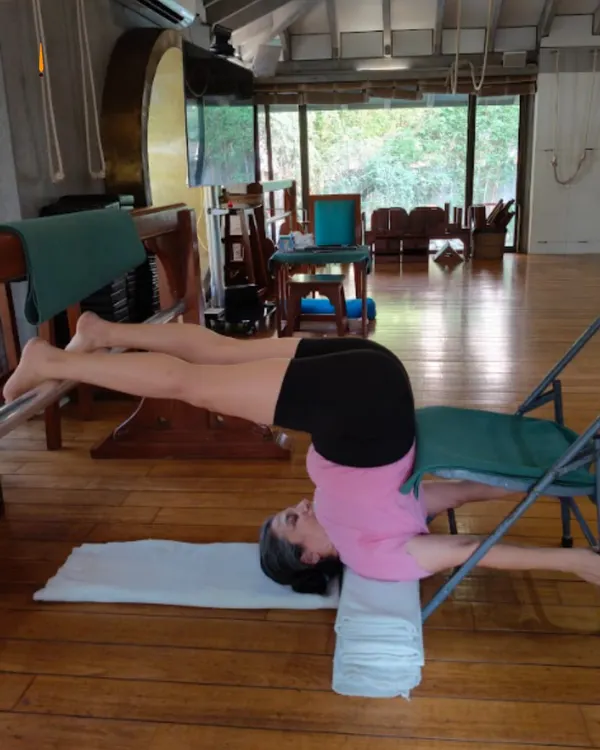
A clear example of how a chair and blankets are used to support the body in an inversion. This precise setup is a hallmark of the Iyengar method, ensuring safety and maximizing the pose's benefits.
About Working with Props for Precision
Using a prop is not about making a pose easier, but making it more precise. Whether it is pulling a rope to create space in your spine or using a chair for a supported backbend, these tools help you find your limit without strain. In my classes, you learn to control the prop to control the posture, as 'Hagga hidibeku' (hold the rope) is not just a command, but a necessary step to avoid mistakes.
In the Iyengar method, props like wooden bricks, chairs, blankets, and ropes are essential for understanding the geometry of an asana. They allow a student to hold a posture long enough to experience its physiological benefits, even if the body is not yet flexible enough to do it unaided.
Why Props Are Essential
- Spinal Elongation: Using ropes provides the leverage needed to decompress the vertebrae. This creates space and relief for the back.
- Safe Backbends: A chair setup allows you to move into deep backbends with thoracic support. This opens the chest and improves respiratory capacity without putting undue stress on the lumbar region.
- Anatomical Alignment: Using a block for a twist ensures your spine remains vertical, preventing you from collapsing into the posture. It makes the asana anatomically correct rather than just performative.
My Teaching Philosophy
I do not believe in forcing the body. If you cannot reach the floor, the floor must be brought to you via a block or a bolster. This is how we build strength and immunity. My classes are a disciplined journey. You must own your props, and more importantly, you must be prepared to listen to technical instructions on how to use them correctly. Do not expect me to adjust you; I will tell you how to adjust yourself.
Similar work from other experts
Browse through Curated picks from other experts on mytribe
 22
22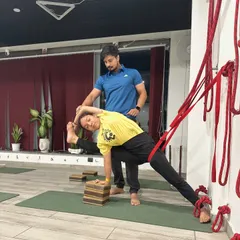
Iyengar Yoga with Props: Precision and Alignment
 100
100
Precision Iyengar Yoga Classes with Props
 33
33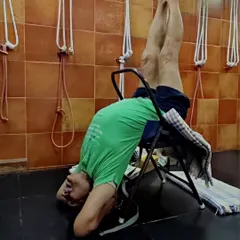
Master Your Alignment with Iyengar Yoga Props
The Science of Asana: Prop-Based Practice
Iyengar Yoga: The Art of Alignment
 13
13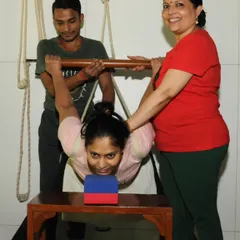
The Iyengar Method: Precision Alignment Through Props
More from Online Pranayama Classes by Madhava R
More services by Madhava R