The Iyengar Method: Using Props for Precision
Props like chairs, ropes, and blocks are not crutches. They are essential tools that reveal how an asana should feel, helping you find stability and alignment safely.
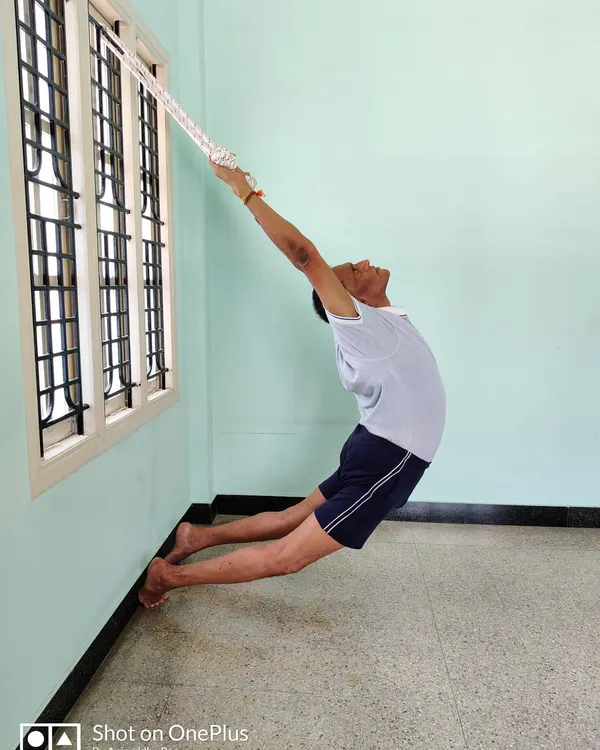
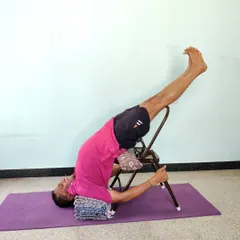
Watch how a chair and wall ropes can be used to safely prepare for and execute a deep backbend. This step-by-step demonstration shows how props build confidence and correct posture.
Using a chair and strap to work on Supta Padangusthasana (Reclining Hand-to-Big-Toe Pose). This modification helps isolate the hamstring stretch while keeping the spine long and stable.
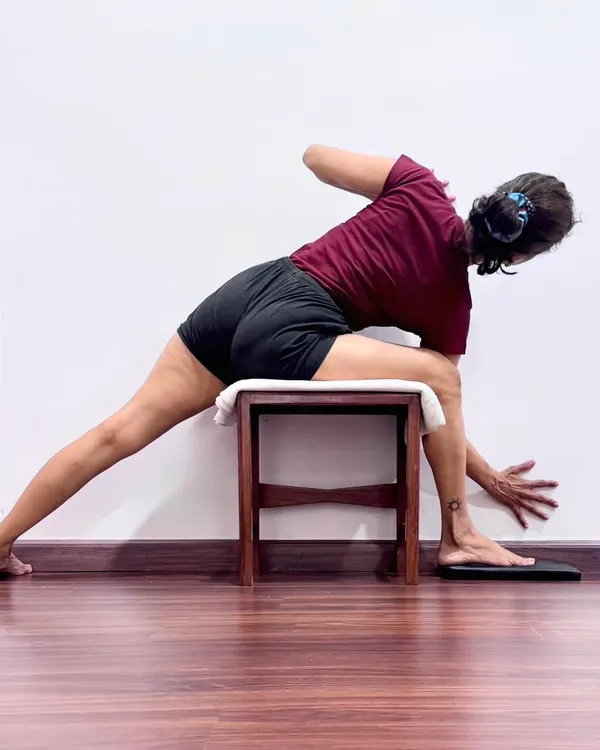
A demonstration of Utthita Trikonasana (Triangle Pose) using a block for hand support. This ensures the chest remains open and the spine stays aligned, which is the true purpose of the asana.
Seated in Padmasana (Lotus Pose) on blocks with a strap for support. This setup helps in training the hips and knees for the full pose while maintaining an upright and comfortable spine.
A supported variation of Navasana (Boat Pose) using straps. This builds core strength and stability without straining the lower back, making it an excellent preparation for the full posture.
Practicing Adho Mukha Vrksasana (Handstand) with the support of wall ropes. The ropes provide safety and allow for a longer hold, helping to build shoulder strength and body awareness.
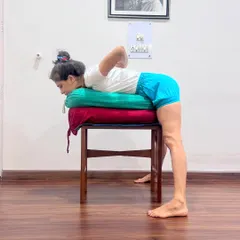
A supported backbend over a chair, a classic Iyengar yoga technique. This helps to open the thoracic spine and shoulders safely, preparing the body for deeper backbends.
A deep forward bend using a chair for support. This variation of Parsvottanasana allows for a passive release of the spine and hamstrings.
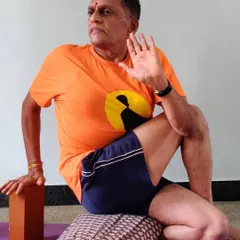
Using a chair and strap to deepen a seated twist. The props provide leverage, allowing for a more complete rotation of the spine while keeping the hips grounded.
A supported forward fold using a bolster. This restorative variation of Uttanasana helps to calm the nervous system and release tension in the back.
About The Iyengar Method: Using Props for Precision
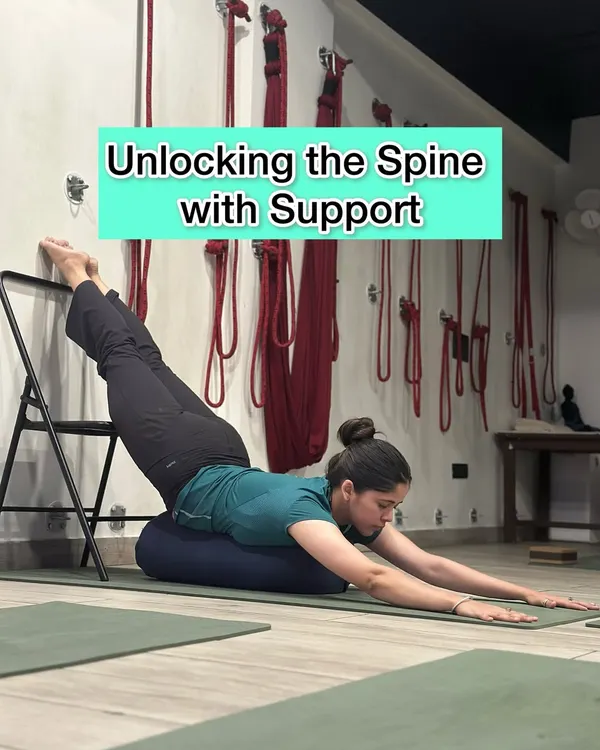
When you practice at my Jayanagar shala, you will see that props are fundamental to the Iyengar method. Whether it is a chair to support a backbend or wall ropes to traction the spine, these tools allow you to hold postures longer, correct your alignment, and understand the subtle mechanics of your body without strain.
Iyengar yoga is built on the concept of alignment—the idea that the body, breath, and mind must integrate to achieve a state of wholeness. When you first step onto a mat, your body may naturally resist certain positions. Props bridge that gap.
A wooden brick brings the floor closer, a belt extends your reach, and wall ropes allow for gravity-defying traction that opens tight shoulders and hips. These are not shortcuts; they are precision instruments that allow you to isolate specific muscle groups and understand the pose from the inside out.
At Prashant Yogashraya, we focus on therapeutic application. For the stiff or the injured, these props are essential. They ensure you are not just 'doing' a pose, but 'feeling' it. By removing the fear of falling or straining, you can explore the deeper nuances of asanas. This applies to our in-person classes in Jayanagar, where we have a full library of equipment, as well as our online sessions, where I teach you how to adapt household furniture—chairs, walls, and belts—to achieve the same precision. This path is not about performance; it is about the practice. We look at the body as it is, not as we wish it to be.
Similar work from other experts
Browse through Curated picks from other experts on mytribe
The Science of Asana: Prop-Based Practice
 100
100
Precision Iyengar Yoga Classes with Props
Yoga with Props for Alignment and Accessible Asanas
 4
4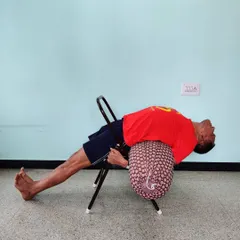
Iyengar Yoga Props for Precision
Iyengar Yoga Props for Alignment and Support
 22
22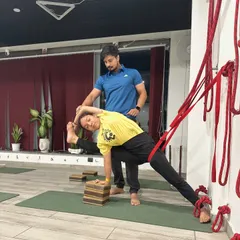
Iyengar Yoga with Props: Precision and Alignment
More from Iyengar Yoga Classes by Prashant Yogashraya
More services by Prashant Yogashraya