Mastering Sirsasana & Sarvangasana with Iyengar Props
The headstand and shoulderstand are pillars of yoga, but they are only as good as the preparation behind them. Learn how to use props to build stability, alignment, and confidence before you ever lift your feet.
To build a sustainable Sirsasana (headstand), it is crucial to correct any tilts in the body. In this video, I explain how to use the corner of a room and blocks to provide feedback, ensuring the elbows, shoulders, and neck remain stable and centered.
Going up into headstand with control, rather than jumping, is key to protecting the neck and shoulders. This can be difficult at first, so we use specific techniques and preparations to build the core strength and awareness needed for a slow, controlled ascent.
Sirsasana (Headstand) and Sarvangasana (Shoulderstand) are the king and queen of asanas. They are learned after adequate preparation and are refined over time to allow for longer, more beneficial holds. Our upcoming short course will focus on leveling up your Sirsasana practice.
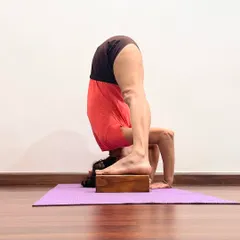
This is a Sirsasana (headstand) variation with straight legs, practiced at the corner of two walls. This setup is excellent for refining alignment and building the strength to sustain the pose for many years.
Here is another Sirsasana variation, with the legs in Baddha Konasana (Bound Angle Pose). Practicing leg variations while inverted challenges your balance and deepens the work in your hips and core.
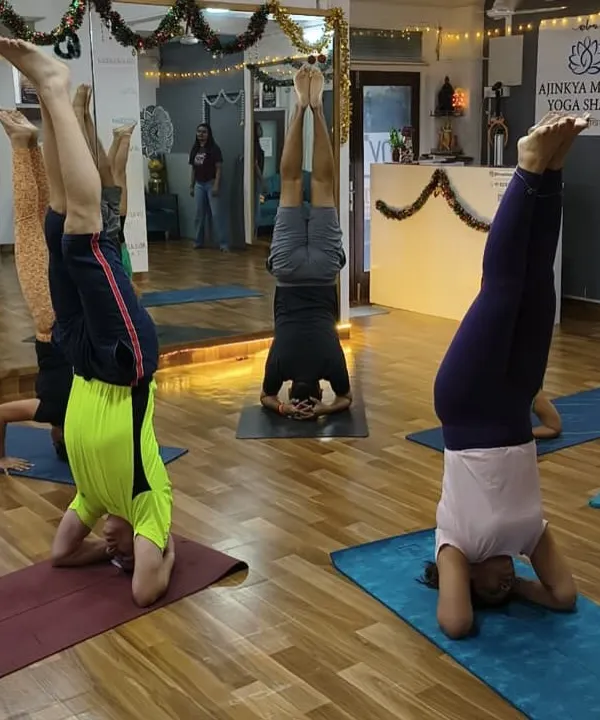
A group of students practicing Sirsasana variations using wall panels for support. The wall is an invaluable teacher, providing feedback that helps to correct imbalances and build a strong, centered headstand.
What you do after headstand is as important as the pose itself. This video shows a simple and effective way to release the neck using bolsters, a crucial step to complement the practice of Sirsasana and ensure long-term neck health.
This is an effective and quick strategy for learning to balance in headstand. By holding the position with bent legs and feet to the buttocks, you can find your center of gravity before extending the legs up, making the final pose more stable.
If your headstand looks more like a banana, it means the core and back are not properly engaged. This video shows a partner adjustment to help correct the "banana back" and find a straight, aligned position from the shoulders to the feet.
An empty corner in your home can be a great yoga prop. This video shows how to practice Sirsasana in a corner to get feedback on your alignment. Touching the walls evenly with your arms and legs helps you find your center, especially if you have imbalances.
About Mastering Inversions: Sirsasana & Sarvangasana
Many practitioners jump into headstand, but this often disturbs the base of your neck and shoulders, making long-term practice unsustainable. In our studio, we use the corner of a room and two yoga blocks to plug the space behind your elbows, giving you immediate tactile feedback on whether you are tilting. It sounds simple, but this tiny adjustment prevents you from relying on momentum and forces you to build strength from the ground up, ensuring your spine stays protected every time you go up.
Sirsasana (Headstand) and Sarvangasana (Shoulderstand) are often called the king and queen of asanas for good reason. They act on the nervous and endocrine systems in profound ways. However, if you are simply kicking up into these poses, you are likely compensating with your neck and lower back. My approach at The Practice Room in Bangalore is to deconstruct these poses.
Why do we jump? Usually, it is because we lack the core engagement or the confidence to move slowly. We fix this by utilizing the wall, corner spaces, and props to create a controlled environment. We use the wall ropes (Yoga Kurunta) for spinal traction and chairs to support the back during preparation. By working with these tools, we remove the fear of falling and allow the student to focus entirely on skeletal alignment.
Our workshops in Cooke Town focus on the 'why' of the practice. We look at the 'banana back' issue, where the spine arches excessively, and use hands-on adjustments to correct it. We also emphasize the importance of the Sarvangasana cycle following a headstand to ensure the neck and shoulders are properly released. If you have been struggling with imbalances in your inversions, it is likely not a flexibility issue, but a need for better feedback mechanisms. Whether you are an athlete looking to improve recovery or a student refining your alignment, these sessions will provide the technical blueprint you need for a sustainable, lifelong practice.
Similar work from other experts
Browse through Curated picks from other experts on mytribe
Inversions: Headstands & Shoulder Stands
Master Sirsasana: Precise Alignment and Safe Inversions
 25
25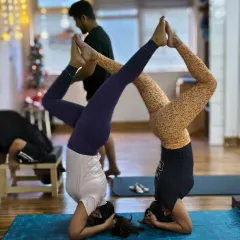
Master Your Inversions: Safe Guidance & Alignment
Mastering Headstands and Handstands: A Consistent Practice
Finding Stability: Sirsasana & Pincha
 8
8
Master Advanced Yoga Asanas and Alignment
More from Iyengar Yoga Classes and Workshops by The Practice Room
More services by The Practice Room