Master Sirsasana: Precise Alignment and Safe Inversions
Sirsasana is not just about balancing on your head. It is a calculated process of building shoulder stability, core engagement, and neck strength. Here, we prioritize alignment and long-term practice over quick results.
Exploring Parivrtta Eka Pada Sirsasana, or a revolved single-leg headstand. I am guiding the student through the twist, ensuring the foundation remains stable.
This is a demonstration of transitioning into Urdhva Kukkutasana (Upward Rooster Pose) from a headstand base. These advanced transitions are taught in stages.
Using the window and wall for support in Parivrtta Parsvaika Pada Sirsasana. This prop-assisted setup helps in understanding the mechanics of the twist.
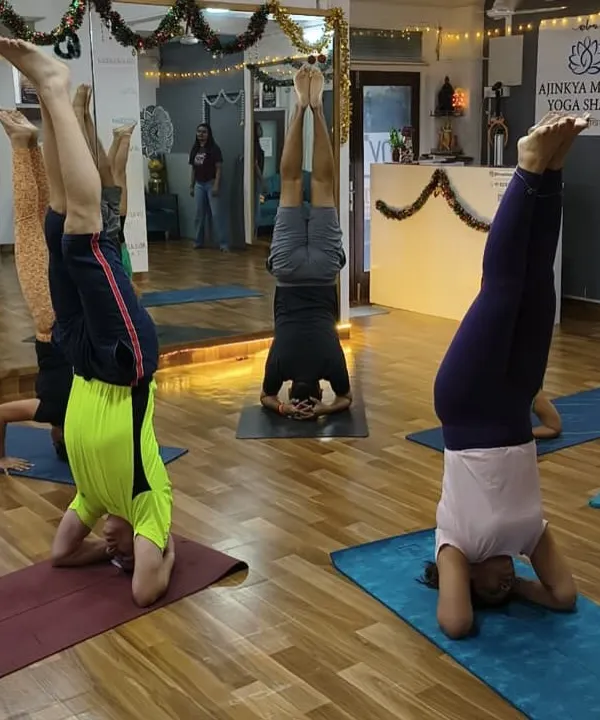
A student practices a twisted variation of Sirsasana against the wall. I am providing verbal cues to refine the alignment of the hips and legs.
This is my student Akshaj, who has been with me for three years. His progress in holding various Sirsasana variations shows the power of consistent practice.
Building neck strength is crucial for headstands. Here, I am supporting a student as she practices lifting her hands off the floor, a key step towards Mukta Hasta Sirsasana.
A student practices coming down from a wall-supported headstand with control. The descent is as important as the ascent for building strength and awareness.
I explain the step-by-step process of learning headstand against the wall, from placing the elbows correctly to taking one hand off at a time.
Guiding a student through the transition from a headstand to Balasana (Child's Pose). This demonstrates that age is no barrier to learning inversions with the right guidance.
Working on Urdhva Dandasana in Sirsasana without wall support. This pose requires immense core control, and I am here to provide the necessary stability.
About The King of Asanas: Headstand (Sirsasana) Practice
We do not teach headstands by jumping into the center of the room. You start by using the Kurunta rope wall and wooden blocks to understand the geometry of the pose. This method removes the fear of falling and allows you to focus purely on the structural engagement of your shoulders and core before attempting any free-standing variations.
Building the Foundation
Learning to invert is a test of patience. In my studio, we treat Sirsasana as a discipline. If you try to force your way into a headstand without adequate strength in your trapezius and serratus anterior muscles, you risk injury rather than growth. We utilize the wall and props not as crutches, but as tools for learning body mechanics.
Why We Use Props
When you use the Kurunta wall or wooden blocks, you are not 'cheating'. You are creating a stable environment where you can observe your own body. You learn how to stack your joints correctly. Only when the muscles develop the necessary memory and strength do we move to subtle variations like Parivrtta Parsvaika Pada Sirsasana.
The Path of Sadhana
Consistency is the only shortcut. You will see students in my gallery practicing for years to refine their control. This is the nature of Sadhana. Whether you are a beginner using the wall for the first time or an advanced student exploring Urdhva Kukkutasana, the focus remains on breathing, alignment, and avoiding the trap of 'Insta-fame' yoga.
Progression Steps
- Wall Support: Establishing the base and proper elbow placement.
- Hand Transitions: Learning to move weight off the hands while maintaining stability.
- Core Awareness: Engaging the abdomen to hold the inverted shape.
- Free-standing Practice: Controlled entry and exit, performed only when structural integrity is achieved.
Similar work from other experts
Browse through Curated picks from other experts on mytribe
Finding Stability: Sirsasana & Pincha
Mastering Headstands and Handstands: A Consistent Practice
 89
89Inversions: Finding Balance Upside Down
 25
25
Master Your Inversions: Safe Guidance & Alignment
Master Headstands and Inversions Safely
 8
8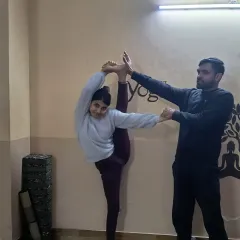
Master Advanced Yoga Asanas and Alignment
More from Alignment-Based Hatha Yoga by Harsha Nagaraj
More services by Harsha Nagaraj