Prop-Based Therapeutic Yoga Classes in Chamrajpet
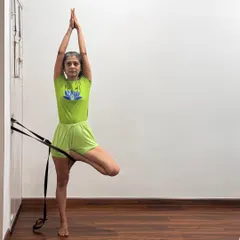
Props are not a crutch, they are your teachers. We use chairs, ropes, and wooden blocks to fix your alignment, protect your joints, and help you unlock deeper states of healing for your spine.
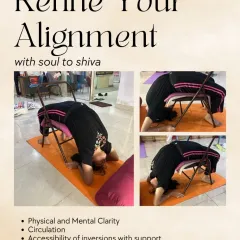
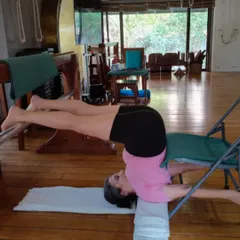
Here, we are using wooden props to make Halasana (Plow Pose) accessible and safe. This method protects the cervical spine, supports the shoulders, and allows for a longer, more restorative hold to calm the nervous system.
This is a demonstration of Parivrtta Parsvakonasana (Revolved Side Angle Pose) using wall ropes. The ropes provide stability and leverage, allowing students to achieve a deeper, more effective twist while maintaining correct form.
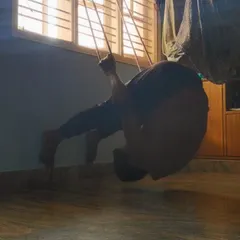
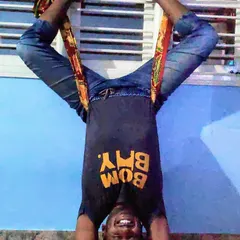
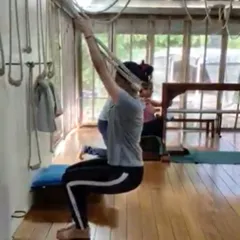
Using overhead bars, a student practices an inversion. This prop helps build the core and upper body strength required for unsupported inversions, making advanced asanas approachable and safe.
A simple yoga brick can transform a practice. This quick warm up sequence combines forward bends, backbends, and lateral rotations to activate the entire spine and prepare the body for a deeper practice.
I guide students, both in-person and online, through a restorative child's pose using a bolster. This prop helps deepen the stretch and encourages abdominal breathing for better digestion and relaxation.
The danda, or stick, is an excellent tool for teaching alignment. Here, students use it to deepen their posture, ensuring the body learns the correct technique for balance and extension in asanas like Vasisthasana prep.
The rope wall is fantastic for building core strength and spinal health. This exercise, a variation of Shalabhasana (Locust Pose), targets the back muscles and improves posture by using the wall for resistance.
Students relax in a supported backbend using wooden props. This therapeutic posture helps to open the chest, improve spinal flexibility, and calm the mind, making it ideal for restorative sessions.
We use Iyengar belts to work on hamstring strength and flexibility. This supported leg raise allows for a safe, deep stretch without straining the lower back, which is essential for building a strong foundation.
A student practices a rope flow sequence on the wall. This dynamic practice builds full body strength, improves coordination, and allows for creative transitions between different supported poses.
About Prop-Based Therapeutic Yoga
When you use a chair or wall rope, you are not cheating your pose, you are teaching your body exactly where it needs to be. Many students arrive thinking they lack flexibility, but often they just lack the right foundation. By using props, we eliminate the compensatory movements that lead to chot (injury). Whether you are dealing with sciatica or just struggling to find depth in your practice, these tools allow you to stay in poses longer, letting the parasympathetic nervous system finally switch on.
Precision Through Props
In our classes at Chamrajpet, we move away from the 'gym-style' approach to yoga. Here, we treat the mat as a lab. Our studio is fully equipped with Iyengar-style apparatus—wall ropes, Halasana boxes, wooden staffs (danda), and backless chairs. These tools allow us to practice with surgical precision.
Why We Prioritize Alignment
Modern life keeps us in a cycle of stress, and often, our posture pays the price. Our therapeutic modules focus on:
- Spinal Decompression: Using wall ropes for traction, we create space between vertebrae, which is vital for managing cervical spondylosis or general back pain.
- Corrective Asanas: Using bricks and blocks ensures your hands or feet are at the right height, preventing you from overextending and hurting your lower back or knees.
- Restorative Holds: By supporting the body with bolsters, we encourage the muscles to release tension, shifting your system from 'fight or flight' into a state of deep recovery.
It’s Not Just About Bending
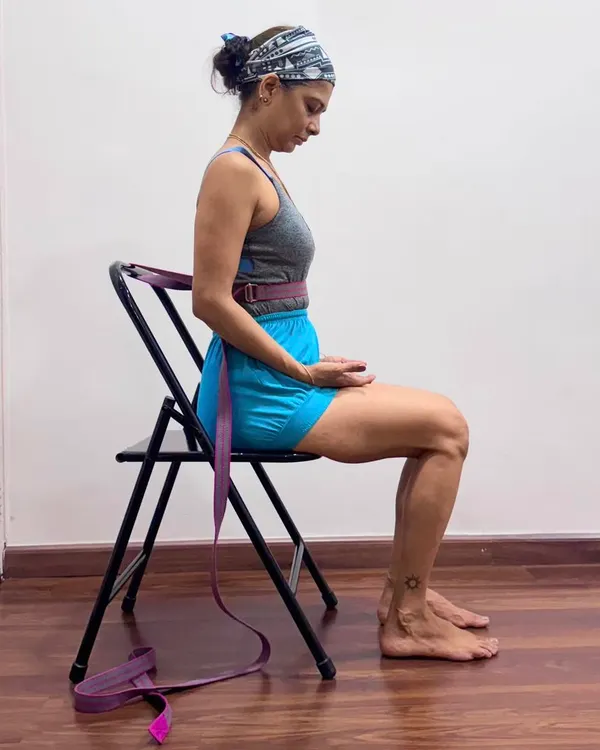
We often hear, 'I am not flexible enough for yoga.' That is exactly why we use props. They meet you where you are today. If you are working on your hamstrings, a belt allows you to engage the muscle without straining your lumbar spine. If you are working on balance, a chair provides the stability to build confidence.
We focus heavily on the science of movement. You will learn to identify your specific structural needs, whether that is releasing a tight psoas or opening the thoracic spine. This is yoga as anushasan (discipline)—an intelligent, science-backed approach to long-term health.
Similar work from other experts
Browse through Curated picks from other experts on mytribe
Therapeutic Yoga with Props
Prop-Supported Yoga for Safe Alignment and Pain Relief
Therapeutic Yoga & Prop-Assisted Practice
Iyengar Yoga Props & Precision Alignment Techniques
Yoga with Props: Deeper Practice and Better Alignment
 15
15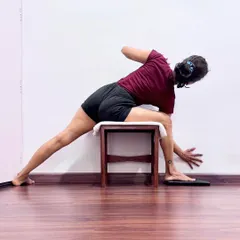
The Iyengar Method: Precision with Props
More from Specialized Yoga Classes by Yogatute Health
More services by Yogatute Health