The Iyengar Method: Precision Alignment Through Props
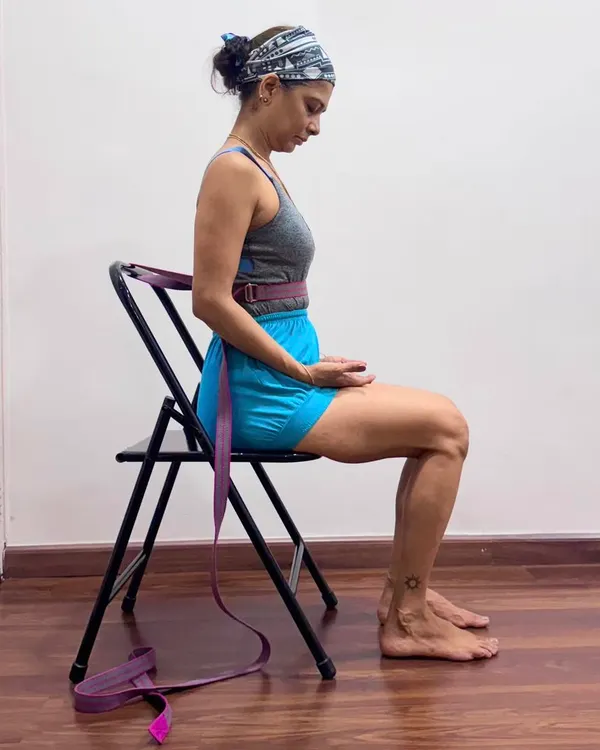
Props are not crutches. Think of them as tools to pour water from a beaker to a glass—if the alignment is off, the energy spills. We use chairs, belts, and ropes to capture that energy and build your foundation.
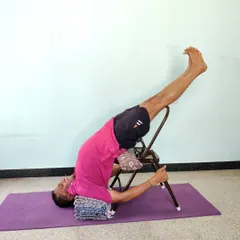
Using a chair and blankets for support in Halasana (Plough Pose) allows the student to hold the posture longer, calming the nervous system and releasing tension in the neck and shoulders without any strain. This is the intelligence of props.
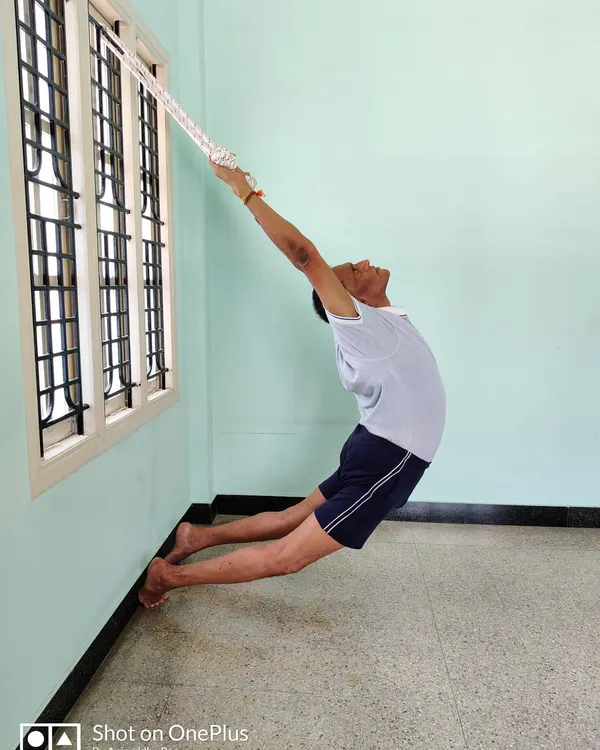
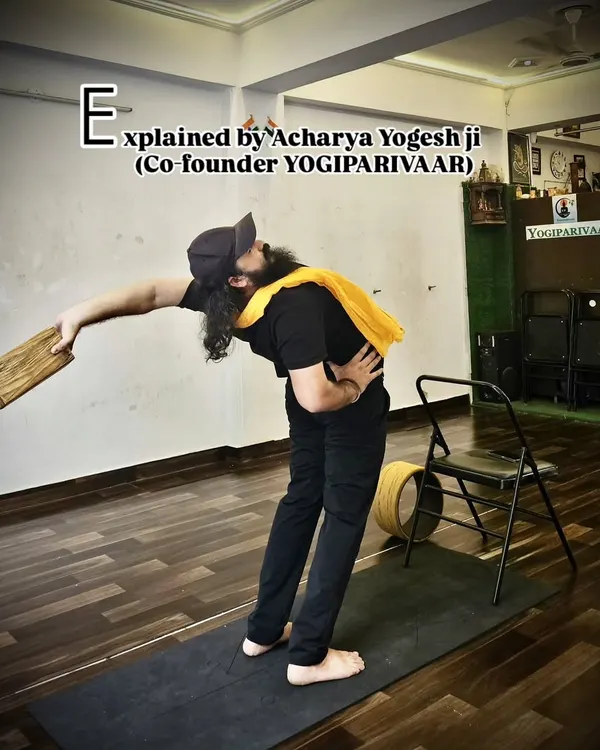
This is a therapeutic backbend using a stool, ropes, and assistance. The props provide complete support, allowing the student's spine to open passively and safely, targeting deep-seated stiffness that is otherwise inaccessible.
Why rely on medicines when your body can heal itself? Here, props like belts and bolsters are used to gently open the hips and release the lower back, demonstrating how movement becomes medicine in Iyengar yoga.
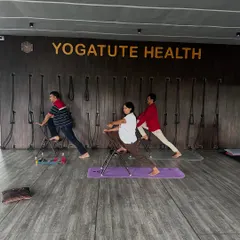
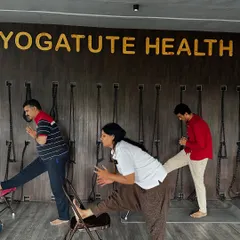
A dynamic class scene showing students using chairs, blocks, and belts. This highlights how props are integrated into every aspect of the practice to ensure proper alignment and support for all body types.
Students use belts in Supta Padangusthasana to extend their hamstrings safely. The belt acts as an extension of the arms, allowing for a deeper, more controlled stretch while keeping the back grounded.
A student performs a supported backbend over a chair. This modification makes the benefits of a deep backbend, like chest opening and spinal flexibility, accessible even to those with stiffness or back issues.
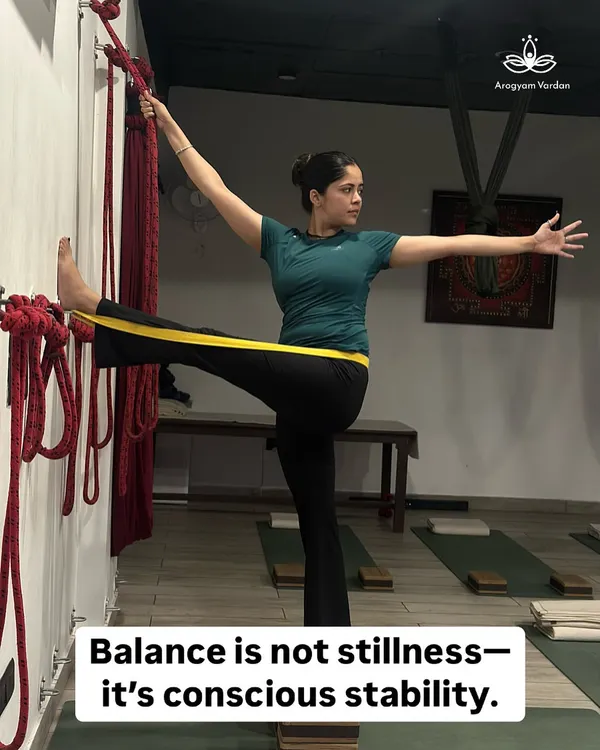
From restorative poses on the floor to active standing poses, props are an integral part of our practice. They provide feedback, support, and the stability needed to find balance and alignment.
Salamba Sirsasana (Supported Headstand) and Salamba Sarvangasana (Supported Shoulderstand) are practiced against the wall with blankets for support. This ensures the neck is protected while the student receives the full circulatory and calming benefits of the inversions.
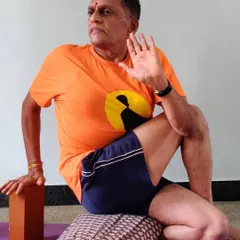
This sequence shows various uses of props: ropes for opening the shoulders, a chair and block for a seated twist, and bolsters for supported kneeling. Each prop serves a specific purpose in aligning and opening the body.
With my guidance, a student uses a chair and blocks to deepen her forward bend. The props help maintain the length in her spine and prevent rounding, ensuring she gets the therapeutic benefit of the pose.
About The Iyengar Method: Precision with Props
Think of our chairs, belts, and ropes as scientific instruments rather than simple support. If you force your body into a pose while your muscles are restricted, you aren't practicing yoga; you are creating tension. By using these props, we create the exact space needed in your joints to hold postures correctly, allowing your nervous system to switch from a state of strain to a state of therapeutic release.
In conventional exercise, people often push through pain, which is mechanical and harmful. In my Iyengar practice, we use gravity and geometry to our advantage. If your shoulder is stiff, a belt allows you to extend the arm fully without compressing the neck, letting you find the stretch without the struggle.
My approach is rooted in the science of 'Sukshma Sharir' (the subtle body). When your body is supported by a chair or bolster, your brain doesn't need to stay in 'fight or flight' mode to keep you balanced. It can finally relax. This relaxation is the essential prerequisite for 'Pran Shakti' (life force) to flow again. We aren't just stretching muscles; we are correcting the structural map of your body.
Whether you are recovering from a spinal injury or feel 'stuck' after years of desk work, these props act as stabilizers. They allow beginners to enter deep, restorative poses immediately. This is not about being flexible; it is about being intelligent with your body. We fix the alignment, and the stiffness naturally resolves.
Similar work from other experts
Browse through Curated picks from other experts on mytribe
 15
15
The Iyengar Method: Precision with Props
 10
10The Iyengar Method: Precision with Props
 4
4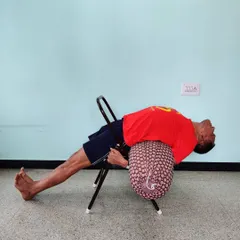
Iyengar Yoga Props for Precision
 16
16Iyengar Yoga: Precision and Healing with Props
Prop-Assisted Yoga for Precision and Healing
Iyengar Yoga with Props for Precision and Alignment
More from Yoga for Mental & Emotional Wellness by Nivedita Joshi
More services by Nivedita Joshi