The Iyengar Method: Precision with Props
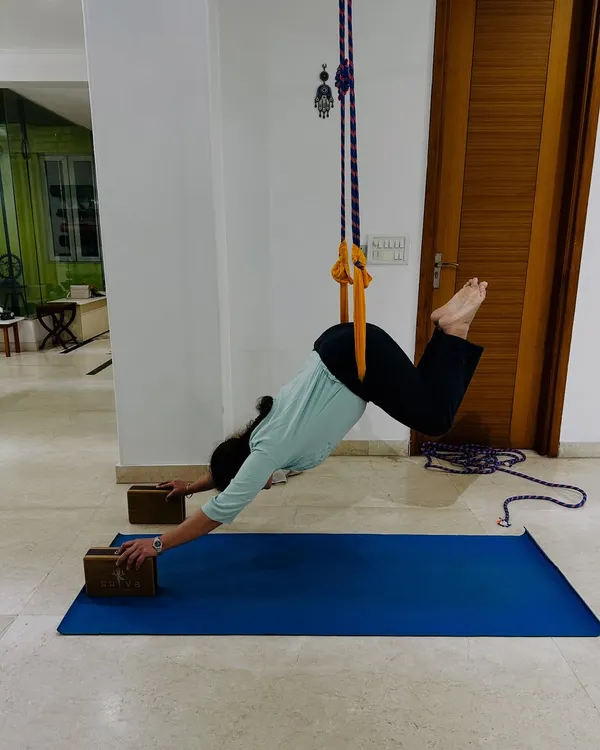
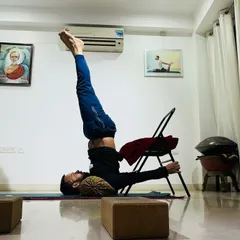
Props are not a crutch—they are tools for intelligence, precision, and safety. Here, I demonstrate how we use chairs, ropes, blocks, and bolsters to deepen your practice and ensure correct alignment for therapeutic benefit.
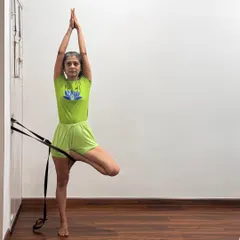
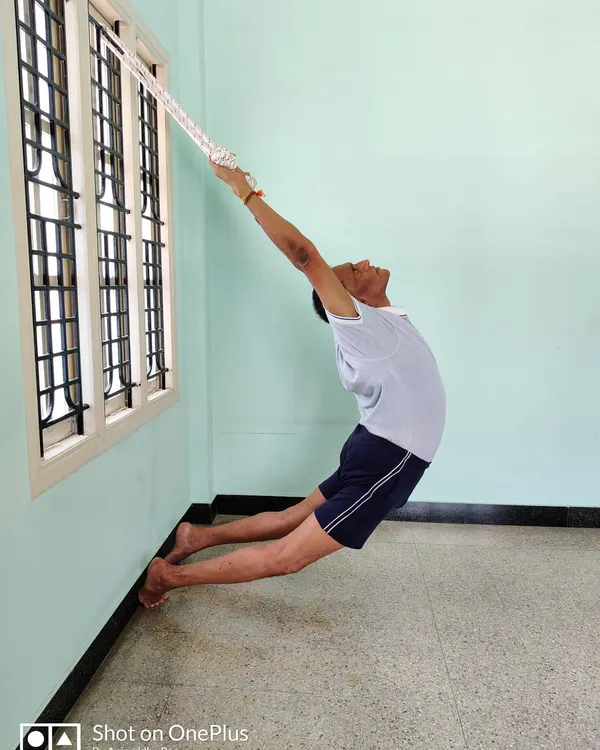
Balance is not stillness; it is conscious stability. Here, a student uses a wall rope to find alignment and stability in Utthita Hasta Padangusthasana (Extended Hand-to-Big-Toe Pose). The prop guides the body into clarity and awareness.
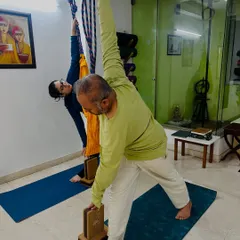
Through the alignment of the body, we discover the alignment of the mind, self, and intelligence. Here, I use a wooden dowel to give tactile feedback, helping the student find the correct extension in Trikonasana (Triangle Pose).
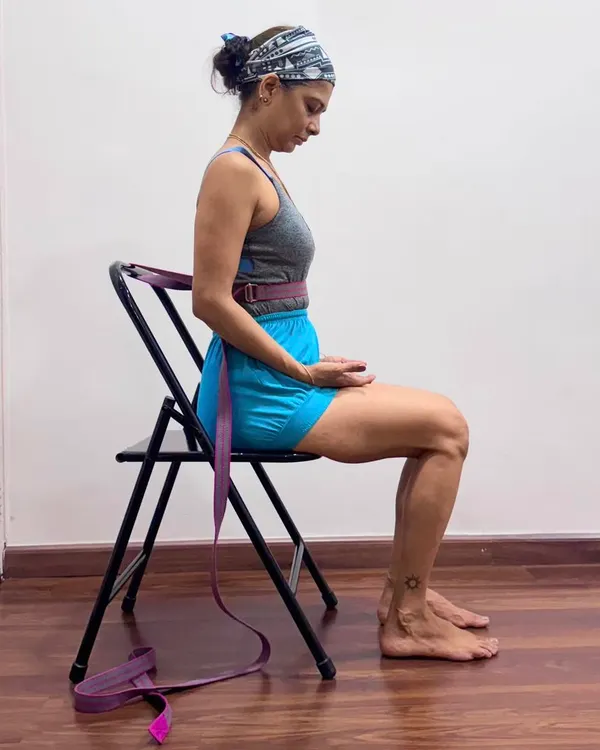
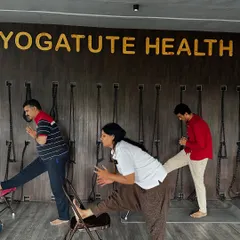
In a group setting, we use chairs to learn the correct spinal extension for Paschimottanasana (Seated Forward Bend). The chair provides support, allowing students to lengthen the torso from the hips rather than rounding the back.
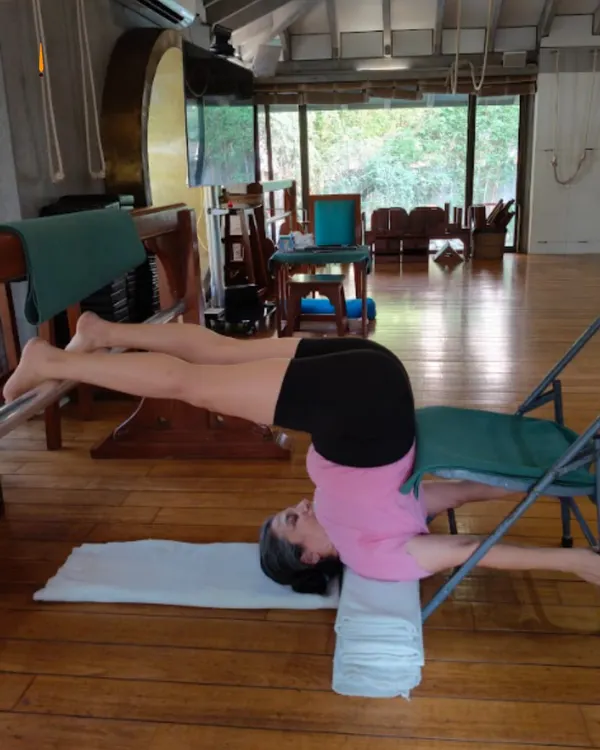
Kurmasana (Tortoise Pose) is a deep inward retreat. Using chairs for support allows the practitioner to gradually release into the pose, finding peace and balance without straining the back or hips.
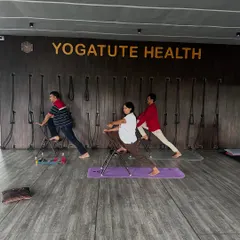
This is Utthita Trikonasana (Extended Triangle Pose) with the support of a chair and wall ropes. This setup helps improve joint health, flexibility, and endurance by ensuring the posture is held with perfect alignment.
Chair Surya Namaskar (Sun Salutation) is a beautiful and inclusive practice. It is a boon for seniors, those with injuries, or anyone with low mobility, allowing them to experience the benefits of the sequence safely.
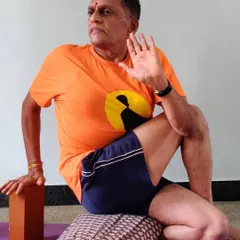
The type of support used in a seated pose matters. A soft bolster allows the buttocks to sink, providing lateral support, which can be comforting for some. We choose props based on the specific need of the student's body.
Using hard blocks for support in Dandasana (Staff Pose) provides a firm foundation. This makes it easier to extend the spine vertically and maintain the natural curves of the back, teaching the body correct posture.
A folded blanket offers a middle ground between a soft bolster and a hard block. It provides gentle lift and support, helping to tilt the pelvis forward and maintain an upright spine in seated postures.
Hands-on adjustments are a key part of my teaching. Here, I am assisting students of varying flexibility levels in a deep forward bend, helping each one find their personal edge safely and effectively.
About The Iyengar Method: Precision with Props
People often ask why we spend so much time setting up ropes or blocks before even starting an asana. It is because without support, the body naturally cheats—we collapse into the path of least resistance. When you use a chair for a forward fold or a wall rope for a standing pose, you create space in the joints that gravity would otherwise compress. This is not about making the pose easier; it is about making it accurate, so your muscles learn the correct pattern and your nervous system finally feels safe enough to let go.
The Science Behind the Support
True yoga therapy is not just about flexibility; it is about biomechanics and structural awareness. When you walk into my studio in Sector 57, you will not see endless, aimless movement. Instead, you will see walls with ropes, wooden blocks, and chairs. These are not shortcuts. They are precision tools that act as an extension of your own skeletal structure.
Why We Use Props
- Joint Decompression: Using wall ropes for traction allows the spine to lengthen without the strain of gravity, which is essential if you are dealing with disc issues or chronic back pain.
- Tactile Feedback: Blocks and dowels provide the sensory input your brain needs to understand where your body is in space. It turns a guessing game into a precise, anatomical alignment.
- Accessibility: A chair helps those with limited mobility perform a Sun Salutation safely, ensuring the benefits of the movement reach the joints without causing injury.
Your Body, Your Practice
Whether you are working through a rotator cuff injury or simply want to improve your posture, props allow us to adjust the pose to fit your body, rather than forcing your body to fit the pose. We move slowly, paying attention to how your muscles engage and where your nervous system holds tension. This is how we move from physical exercise into true healing. If you are looking for a practice that respects your current physical reality while gently pushing the boundaries of your mobility, this is the place to start.
Similar work from other experts
Browse through Curated picks from other experts on mytribe
Iyengar Yoga with Props for Precision and Alignment
 13
13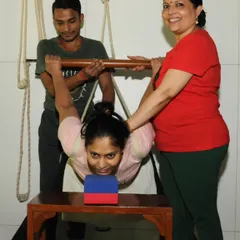
The Iyengar Method: Precision Alignment Through Props
 15
15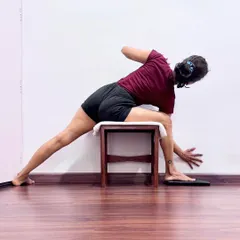
The Iyengar Method: Precision with Props
Prop-Assisted Yoga for Precision and Healing
 16
16
The Art of Alignment: Using Props
 4
4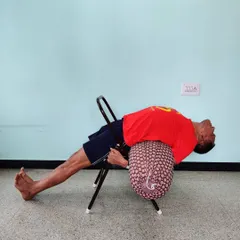
Iyengar Yoga Props for Precision
More from Yoga Therapy & Rehabilitation by Arogyam Vardan
More services by Arogyam Vardan