Iyengar Yoga: Building Precision Through Props
The Iyengar method focuses on precision, alignment, and the intelligent use of props. We use chairs, ropes, and blocks to help you access poses safely, creating deep, sustainable change in your body.
In this clip, I guide students through a side variation of Setu Bandha Sarvangasana (Bridge Pose). The detailed instructions to keep the shoulder down and extend the waist corner are examples of the precision that allows for a deeper, more transformative experience.
"Go low, pull down, roll the upper arm." The instructions are constant and specific because each action has a purpose. Here, a partner assists in a backbend, learning how to give and receive feedback to refine the pose.
Partner work is a privilege. In this bilingual session, I explain how an informed partner provides feedback that is impossible to get on your own. This interaction humanizes the practice and deepens the understanding of alignment.
How detailed can instructions get? Here we work on an "ankle lift" in Downward-Facing Dog, using a strap to teach the shin to lift away from the foot. This micro-adjustment has a major impact on the entire pose and is a hallmark of the Iyengar method.
A moment from the Bogota workshop, showing an adjustment in a supine twist. The focus here is on keeping the shoulders grounded while rotating the spine, using my hands to provide stability and encourage a safe, deep release.
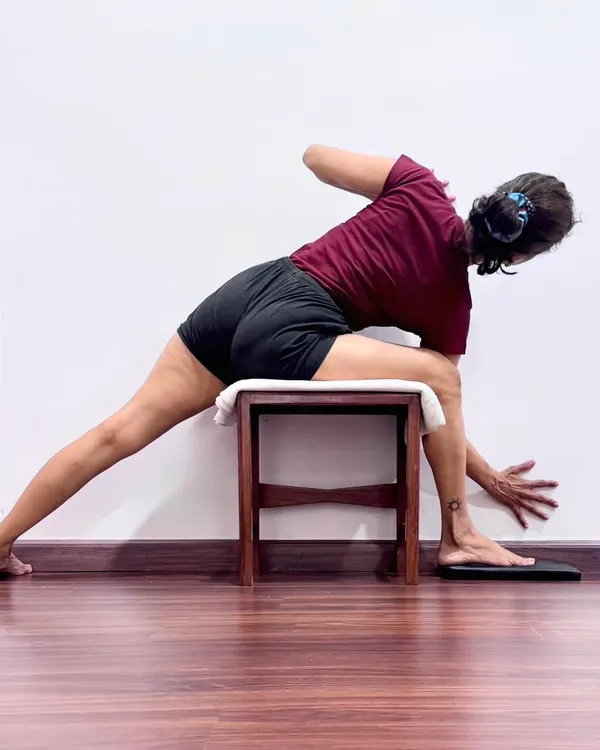
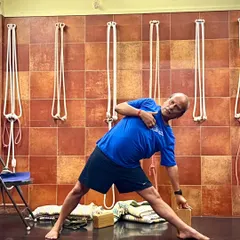
Assisting a student in Utthita Trikonasana (Triangle Pose) at the Bogota workshop. Using a block under the hand and providing support at the shoulder helps her find more length in the side body and maintain the alignment of the pose.
What are 'wrong' actions in asanas? This video discusses moving beyond right and wrong to what is appropriate. The classical Trikonasana with the head turned up is the final pose, but for a beginner, keeping the gaze forward is more intelligent to maintain alignment.
Alignment in asanas is not about making flat shapes; it is about aligning your awareness. This video explains the concept of the coronal plane, dividing awareness between the front and back of the body to create intelligent, three-dimensional action.
Do you soar when you arch back? This sequence shows the progression of a supported backbend over a chair, from preparation to the full expression of Virabhadrasana I (Warrior I). The chair provides support to open the chest and spine safely.
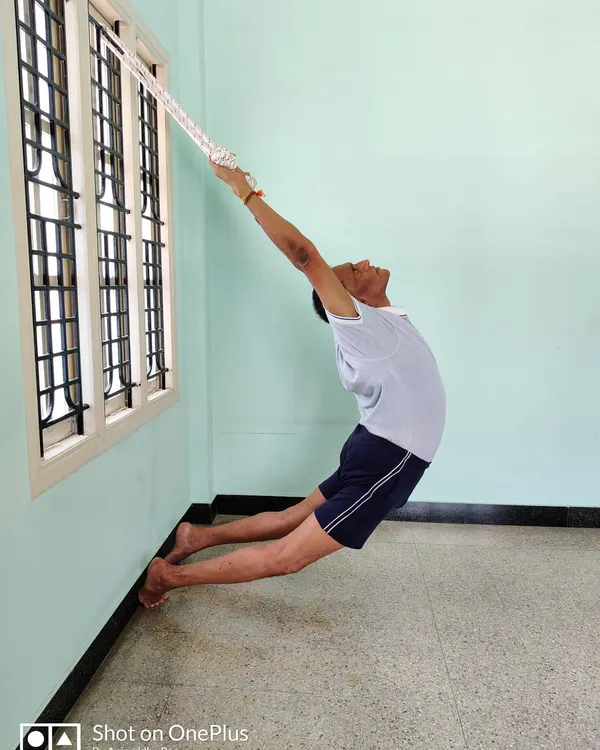
This is an interpretation of Virabhadrasana II (Warrior II) on the path to Vasisthasana (Side Plank). Using the wall ropes for support allows us to build the necessary strength and stability in the core and shoulders before attempting the final pose.
About The Iyengar Method: Precision in Practice
In many yoga classes, props are treated like training wheels. At our studio, we use them as diagnostic tools. Whether it is a wooden trestle for spinal traction or a chair for supported backbends, these tools help you access alignment that your body cannot reach on its own. This is not about making the pose easier, but about making the work safer and more precise, allowing you to build strength without strain or injury.
The Iyengar Alphabet
Iyengar yoga is often called a practice of precision. We approach asanas as an alphabet—once you understand the fundamental letters (alignment, stability, and prop usage), you can begin to write sentences and stories with your own body. Our sessions in Cooke Town are built on this structured foundation, ensuring that every movement is deliberate and informed.
Why Props Are Not Shortcuts
Many students assume that using blocks, blankets, or wall ropes means they are not 'doing' the yoga. We view it differently. If your hamstring is tight, forcing a forward fold might only lead to lumbar strain. By using a block or a wall to modify the pose, you maintain the correct anatomical action while allowing your nervous system to relax. This is how we use props to create space.
Alignment as Awareness
We often talk about the coronal plane or the lifting of the shins, not just to create a 'pretty' shape, but to train your awareness. Alignment is not about forcing your limbs into a straight line. It is about aligning your mind with the physical action. When you work with us, you are not just exercising; you are learning the biomechanics of your own structure. Whether you are recovering from an injury or seeking to deepen your athletic performance, our approach bridges the gap between purely physical movement and a conscious, intelligent practice.
Similar work from other experts
Browse through Curated picks from other experts on mytribe
 100
100
Precision Iyengar Yoga Classes with Props
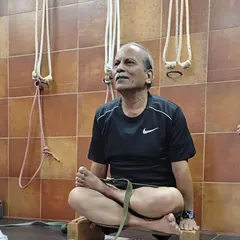
The Iyengar Method: Using Props for Precision
 4
4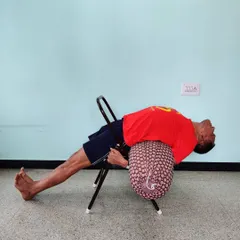
Iyengar Yoga Props for Precision
The Science of Asana: Prop-Based Practice
Iyengar Yoga: The Art of Alignment
 22
22
Iyengar Yoga with Props: Precision and Alignment
More from Specialized Yoga & Yoga Therapy by The Practice Room
More services by The Practice Room