Iyengar Yoga: A Philosophy of Intelligent Movement
Action is movement with intelligence. We explore yoga as a dialogue between the body, the mind, and the breath, moving beyond simple exercise to find real, structural change.
In this video for my students in Bogota, I share a story about the Gurukul tradition and the sense of responsibility a teacher has for a student. This commitment to each individual's journey is a core part of my teaching philosophy.
B.K.S. Iyengar's book "Light on Life" is a masterpiece that connects asana practice to deeper meditative states. Here, I introduce the book and its concept of the koshas, or layers of the self, which is a guiding philosophy in my teaching.
Mr. Iyengar said, "When I practice I am a philosopher, when I teach I am a scientist, and when I demonstrate I am an artist." I share my three favorite books by him, which embody this wisdom and guide my approach to teaching yoga in a practical, generous way.
Do you love yoga but hate exercising? In this conversation, we discuss how to bridge that gap. I believe that even repetitive "exercises" can become meaningful when we see them as preparation for the more complex and integrated art of asana.
About My Philosophy & Teaching Style
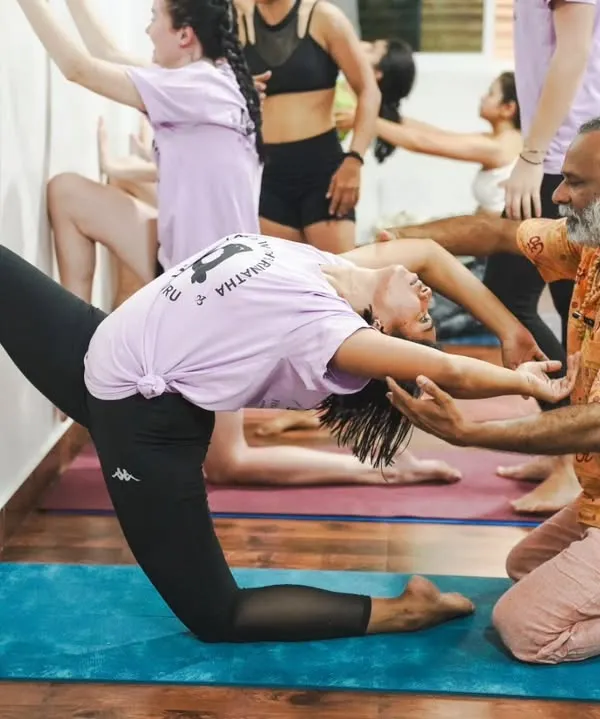
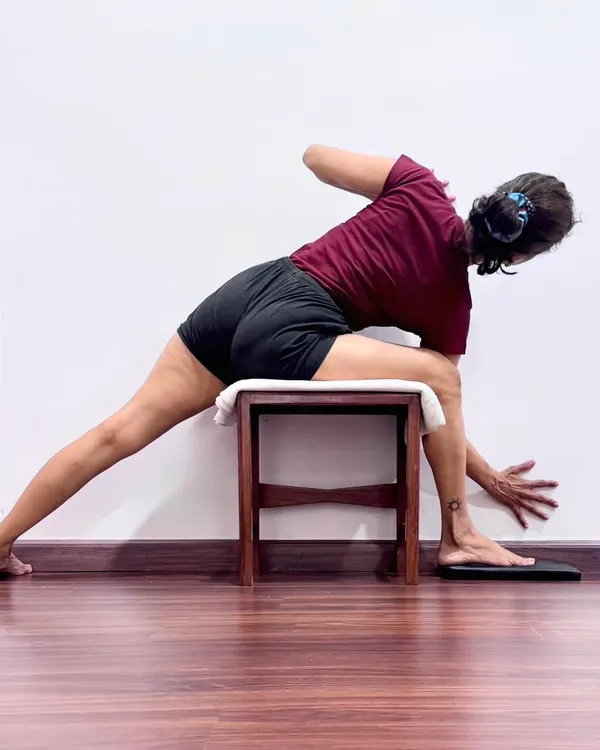
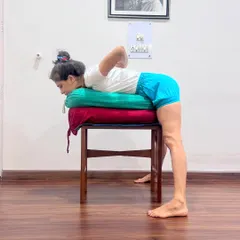
In my studio, we don't treat props like blocks, chairs, or wall ropes as shortcuts. They are precise tools of the Iyengar method that help us deconstruct complex asanas, allowing you to feel exactly where your body needs support and where it can release. Whether we are working on injury recovery or athletic performance, I prioritize teaching you the anatomy of the pose so you can build a practice that is safe, sustainable, and entirely your own.
Beyond the Exercise
Many people come to yoga because they are bored with traditional gym exercise, and I understand that frustration. If your mind is not involved in the movement, it becomes a repetitive task. My philosophy, rooted in the teachings of B.K.S. Iyengar, is that yoga is a form of scientific exploration. We break down complex movements into smaller, manageable actions. This is why you will see us using a wooden trestle for traction or wall ropes for spinal decompression—these tools create the space necessary to correct imbalances that years of bad posture or injury might have created.
The Gurukul Tradition
My teaching style is influenced by the traditional Gurukul system, where the focus remains on the individual student's journey. It is not about perfect poses for social media. It is about the 'snayu vrtti nirodhah'—the cessation of fluctuations in the muscles. We work with the body as it is today, not as we wish it to be. This means I provide detailed anatomical corrections and modifications for every student, whether you are dealing with chronic neck pain, knee issues, or simply looking to understand the mechanics of your own structure.
Practical Philosophy
I often use the Yoga Sutras not as abstract text, but as a framework for our physical work. When we talk about alignment, we are talking about creating a 'seat' for the mind. If you are struggling with a posture, we look at the root cause. Are your hips tight? Is your lumbar spine collapsing? We don't just push through pain; we educate you on the biomechanics of the issue so you can eventually manage it independently.
Who this is for
- Athletes: Those needing to integrate alignment to prevent injury.
- Recovery: Anyone needing a methodical, prop-supported approach to rehab.
- The Curious: Students who want to understand the philosophy behind the breath.
Similar work from other experts
Browse through Curated picks from other experts on mytribe
 4
4

My Yoga Journey and Philosophy
 11
11
The Yogic Path: Understanding the Iyengar Method
 76
76Hatha & Iyengar-Inspired Yoga: Precision and Alignment
 100
100
Precision Iyengar Yoga Classes with Props
Featured Yoga Classes: Therapeutic Flows & Alignment
My Personal Yoga Practice and Discipline
More from Specialized Yoga & Yoga Therapy by The Practice Room
More services by The Practice Room