Agility, Coordination & Hurdle Drills Training
Speed isn't just about running in a straight line. I use these drills to build the hip mobility, balance, and explosive power that turn beginners into athletes.
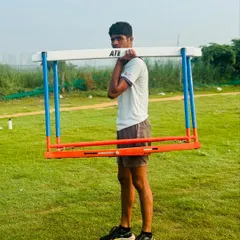
Hurdle drills are invaluable for all runners, not just hurdlers. They improve speed, agility, and coordination by ingraining rhythm and increasing explosiveness, making athletes faster and more efficient.
The fear of a little punishment always works. I use small challenges to ensure my athletes stay focused and maintain perfect coordination during these hurdle drills.
Every athlete needs hurdle drills. They improve sprint mechanics, enhance hip mobility for longer strides, boost coordination, and develop the balance and core control needed to maintain form at high speeds.
Why do we do so many hurdle drills? Because they unlock speed, rhythm, flexibility, and power. They are a must for any serious athlete looking to improve their performance.
The benefits of hurdle drills are immense. They improve stride length and frequency, enhance hip mobility, boost coordination, and strengthen stabilizer muscles to reduce the risk of injury.
Plyometric training, like these hurdle hops, is highly effective for improving explosive power, speed, and agility. It enhances muscle strength and reaction time, which is essential for any high intensity sport.
Pushing yourself out of your comfort zone is where growth happens. These plyometric hurdle drills enhance fast twitch muscle fibers, which are crucial for sprinting and jumping.
Hurdle stretches are essential for sprinters. They target the hip flexors, hamstrings, and glutes, improving hip mobility which leads to better stride length and knee lift.
Your mind can make the impossible possible. When this athlete doubted she could clear the increased hurdle height, my belief in her gave her the confidence to succeed.
This drill specifically targets the adductor muscles. Strengthening these muscles is crucial for stability, power, and injury prevention in sprinters.
About Agility, Coordination & Hurdle Drills
These hurdle drills aren't just about clearing height. Most athletes clip the hurdle because their lead leg mechanics or hip mobility are flawed. My sessions focus on fixing your foot strike and knee lift, so you stop leaking energy and start using the ground to propel your stride forward. If you want to get faster, you have to fix how you move, not just how hard you run.
Why Hurdle Drills are Non-Negotiable
Most people think hurdles are only for hurdlers. They are wrong. Hurdle drills are the fastest way to ingrain correct sprint mechanics and rhythm. At Go Speed, we don't just do jumps for the sake of it.
- Technique Over Height: We start low. If your form is bad, height does not matter. I focus on A/B/C skips and proper arm action to build your foundation.
- Adductor Activation: We specifically target the inner thigh muscles to improve stability and prevent the common injuries I see in amateur runners.
- Plyometric Integration: We use hurdle hops and box jumps to wake up your fast-twitch muscle fibers. This is the difference between a runner who is fast and one who is explosive.
My Approach to Speed
I have seen too many kids focus on pure distance without learning how to run. Whether you are a cricketer needing to convert singles into twos, or a sprinter chasing national records, my programming oversight ensures you are not just getting tired—you are getting better. We track your progress with time trials and video biomechanics at our centers in IIT Delhi and Vasant Kunj. The goal is simple: improve your stride length and frequency through better coordination. If you are ready to put in the work, my academy is where you start.
Similar work from other experts
Browse through Curated picks from other experts on mytribe
Explosive Speed & Agility Training in Delhi
Speed & Agility Drills: Build Explosive Athletic Power
Hurdle Training in Greater Noida: Master Your Technique
Speed and Agility Drills for Explosive Performance
Athletic and Explosive Power Training
Sport-Specific Speed and Agility Training
More from Sports Performance Training by Amit Khanna
More services by Amit Khanna