Flexibility for Tight Hips & Hamstrings
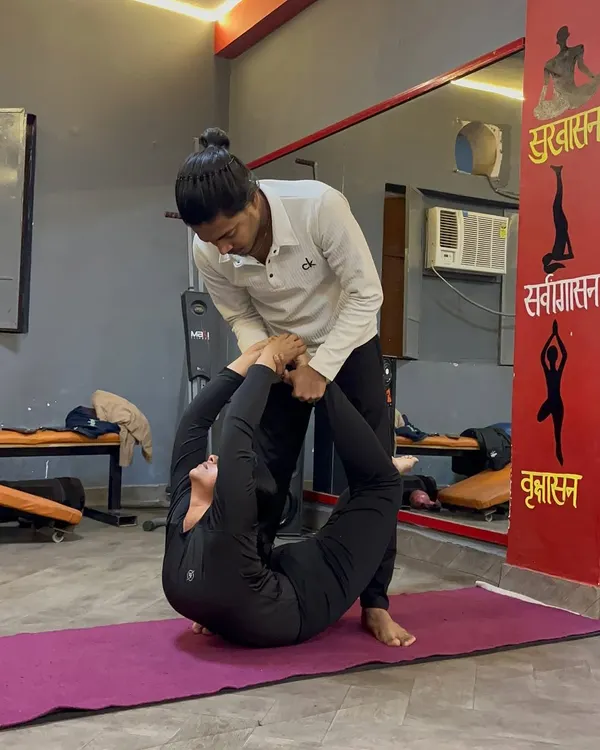
I hear this all the time: I am not flexible enough for yoga. If that is you, you are exactly who needs to be on the mat. We will work on releasing tension in your hips and hamstrings, focusing on safety and alignment rather than forcing your body into shapes it is not ready for.
In this short video, I guide you through a lower body stretching routine using blocks. We target the calves, hamstrings, quads, and hips, showing how props can help you get a deeper, safer stretch.
Gentle, sustained stretching is far more effective than forcing it. Here, I'm easing into a forward fold, focusing on breathing into the stretch for a minute or two. Remember to warm up your muscles before stretching deeply.
Try this mobility challenge with me. It's a playful sequence that tests your balance, flexibility, and control as you move through a modified pistol squat. Mobility is about usable range of motion, not just passive flexibility.
This wall squat drill is tougher than it looks. It's a fantastic exercise for improving your squat depth, ankle mobility, and thoracic spine flexibility all at once. Give it a try and see how it feels.
Lizard Pose is one of my favorite hip openers. It provides a deep stretch for the hip flexors, hamstrings, and groin. Remember to breathe and ease into it, as our hips can hold a lot of tension.
A yoga block can be a wonderful tool for opening the chest and shoulders. Placing a block under your upper back in a supported fish pose helps counteract the effects of slouching and creates space for deeper breathing.
Using a chair as a prop can help you explore advanced stretches like this standing split variation. It provides support and allows you to work on your flexibility and alignment in a new way.
About Flexibility for Tight Hips & Hamstrings
It is easy to get frustrated when your body feels stiff, especially after long hours at a desk. My approach focuses on using props like blocks to make the floor feel closer, which helps you hold stretches safely for longer periods. You do not need natural flexibility to get started; you just need to be patient enough to let your muscles release gradually rather than forcing them.
Many students come to me thinking they need to touch their toes on day one. That is simply not true. Flexibility is about usable range of motion, not performing gymnastics.
Why We Feel So Tight
If you spend a lot of time sitting, your hip flexors tighten and your hamstrings weaken from being in a shortened position all day. This creates that 'stuck' feeling. My sessions, whether Hatha or Vinyasa, integrate specific mobility drills to counteract this. We focus on active engagement rather than just passive hanging.
The Role of Props
I am a big fan of using blocks and straps. If you cannot reach the floor, the floor should come to you. Placing a block under your hands in a low lunge or under your sacrum in a supported fish pose creates space. This space allows your nervous system to relax, which is the only way to actually gain flexibility.
My Rules for Stretching
- No Ballistic Stretching: Avoid bouncing or jerking into a pose. It triggers a protective reflex that actually makes your muscles tighten up more.
- Warm Up First: Never stretch cold muscles. We always spend time moving with the breath to get blood flowing before we dive into deep holds.
- Consistency Over Intensity: Holding a gentle, sustainable stretch for a minute is far more effective than forcing an intense stretch for five seconds.
If you want to move without pain and feel more at home in your body, let’s get on the mat.
Similar work from other experts
Browse through Curated picks from other experts on mytribe
Unlock Tight Hips and Hamstrings with Guided Yoga
Hips and Hamstring Release Yoga
Flexibility and Mobility Yoga Flows in Bangalore
Master Hip Flexibility and Splits with Alignment-Based Yoga
Deep Stretching & Flexibility Yoga Sequences
 26
26
Flexibility & Deep Stretching Yoga Classes
More from Yoga for Fitness and Flexibility by Sanjana
More services by Sanjana