Master Hip Flexibility and Splits with Alignment-Based Yoga
Tight hips are a byproduct of modern living, but forcing your body into poses causes injury. We use props and precision to open your hamstrings safely.
Using a chair to support the leg in a variation of Hanumanasana (the splits). This makes the challenging pose more accessible.
Using the rope wall to get a deep hamstring stretch. The ropes allow for passive stretching, helping to release long-held tension.
A student uses a chair, block, and ropes to work on a wide-legged split variation, demonstrating how props can be combined for maximum benefit.
This is Yoganidrasana, where the feet are placed behind the head like a pillow. It requires extreme hip and hamstring flexibility.
Using a belt and the window to practice Natarajasana (Dancer's Pose), which is a deep quadriceps and hip flexor stretch.
A wall-assisted preparation for Eka Pada Raja Kapotasana (King Pigeon Pose), which is an intense hip opener and backbend.
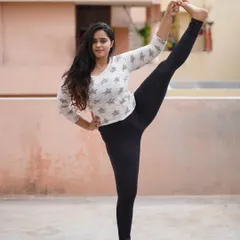
A personal practice of a vertical split against the wall, using blocks for elevation.
Prasarita Padottanasana (Wide-Legged Forward Bend) against the wall to ensure the back remains straight and the stretch is focused on the hamstrings.
Assisting a student in a standing split variation using the rope wall for support.
A student practices a vertical split while in a forward bend, using blocks for support. I am assisting to ensure her alignment is correct.
About Unlocking Flexibility: Hips, Hamstrings & Splits
Many students come to me thinking that splits are about how hard they can push. This is a mistake. Flexibility is not about force, it is about creating space. When you see me using chairs, blocks, or the Kurunta rope wall, understand that these are not crutches. They are tools that allow your muscles to let go. By supporting your leg with a prop, you stop fighting your own nervous system, which is the only way to genuinely lengthen your hamstrings and open your hips without pain.
The Anatomy of Progress
Progress in Hatha Yoga is slow. My method focuses on structural precision, meaning we do not rush into deep postures like Hanumanasana. Instead, we use specific drills to align the pelvis and lengthen the connective tissue. If you are struggling with tight hips, it is usually because you have spent years ignoring your body's structural needs.
Why Props Are Essential
In my studio in Rajarajeshwari Nagar, we use the Kurunta rope wall, wooden blocks, and metal chairs. These tools allow us to:
- Decompress the spine: While working on leg flexibility, we ensure the back remains supported.
- Control the intensity: You decide how much weight to bear. If you are a beginner, we use props to keep you safe. If you are advanced, we use them to go deeper into transitions.
- Maintain Mithahara: Just as we practice moderation in food, we practice moderation in asana. We do not overstretch.
This is not a 15-minute quick fix. Whether you join my Quarterly Alignment Immersion or the Annual Advanced Sadhana, expect to sweat, expect to be corrected, and expect to feel the change in your body over months, not days. Bring your patience to the mat, and leave the rush at the door.
Similar work from other experts
Browse through Curated picks from other experts on mytribe
Flexibility & Hip Opening Yoga
Flexibility for Tight Hips & Hamstrings
 16
16
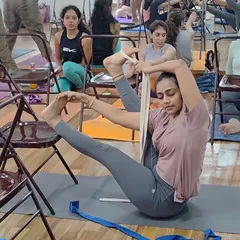
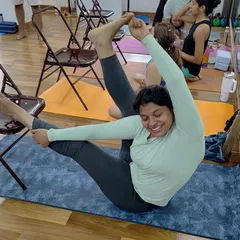
Hip Opening Yoga Classes for Better Flexibility in Mumbai
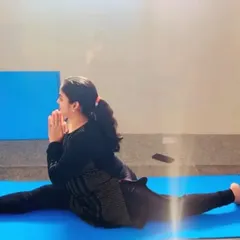
Mastering Splits and Hip Openers with Expert Guidance
Flexibility & Deep Stretches
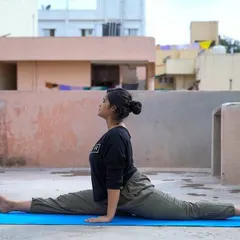

Unlocking Hips: Splits and Forward Folds
More from Alignment-Based Hatha Yoga by Harsha Nagaraj
More services by Harsha Nagaraj