The Deeper Practice: Yoga Philosophy
Yoga is more than just shapes on a mat. It is a system of movement and mind that helps you navigate life, from the wisdom of the Bhagavad Gita to the quiet of focused breathwork.
The Bhagavad Gita outlines four main paths of yoga. The first is Karma Yoga, the path of selfless action. We practice this whenever we perform our work and live our lives in service to others, without attachment to the outcome.
Jnana Yoga is the path of wisdom and intellect. It involves deep study of yogic scriptures and texts to understand our true nature. This path appeals to those who are intellectually inclined and seek knowledge.
Bhakti Yoga is the path of devotion and love. It's about seeing the divine in all of creation and channeling our emotions in a positive way. This path helps us cultivate acceptance and tolerance for everyone.
Raja Yoga is the royal path of meditation, outlined in Patanjali's eight limbs of yoga. It is a comprehensive system that moves from ethical principles and physical postures all the way to final liberation, or samadhi.
A class described as 'Hatha' yoga will typically involve a set of physical postures and breathing techniques practiced more slowly than a vinyasa class. The practice aims to balance the sun ('ha') and moon ('tha') energies in the body.
Twists are described as a "squeeze and soak" action. They compress the organs to push out old blood, and upon release, fresh, oxygenated blood flows in. This has a cleansing and refreshing effect on the entire torso.
Side Plank is named after the sage Vasistha. The pose requires focus and balance, symbolizing the clear vision needed to follow one's spiritual path. It reminds us to look at things from different perspectives.
The number 108 is sacred in yoga, representing the wholeness of existence. It connects the Sun, Moon, and Earth, as the average distance to each is 108 times their respective diameters. This is why we often do 108 sun salutations.
The Bhagavad Gita teaches that while we cannot always choose our situations, we can choose how they impact us. Like a potato and an egg in boiling water, the same situation can make one person softer and another harder. The choice is ours.
About The Deeper Practice: Yoga Philosophy
In my sessions, we do not just hold poses; we unpack the why behind them. Whether it is understanding the “squeeze-and-soak” action of a twist to clear out metabolic waste or reflecting on the teachings of the Gita to handle stress, we connect the physical mat to your real life.
Moving with Intent
Many of us approach yoga seeking a quick fix for physical tension, but true practice requires looking inward. When I guide a flow, we explore the four traditional paths of yoga—Karma, Bhakti, Jnana, and Raja—not as abstract concepts, but as tools to shift your perspective on daily challenges.
Practical Philosophy
We integrate this by breaking down the anatomy of movement alongside the wisdom of the Yoga Sutras. For instance, when we practice a twist, I talk about the “squeeze-and-soak” effect—how it physically compresses organs to push out metabolic waste and refreshes them with oxygenated blood. Understanding this creates a different connection to your body than just mimicking a shape you saw online.
Navigating Life’s Constraints
I often speak about the concept of “apariharya artha,” or choice-less situations. Life presents moments—job loss, conflict, grief—that we cannot avoid. Our practice teaches us that while we cannot choose the situation, we can choose how it impacts us. Like an egg and a potato in boiling water, we decide whether to harden or soften in response.
My classes are designed to be accessible, not perfect. You do not need flexible hamstrings to start exploring these ideas. Whether you are joining a small group batch or a private virtual session, the focus remains the same: show up, breathe, and learn something about yourself on the mat today.
Similar work from other experts
Browse through Curated picks from other experts on mytribe
The Philosophy of Yoga: Beyond the Asanas
Ancient Yogic Wisdom and Philosophy
Yoga Philosophy: Moving Beyond the Asana
The Philosophy of Yoga: Finding Balance and Clarity
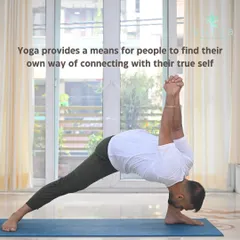
Yoga Philosophy and Mindful Living
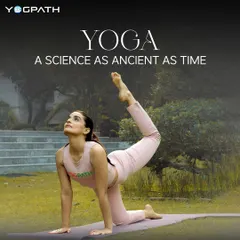
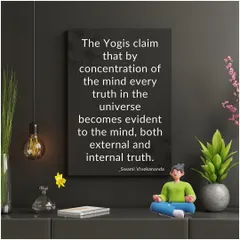
The Philosophy of Yog: Understanding Mind-Body Alignment
More from Yoga for Fitness and Flexibility by Sanjana
More services by Sanjana