Professional Glazing and Kiln Firing Services
The final transformation happens here. From delicate bisque ware to durable ceramics, we handle the chemistry and heat required to bring your pieces to life.
The moment of truth. Unloading the kiln after an 18 hour glaze firing at 1250°C. It's always a joy to see the finished pieces, with their glossy, vibrant colors finally revealed.
A cozy day in the studio involves many steps. This video shows the process from carving details into a greenware pot, to painting with glaze, and finally loading the finished pieces into the kiln for their final firing.
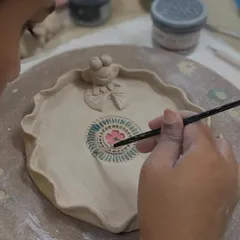
Onglazing is the final artistic step before the kiln. Here, students are carefully painting designs onto their bisque fired pieces. The kiln's heat will transform these chalky pigments into beautiful, permanent colors.
Unboxing a new shipment of underglazes, onglazes, and stains is like Christmas for a potter. We love experimenting with new colors and can't wait to see how these bring our next batch of work to life.
A close up of freshly glazed pieces waiting on the kiln shelf. The colors you see before firing are often completely different from the final result, which is part of the excitement of the process.
About The Final Touches: Glazing & Firing
Glazing is more than just applying color; it is a delicate chemistry that requires precision. When you bring your pieces to us for firing, we manage the kiln environment at 1250°C to ensure your work achieves true vitrification. This ensures that every piece leaving our kiln is not only vibrant but also non-porous and genuinely food-safe for daily use.
At our studio in Kodathi Gate, we treat the kiln as the heart of the creative process. It is where months of intentional work face the ultimate test. We primarily manage two stages: the initial bisque fire, which hardens raw clay, and the high-temperature glaze fire, which transforms your piece into a finished ceramic.
Why 1250°C matters: This temperature is the gold standard for stoneware. It ensures the clay body is fully vitrified—meaning it becomes dense, durable, and waterproof. Beginners often struggle with glaze consistency—applying it too thick causes runny drips, while applying it too thin results in dull, uneven patches. We provide the technical guidance to help you understand how your glaze will react at this heat, taking the guesswork out of the process.
Best practices for your pieces: If you are preparing work for the kiln, always remember to leave a clean, unglazed foot on the bottom of your pot. If glaze touches the bottom, it will melt and fuse to the kiln shelf during firing, which can damage both your piece and our equipment. We take the safety of the kiln and your art seriously, which is why we inspect every piece before loading. If you are experimenting with new glaze recipes or struggling with surface textures, bring your work by. We can sit down, look at your techniques, and figure out how to get the finish you are looking for.
Similar work from other experts
Browse through Curated picks from other experts on mytribe
 8
8

The Secret Sauce: Glazing and Firing

Professional Kiln Firing Services in Whitefield

Master Pottery Glazing & Surface Decoration
The Journey of Clay: How We Make Ceramics
 27
27
The Art of Pottery: Process and Technique
Pottery Glazing and Painting Workshops
More from Professional Pottery Program by The Janbo
More services by The Janbo