Harikatha and Shastra: The Philosophy Behind Kathak
Kathak is more than physical movement; it is the art of storytelling rooted in ancient Shastras. Explore these insights where I decode the rhythm, philosophy, and mythology that breathe life into every performance.
In this 'Harikatha quick bit', I explain the different interpretations of Brahma's single-syllable teaching, 'Da'. It shows how a simple sound can hold profound wisdom about self-control, compassion, and charity.
Here I share a theory on what our five fingers represent, from the Paramatma (thumb) to the Jeevatma (index finger). This story explains the philosophical meaning behind the 'Jnana Mudra', or the gesture of wisdom.
A short story about the crescent moon on Lord Shiva's head. It symbolizes the eternal seeker of knowledge, who is always learning and growing but never feels complete. This is a lesson for every artist.
A clip from a podcast where I discussed the process of decoding ancient epics like the Mahabharata for modern audiences. We explore how to balance historical context with artistic interpretation.
In this conversation, I explain the concept of 'Rasa', the aesthetic bliss that is the ultimate goal of art. It is the experience of being moved so deeply that you feel happy even while shedding tears for a story.
A snippet from a podcast where I discuss my artistic journey. I explain how Kathak is defined as 'Katha kahe so Kathak kahave', meaning the one who tells the story becomes the Kathak.
This is a personal poem I wrote in Sanskrit as a humble offering to Lord Shiva. My study of Sanskrit allows me to engage directly with ancient texts and create new works inspired by them.
About The Story Behind the Dance: Harikatha & Shastra
These insights aren't just talks; they are the 'why' behind the 'how' of my Kathak performances. Whether I am breaking down the meaning of a hand mudra or the mathematics of a rhythmic cycle, these clips are meant to help you see the logic in the movement. When you understand the Shastra, the dance stops being just physical steps and starts becoming a conversation with yourself.
Decoding the Art Form
Many see Kathak only as footwork or spins. While those are technical milestones, the soul of the dance lies in Abhinaya (expression) and Katha (storytelling).
My approach to these 'Harikatha' snippets is simple: to make ancient texts and mythological concepts accessible without diluting their essence. I don't interpret texts to fit a trend; I go through them as they are, which is why I studied Sanskrit. Whether we are discussing the philosophical meaning of the 'Jnana Mudra' or the connection between Bharat Muni’s Natya Shastra and the kitchen, the goal is always to move the audience—and the dancer—towards that state of Rasa, or surreal bliss.
Why the Theory Matters
If you are a student, you might find that rhythm patterns can sometimes twist your brain. That is intentional. By integrating the mathematics of Taal and the theoretical roots of Shastra into our practice, you develop a stronger foundation.
- Understanding the Narrative: We explore how stories from the epics connect to modern life.
- Technical Precision: We look at how vocal percussion (Pāḍhant) guides the feet.
- Mindfulness: We use dance as a meditative practice to find stillness in movement.
Ultimately, I believe that if you don't understand the story, you aren't really dancing. You are just moving. I invite you to join me in my Bengaluru studios or via our virtual programs to explore this deeper connection to Indian classical dance. Think about it.
Similar work from other experts
Browse through Curated picks from other experts on mytribe
 11
11
Kathak Storytelling for Mythological & Spiritual Themes
The Art of Storytelling: Abhinaya & Classical Dance Theory
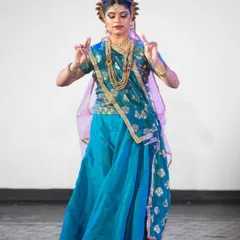
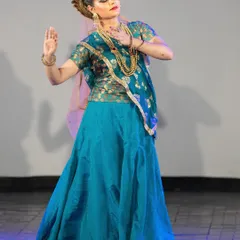
Mythological Storytelling and Abhinaya Choreography
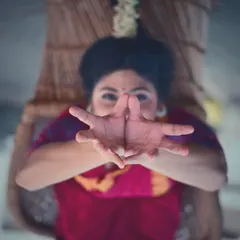
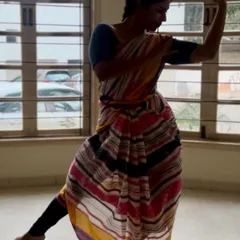
Bharatanatyam as Inquiry: Weaving History, Philosophy, and Dance
Devotional Classical Dance & Storytelling Performances
Mastering Kathak Abhinay and Expressive Dance
More from Kathak Dance Classes by Sharat Prabhath
More services by Sharat Prabhath