Mastering Kathak Padhant and Layakari
Kathak is as much about mathematics as it is about movement. I simplify the intricate rhythms of the Jaipur Gharana, breaking down complex padhant and layakari into accessible steps for every dancer.
Having some fun with Padhant. Here, I'm demonstrating the descending krama (sequence) of Dhamaar taal, ending with a spontaneous tihai. This is how we play with rhythm in Kathak.
A challenging exercise in Layakari. I'm attempting to recite 12 speeds of the bol 'Takita' in 60 seconds, all while maintaining a steady 4-beat cycle. This is a glimpse into our advanced workshops.
Think Teentaal is boring? Let me show you how a few changes in presenting the taali-khaali and a bit of layakari can make it incredibly interesting. Here is a complex Tihai to challenge you.
A quick challenge for you. Can you figure out how many speeds of Jhaptaal I am reciting in this video? This exercise helps in understanding the concept of Ekgun, Dugun, Tigun, and beyond.
A breathless but fun exercise for both Kathak dancers and Tabla players. I'm reciting one bol in 7 different speeds. The last speed is the trickiest. Can you identify which 'gun' it is?
Let's learn a Tihai together in a simple, step-by-step manner. By breaking down the patterns into small, repeatable parts, even complex compositions become easy to learn.
Many students requested a tutorial on Jhaptaal Tigun, so here it is. I share a three-step method using a nagma and ginti (counting) to help you access the rhythm pattern with more ease.
This is part two of my rhythm exercises for all dancers. We hold a clap of four and progressively increase the number of recited digits, a method that helps build a strong internal sense of rhythm.
A simplified version of Jhaptaal Kramlaya in Ginti (counting). This exercise, moving from the 1st to the 5th speed, is a great way for dancers to practice rhythmic progression.
Let's practice Teentaal Kramlaya Padhant together using Tatkaar bols. This call-and-response format makes it easier to internalize the different speeds and rhythmic cycles.
About The Teacher's Corner: Padhant & Layakari
Many dancers struggle to sync their footwork with the nagma (melody). In my classes, we don't just dance—we recite. I teach you to use ginti (counting) as a bridge, breaking down complex patterns into manageable, repeatable bols so you stop guessing and start internalizing the rhythm.
Why Padhant is the Secret to Strong Footwork
Kathak is a dialogue between the dancer and the percussionist. If you cannot recite the bols (syllables) accurately, you cannot execute them with clarity. My approach to padhant and layakari is designed to build this internal rhythm.
My Teaching Methodology
- Counting as a Foundation: We use ginti (counting) as a scaffold. Before moving to fast-paced tatkaar (footwork), we master the rhythmic cycle vocally. This prevents the common mistake of 'guessing' where the sam (the first beat) falls.
- The Jaipur Gharana Approach: We focus on the precision that defines our lineage. Whether we are working on Teentaal or Jhaptaal, the emphasis remains on the mathematical integrity of the layakari.
- Tools for Success: We use nagma tracks for every practice session. Relying on a constant rhythmic reference is non-negotiable in my classes. You will learn to hold a clap of four beats while reciting patterns, a technique that builds absolute rhythmic independence.
What to Expect
Whether you are joining my online batches via Zoom or training in my Vile Parle studio, the goal is the same: to move from copying steps to understanding the structure of the dance. My online sessions are strictly capped at 10 students. This ensures that when you recite or dance, I can hear and see your angles and timing, offering real-time verbal corrections.
If you are feeling stuck in your current practice, we will go back to the basics of padhant. It is the fastest way to break through a plateau, regardless of whether you are a beginner or a seasoned dancer looking to refine your tihai structures.
Similar work from other experts
Browse through Curated picks from other experts on mytribe
Kathak Technique and Riyaaz Training
Kathak: From Basics to Stage
Advanced Kathak Training: Master Rhythm and Grace
Kathak Training: Master Rhythm and Grace
 11
11Kathak Classes and Training
 5
5
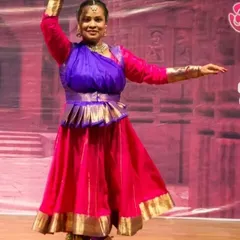
Kathak: From Basics to Performance
More from Kathak Dance Classes by Eshani Sathe
More services by Eshani Sathe