Running Mechanics and Injury-Free Running
Most running injuries start with a loss of control, not just fatigue. We focus on building hip stability, improving sprint mechanics, and strengthening deceleration patterns to help you run faster, more efficiently, and without pain.
This is the story of Akshay Sharma, a runner who embodies dedication. We had the privilege of guiding his journey, optimizing his strength and running programs to help him conquer a 100 km ultra-marathon pain-free. His success shows what's possible with a structured, scientific approach.
The key to injury-free running is achieving a strong hip lock and single-leg stability. Every stride demands balance, control, and force transfer. If your hip can't stabilize, your knee and ankle pay the price.
Running is a series of controlled single-leg hops. Each stride generates ground reaction forces of 2-3 times your bodyweight. Without hip control to manage these forces, the kinetic chain collapses, leading to overload elsewhere.
Hip stability isn't about stiffness; it's the ability to control the pelvis while the opposite leg moves. This dynamic control comes from the gluteus medius and minimus, deep hip rotators, and core working together.
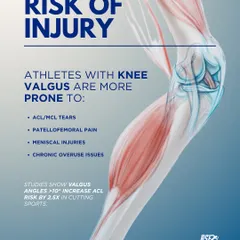
This is how weak hips cause injuries. Common issues like IT Band Syndrome, Runner's Knee, and Achilles Tendinopathy can often be traced back to a loss of frontal plane control, where the body cannot resist side-to-side collapse.
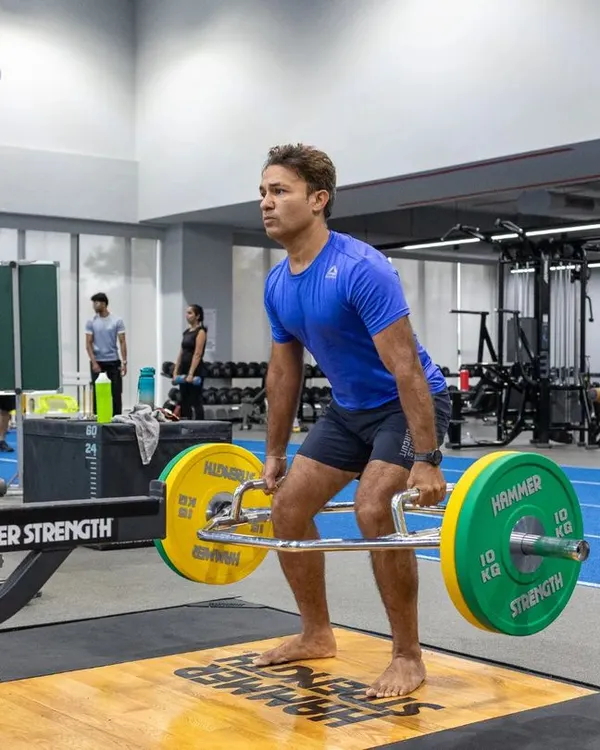
We build hip stability through a progression of strength and control exercises. We start with movements like single-leg RDLs and Pallof holds, then add load, movement, and fatigue to ensure stability holds up under speed, not just in the gym.
This infographic breaks down where adult sprint mechanics often fail. Common issues like overstriding, excessive vertical bounce, and long ground contact times keep output low even when effort feels high. Our Speed & Power Masterclass is built to fix this.
If your knees hurt, it's probably not just your desk job. This image introduces the idea that knee pain is often a symptom of a problem elsewhere in the kinetic chain.
Think your desk job is wrecking your knees? While prolonged sitting plays a role, it's not the whole story. This infographic series explores what actually causes that nagging knee pain.
Sitting all day can cause quad tightness and weak glutes, but blaming your desk skips the deeper issue. Your body isn't prepared for the loads you're putting on it during activities like running or squatting.
About Running Mechanics & Injury-Free Running
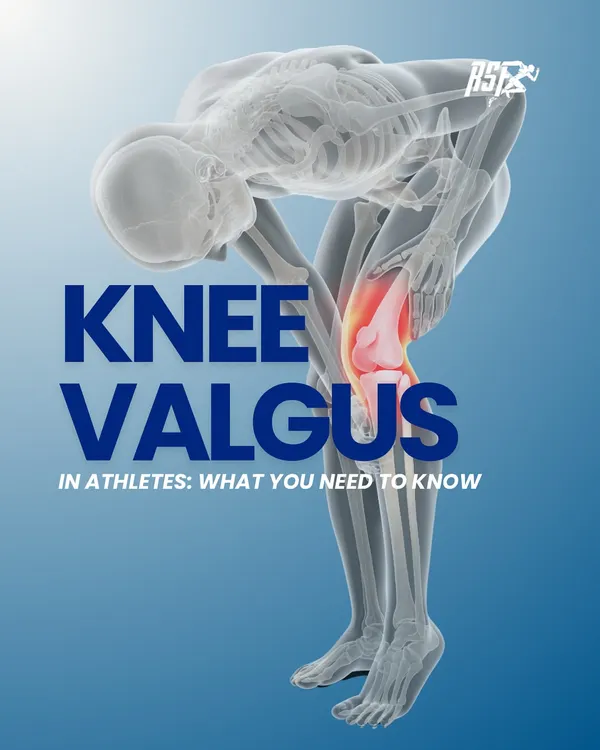
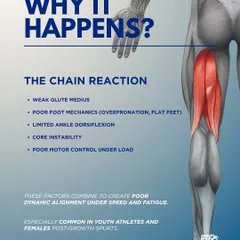
We don't guess; we test. Before you start a running program, we use tools like dynamometers and force plates to identify exactly where your kinetic chain is leaking energy, whether it is hip instability causing knee valgus or limited ankle mobility hindering your gait.
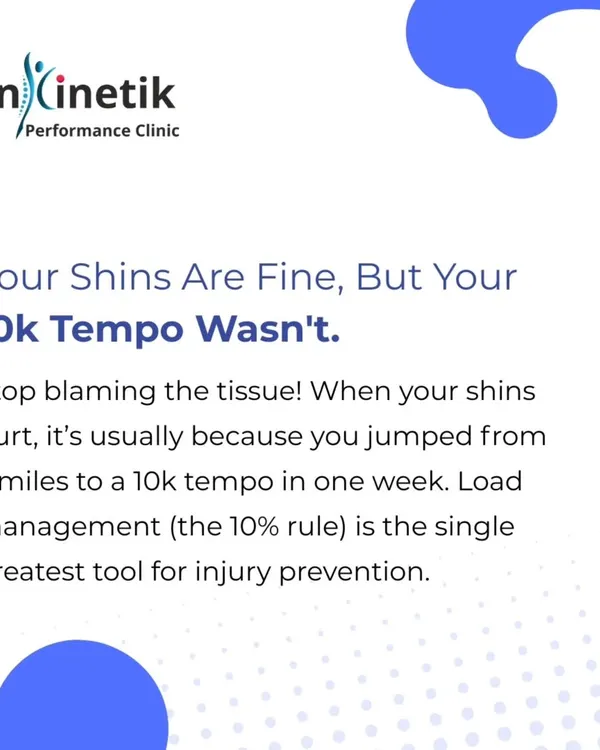
Running is not just endurance. It is a series of controlled single-leg hops that generate ground reaction forces of up to 3 times your bodyweight. If your body cannot manage these forces, the kinetic chain collapses. Common issues like IT Band Syndrome, Runner's Knee, and Achilles Tendinopathy are rarely about 'bad luck.' They are typically symptoms of poor load management or a failure in your biomechanical foundation.
Why Your Knees Hurt
Many runners blame their desk jobs for knee pain. While prolonged sitting can lead to quad tightness and weak glutes, the real issue is that your body is not prepared for the loads you place on it during high-intensity training. We do not just chase the symptom with ice or rest. We rebuild the chain by restoring control, strength, and mobility in the hips, ankles, and core.
The Science of Our Approach
Our Running Mechanics program is built on three pillars:
- Force Analysis: We measure muscle force output and left-right imbalances to see where you are weak.
- Reactive Strength: Using jump mats, we assess your landing mechanics to ensure your knees and ankles are protected under load.
- Sprint Mechanics: We analyze your gait to identify 'energy leaks' like overstriding or excessive vertical bounce that slow you down and increase injury risk.
Whether you are training for a 5K or an ultra-marathon, we help you transition from simply managing pain to achieving 'game-ready' performance. Visit us at our Koramangala or Jayamahal centers to get assessed and fix your running pattern for the long term.
Similar work from other experts
Browse through Curated picks from other experts on mytribe
 5
5
Injury Prevention & Management for Runners
Strength Training for Runners in Bengaluru
Running Form & Technique Coaching
 15
15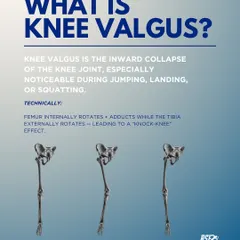
Knee Injury Prevention and Rehabilitation
 6
6
Strength Training for Runners in Sarjapur, Bengaluru
Lower Body and Joint Pain Rehabilitation
More from Injury Rehabilitation & Physiotherapy by Rapid Sport Fitness
More services by Rapid Sport Fitness