Anatomy for Yogis: The Science of Safe Practice
Yoga is not just about stretching; it is an exploration of the human body. I use anatomical models and biomechanics to help you understand your foundation, from the tripod of the foot to spinal alignment, ensuring your practice is both safe and sustainable.
Understanding anatomy is the key to unlocking the secrets of yoga. Here, I am indicating the sternum and its connection to the rib cage, which is crucial for understanding how to create space in the chest during backbends and pranayama.
To practice Kurmasana, or Tortoise Pose, safely, we must understand the biomechanics of hip external rotation and spinal flexion. I use our studio skeleton to demonstrate the correct movements, ensuring you learn to protect your joints while deepening the pose.
Your feet are your foundation. In this video, I explain the biomechanics of the foot arches and how to correct common issues like over-pronation or supination. A strong, stable foundation is essential for balance and injury prevention.
Proper foot awareness starts with understanding the 'tripod of the foot', the three points that distribute our weight. Mastering this concept is fundamental for stability in all standing poses and for preventing common foot and ankle injuries.
This clip demonstrates exercises for improving hip mobility. We focus on the key movements of flexion, extension, and external rotation, which are essential for both daily functional movement and advancing your asana practice.
Gomukhasana, or Cow Face Pose, is a deep stretch for the shoulders and hips. In my classes, we break down the alignment and use props like belts to make the pose accessible, ensuring a mindful and effective opening.
Here, students use two belts to enhance their awareness of thigh rotation and pelvic alignment. This technique provides immediate feedback, helping to build a deeper mind-body connection and stability in standing poses like Ardha Chandrasana.
About Anatomy for Yogis: The Science of Safe Practice
When you practice without anatomical awareness, you are often guessing at the pose. I teach you to use props like chairs, blocks, and belts as tools for intelligence rather than crutches. In my sessions, we focus on the specific biomechanics—whether it is external hip rotation or rib cage expansion—so you can correct your form, prevent injury, and actually feel what the pose is designed to do.
Understanding the Mechanics of Movement
Most yoga injuries occur because the practitioner forces the body into a shape it is not biomechanically ready for. In my studio in Sushant Lok, we prioritize the 'why' over the 'how'. When we work with Kurmasana or Gomukhasana, we do not just aim for the final posture. We break down the movement, analyzing joint stabilization, tendon strain, and muscle engagement using skeleton models.
Why Props Are Essential
Many students view props as crutches for beginners. I teach the opposite. Using two belts to facilitate thigh rotation or a chair for spinal flexion provides immediate feedback that the body cannot generate on its own. This is not about making the practice easier; it is about making it accurate. By using these tools, you build the correct muscular memory that allows you to eventually perform the asana with independence and safety.
Anatomy-Based Teacher Training
If you are training to be a teacher, you need to understand more than just flow; you need to understand anatomy. My 200-hour course in Gurugram includes rigorous sessions on:
- Biomechanics: Real-time breakdown of spinal movement and joint rotation.
- The Tripod of the Foot: Correcting common issues like over-pronation and building a stable foundation for standing poses.
- Physical Adjustment: Learning how to safely correct a student's posture without relying on forceful manipulation.
Yoga is a science of the body. My goal is to equip you with the knowledge to read a body, understand its limitations, and guide it toward healing.
Similar work from other experts
Browse through Curated picks from other experts on mytribe
In-Depth Yoga Anatomy Training for Teachers
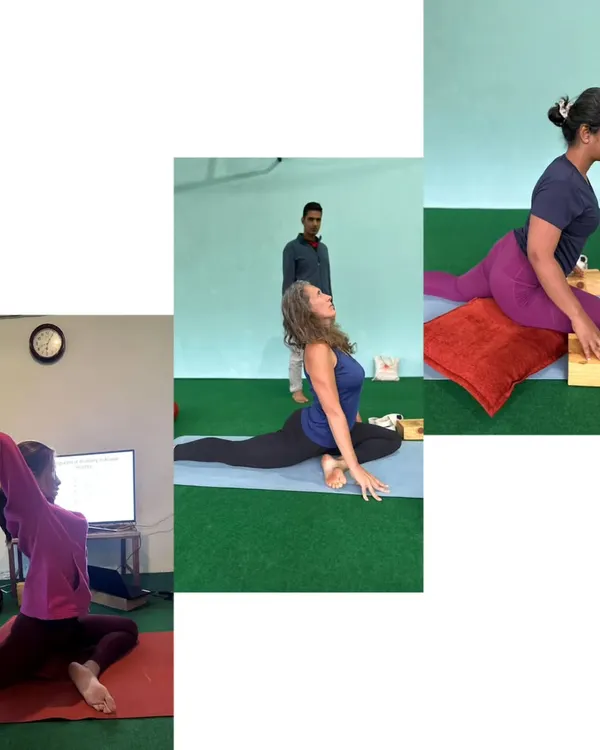 15
15Functional Anatomy: Learning Alignment for Every Body
Hands-on Yoga Adjustments & Alignment
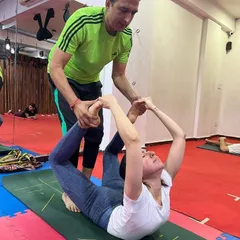
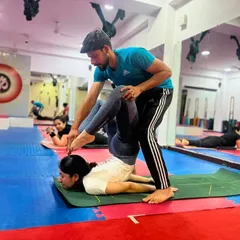
Yoga Teacher Training: Mastering Alignment & Adjustment
Master Advanced Yoga Through Anatomy and Proper Technique
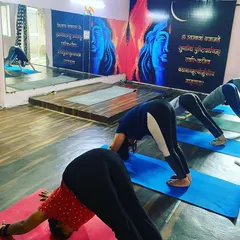
Personalized Yoga Guidance and Teacher Training
More from Yoga Teacher Training by Arogyam Vardan
More services by Arogyam Vardan