Hands-on Yoga Adjustments & Alignment
Understand how we use precise physical adjustments to guide students into correct asana alignment and deepen their practice safely.
I am adjusting a student in Parsvottanasana to help them square their hips and deepen the forward bend without compromising their spine. In another adjustment, I guide a student in Utthita Parsvakonasana to create a long line of energy from the back foot to the fingertips.
Assisting a student with a standing backbend requires trust and precise support. I stabilize the student's hips and guide their upper body to encourage a safe and deep spinal extension.
Guiding a student into the full Eka Pada Rajakapotasana (One-Legged King Pigeon Pose). This hands-on assistance helps them to safely open their shoulders and deepen the backbend.
In the Ashtanga intermediate series, poses like Kapotasana require careful guidance. I am assisting students to deepen their backbend while ensuring their foundation remains stable and safe.
A glimpse into our shoulder and back yoga workshop. We focus on the anatomy of these areas and teach how to adjust students to relieve tension and improve mobility.
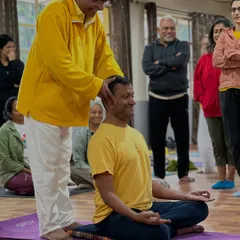
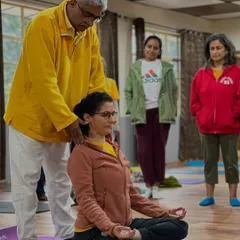
An instructor provides support during Sirsasana (headstand) practice. This ensures students build confidence and maintain correct alignment as they learn to balance.
In our advanced backbend class, I demonstrate the proper form before an instructor assists a student into a deep variation using the wall for support. This shows our progressive and supportive teaching method.
Partner work can be an effective way to understand alignment. Here, students are assisted to achieve a deeper side body stretch, opening the shoulders and rib cage.
Instructors carefully guide students in Pincha Mayurasana (Forearm Stand), helping them find their balance and engage the correct muscles.
Using props like chairs and bolsters for deep hip-opening poses. An instructor assists a student to help them release tension and move further into the posture safely.
About Hands-on Adjustments & Alignment
I do not believe in forcing a body into a pose. Real adjustment means understanding the bone structure and joint mechanics of the individual student. Whether it is using a prop to square your hips in Parsvottanasana or guiding the spine during a deep backbend, the goal is always to protect your body while you explore your limits.
Precision in Practice
In my classes at AumYogaShala, adjustments are not about 'fixing' a student. They are about guiding energy and alignment so the practitioner can find stability in the pose. When I work with a student, I look for the drishti (focus), the foundation of the feet, and the extension of the spine. If a student is rounding their back in a forward fold, we do not push harder; we use blocks or straps to create space, allowing the breath to flow. This is the essence of abhyasa (practice) — consistent, safe, and intelligent work.
Why Alignment Matters
Poor alignment is the primary cause of injury in yoga. We spend time breaking down complex postures like Pincha Mayurasana or Kapotasana to ensure the shoulders, hips, and lower back are supported.
- Joint Mechanics: We focus on safe movement patterns to protect the knees and lower back.
- Anatomical Understanding: You learn why Uddiyana bandha acts as a lock for the core and how it supports your spinal integrity.
- Prop Support: We use chairs, wall ropes, and belts not as crutches, but as tools to understand the geometry of the pose.
Learning to Adjust
For those joining my Teacher Training Course, learning to adjust is a major module. You will learn to read a student's body, understand their limitations, and offer tactile cues that are safe and respectful. Whether you are a beginner or an experienced practitioner, our focus remains on tradition and sincerity over aesthetic perfection. Join me in Gurgaon to experience this technical and traditional approach firsthand.
Similar work from other experts
Browse through Curated picks from other experts on mytribe
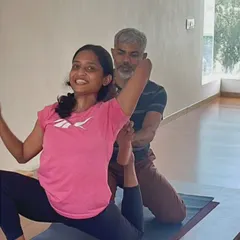
The Art of Yoga Adjustments & Assisting
Hands-On Yoga Instruction for Precise Alignment
Hands-On Yoga Adjustments & Safe Alignment Training
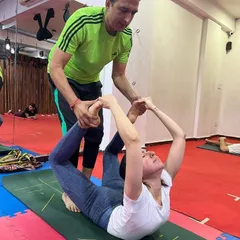
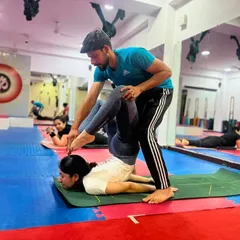
Yoga Teacher Training: Mastering Alignment & Adjustment
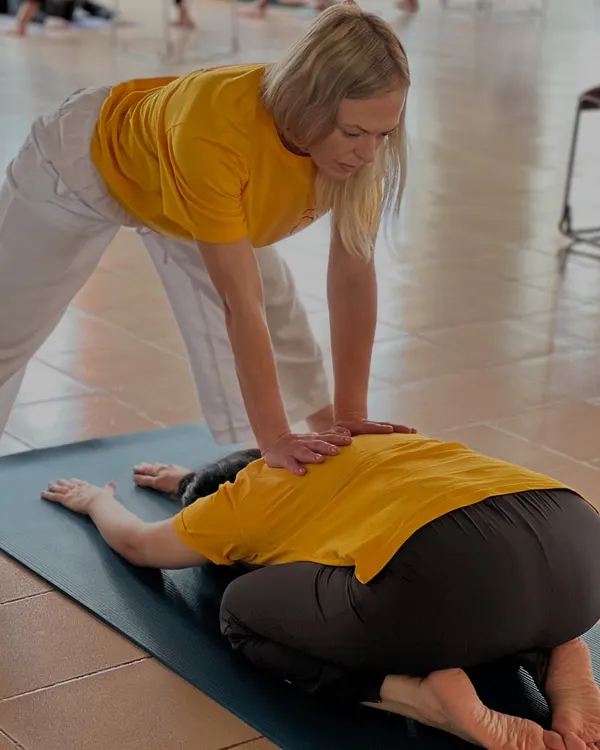 26
26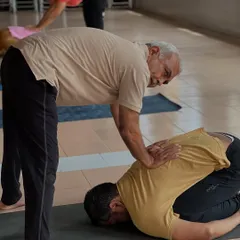
The Art of Yoga Teaching and Correction
Advanced Asana and Adjustment Training in Gurugram
More from Yoga Teacher Training Course (YTTC) by Devender Bhardwaj
More services by Devender Bhardwaj