Functional Anatomy: Learning Alignment for Every Body
Yoga is not a performance—it is a practice meant to fit your unique skeletal structure. We teach you to look beyond 'perfect' poses and understand the biomechanics behind safe, sustainable movement.
A collage showing how the same pose looks different on different bodies, illustrating the importance of a functional approach over a "picture perfect" aesthetic.
Demonstrating different hand grips in Adho Mukha Svanasana (Downward-Facing Dog) to show how to adapt poses for unique skeletal structures.
A short lecture explaining the difference between a functional approach ('how you feel') and an aesthetic approach ('how you look') in asana practice.
An anatomy class explaining the kinetic chain, starting with the feet as the foundation for stability in all standing asanas, just as roots are for a tree.
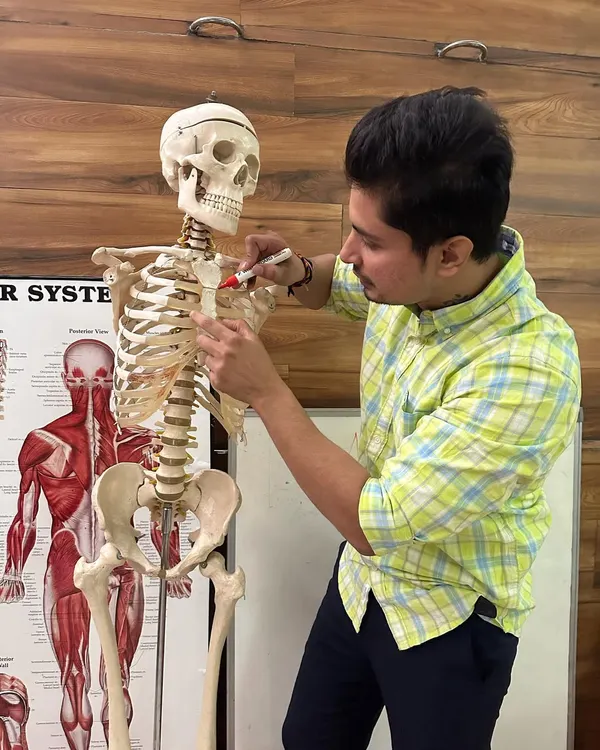
An asana alignment session where we use a model of the spine to demonstrate correct posture and muscle engagement, making the practice safe and effective.
Explaining the three planes of movement (sagittal, transverse, coronal) and why a balanced asana practice must incorporate movements from all three.
Busting a common myth about Sirsasana (Headstand). We explain the science of cerebral blood flow autoregulation to show that inversions don't dangerously increase blood flow to the brain.
Preparing students for arm-loading asanas like Chaturanga Dandasana by teaching proper muscle engagement and identifying red flag areas to avoid injury.
An alignment session in progress, where participants are introduced to the principles of individualized alignment using a skeletal model.
A session on the biomechanics of the knee joint, explaining how repeated incorrect movements (pathomechanics) can lead to injury and how to avoid them.
About Functional Anatomy: A Scientific Approach to Asana
Stop forcing your body into shapes that don't fit your bones. In our sessions, we move away from the 'one size fits all' dogma and use functional anatomy to help you understand your own unique hip orientation and joint range of motion. Instead of aiming for a mirror-perfect pose, we focus on identifying your specific target areas and red flags—ensuring you can practice and teach without risking injury.
Why Functional Anatomy Matters
Most modern yoga training focuses on how a pose looks—the aesthetic approach. But we believe the true value lies in how it feels—the functional approach. If you are a teacher or a dedicated practitioner, understanding biomechanics is the difference between a lifetime of practice and a premature injury.
At Sayujya Yoga, we apply the '14-10-7' rule and principles of skeletal variation to our teaching. We teach you that if your bone structure doesn't allow for a specific version of an asana, the 'correct' alignment is the one that allows your body to find Sthira (steadiness) and Sukham (comfort).
What You Will Learn
- Joint Mechanics: We break down the primary movements of the knee, hip, and spine. You will learn to distinguish between healthy muscle tension, safe stretching, and dangerous joint compression.
- Individualized Alignment: We move away from universal cues like '45-degree foot angle' and teach you how to adapt poses based on individual anatomy.
- Prop Usage: We treat props not as crutches, but as essential tools to make poses accessible for every student, regardless of their flexibility or experience.
- Safe Sequencing: You will learn to build classes that respect the kinetic chain, moving beyond simple sun salutations to create a balanced, safe, and effective practice.
Training with Our Tribe
Whether you are joining our hybrid training at our Ghatkopar studio in Mumbai or immersing yourself in our residential programs, this knowledge is at the core of our curriculum. We want you to stop chasing Instagram-perfect shapes and start teaching yoga that is genuinely inclusive, safe, and empowering for your students.
Similar work from other experts
Browse through Curated picks from other experts on mytribe
In-Depth Yoga Anatomy Training for Teachers
 7
7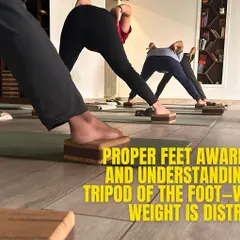
Anatomy for Yogis: The Science of Safe Practice
 8
8Advanced Yoga Training & Anatomy in Bangalore
 27
27


Mastering Yoga Asanas: From Foundation to Advanced
 17
17
Asana Lab: Mastering Yoga Postures with Precision
Expert Yoga Asana and Alignment Practice
More from Yoga Teacher Training Courses (YTTC) by Sayujya Yoga
More services by Sayujya Yoga