Featured Yoga Inversions & Handstand Training
A look at my personal practice and how I guide students through the technical challenges of inversions, arm balances, and steady, real-world progress.
This is what we work towards: the seamless flow between strength and flexibility. Moving from a stable Handstand into Chakrasana (Wheel Pose) requires core control, shoulder opening, and trust in your practice.
Yoga is a path for everyone, and we all start somewhere. This shows the beautiful stages of learning an inversion, from beginning with support, to building stability in progress, to finding confident mastery.
The Scorpion Pose, or Vṛścikāsana, is a powerful inversion that combines a deep backbend with an arm balance. It teaches focus and control, transforming what seems intimidating into a moment of grace and strength.
Building a solid handstand starts with the fundamentals. This video breaks down the common mistakes and shows the correct core engagement and alignment needed to lift off safely and build a strong foundation.
The path to advanced poses is filled with trial and error. I believe in sharing the whole process, including the series of failures that lead to eventual success in poses like one-arm balances.
Unlocking your spine's potential is a journey, not a destination. With proper technique and consistent practice, we can safely explore deep backbends like this one, improving mobility and opening the heart space.
Progress is not always linear, but it is always rewarding. This transformation shows how consistent practice over time, focusing on deep contemplation and technique, can lead to incredible breakthroughs in flexibility.
Acro Yoga is a practice of trust and connection. Here, we explore a supported Dhanurasana (Bow Pose), which builds strength for the base and encourages a deep, safe backbend for the flyer.
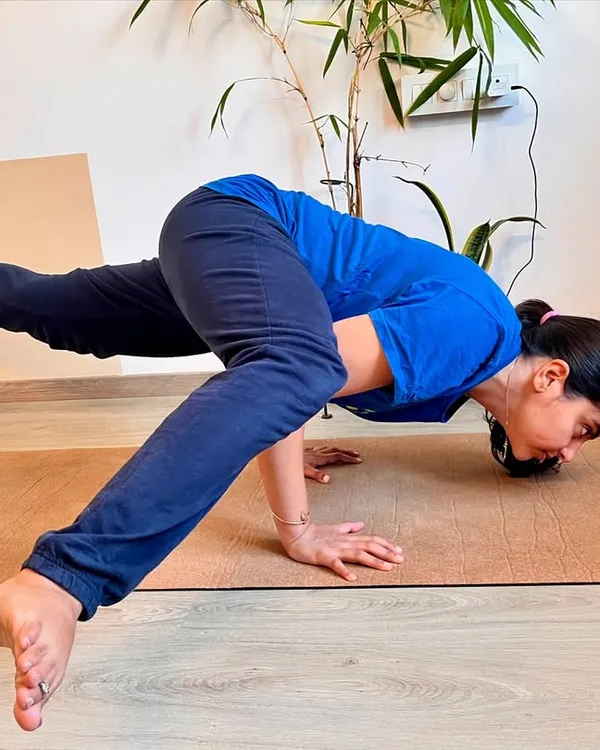
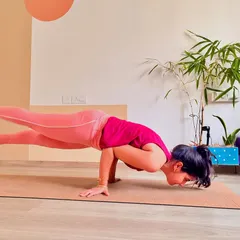
Recovering from an injury has taught me the importance of mindful movement. This was my first time attempting Bakasana (Crow Pose) after a setback, a reminder that the journey back to the mat is about patience and listening to your body.
There is no greater joy for a teacher than seeing a student's progress. Here is a student holding a stable handstand, a testament to her dedication, strength, and balance.
About Featured
Mastering inversions isn't just about holding the pose—it’s about managing your weight, protecting your wrists, and learning how to fall safely. My sessions are designed to move you past the fear of being upside down by teaching the biomechanics of core engagement and proper exit strategies. We don't skip steps; we build your confidence until you're ready to fly.
Building Your Inversion Practice
Many students come to me wanting to master the handstand or forearm stand but feeling stuck at the beginning. The secret is that these advanced poses are not about brute strength; they are about understanding the line of gravity and learning to micro-adjust. Whether we are doing virtual biomechanics checks or in-person spotting, we focus on three pillars:
- Wrist & Shoulder Health: Before you go upside down, we condition the joints. We spend time on mobility to ensure your shoulders have the flexion required for a straight line and your wrists are prepared for the load.
- Core Engagement: Without a tight core, your lower back takes the stress. I teach specific drills like tuck planches and pike compressions that force you to engage your abdominal wall, keeping you stable even when you are off-balance.
- Safe Falling: The biggest hurdle is the fear of falling. By practicing how to exit a handstand safely—learning when to bail and how to roll out—we remove that mental block, allowing you to actually practice.
Why Practice with Me?
I have spent nine years refining my own practice, including time spent recovering from my own injuries. I know exactly what it feels like to have a body that doesn't cooperate and a mind that gets frustrated. My teaching is rooted in that experience: I won't ask you to do something I haven't struggled with myself.
We work in a space that respects your limits. If you need modifications for injury recovery or want to push into elite transitions like the One-Arm Handstand, we tailor the drill to exactly where you are today. It’s not about being perfect from day one; it’s about showing up, consistent effort, and enjoying the process of getting stronger.
Similar work from other experts
Browse through Curated picks from other experts on mytribe
Master Advanced Inversions & Arm Balances with Expert Guidance
Advanced Yoga Practice: Strength & Flexibility
Master Advanced Arm Balances & Inversions in Bengaluru
 7
7
Real Yoga and Strength Coaching
 10
10
Advanced Yoga Practice: Arm Balances & Inversions in Bengaluru
Advanced Yoga Poses & Flexibility Training
More from Advanced Yoga: Inversions & Arm Balances by Praveen
More services by Praveen