Architectural Design Process: Models and Site Analysis
Before we build, we test. Our approach begins with rigorous site mapping, conceptual diagrams, and scale models to determine the right human scale and rhythm for every project.
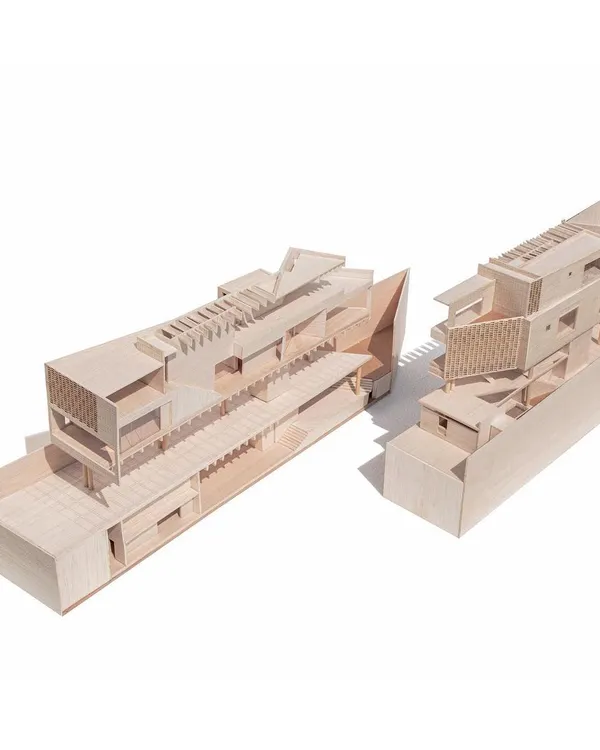
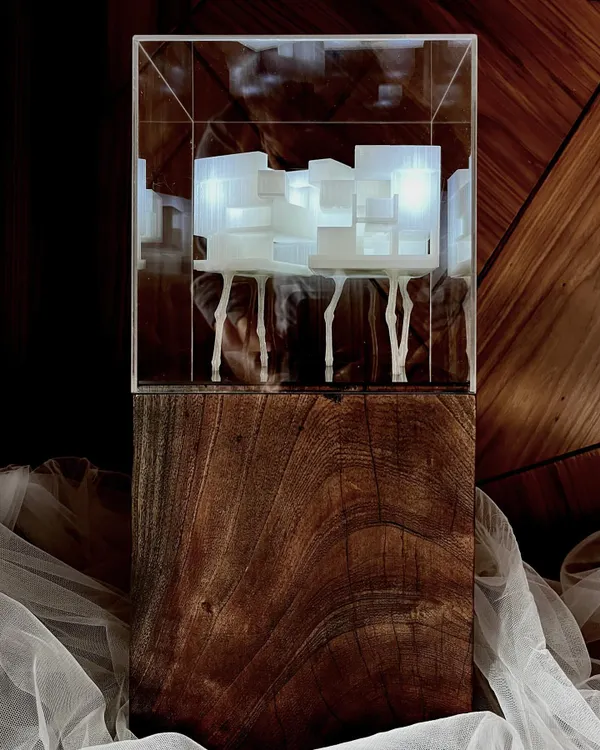
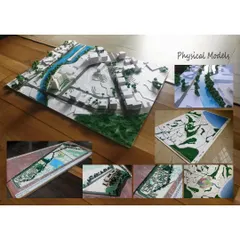
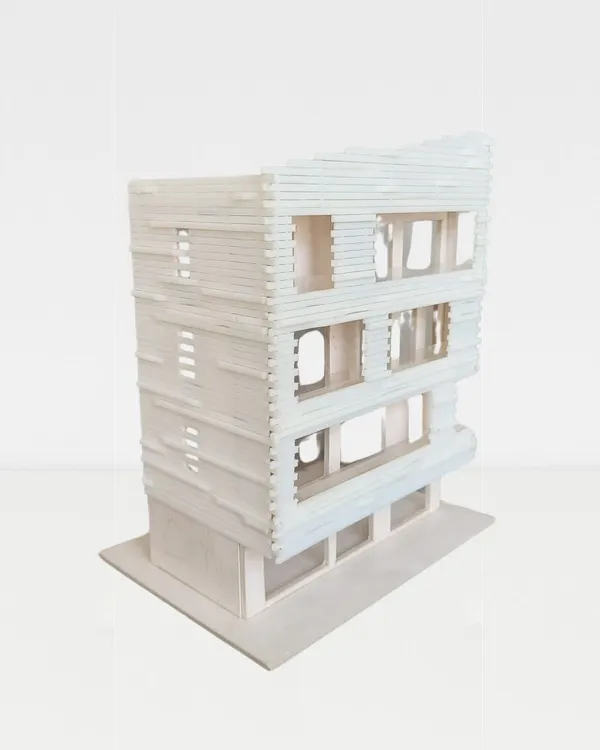
A 3D printed model of 'The Arcades Project'. Models like this are crucial for studying form, volume, and light. Here, we reinterpreted familiar arches and pitched roofs in unfamiliar ways.
This is a part-model of a public space project, exploring how to reinvent a typically mundane urban typology. The 3D printed model allows us to study the volumetric and spatial qualities of our concept.
Before designing any intervention, we conduct extensive contextual studies. This drawing analyzes the organic patterns of growth in a peri-urban site in Maharashtra, teasing out existing social and spatial networks.
Our contextual studies map not just buildings, but how people use the spaces between them. This informs our master planning for new speculative urban interventions.
A diagrammatic animation showing the conceptual development of 'Coilspace'. We use such diagrams to clearly articulate the step-by-step logic behind our design decisions, from unit arrangement to the thickening of corridors.
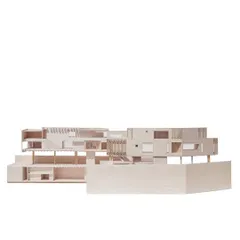
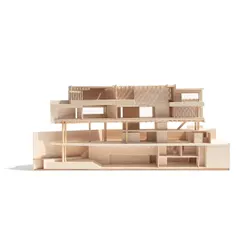
A studio vignette showing a detailed sectional model for a housing project. We combine materials like 3D printed PLA and wood to study the relationship between different building components.
This diagram maps key features and activities across the 35-acre site, forming the analytical foundation for our proposed master plan.
Our studies document the informal economies and social spaces, like street markets, that define the character of a neighborhood.
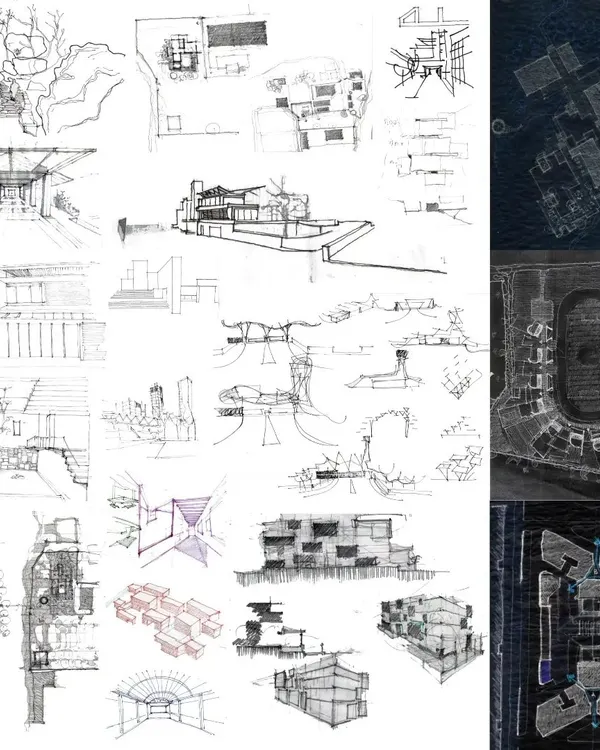
These drawings are not just representations, but analytical tools that help us understand the existing urban fabric before we propose to add to it.
The process of drawing helps us to internalize the complex relationships between buildings, open spaces, and human activity on a site.
About Design Process: Models & Diagrams
We believe architecture begins long before construction. In our studio, we use 3D printed models and detailed sectional drawings to test the interplay of light, volume, and material. When you see a model of an arcade or a housing block, you are looking at our attempt to solve complex spatial problems, like circulation or sunlight, before they ever reach the site.
Our design process is rooted in the philosophy of the Thinking Hand. We reject the idea that a design can be generated purely through software. Instead, we engage in a messy, tactile dialogue with our concepts. This starts with extensive contextual studies, where we map not just the buildings on a site, but the organic social and economic networks that govern how people use the space.
By documenting everything from peri-urban growth patterns to existing heritage structures, we ensure our interventions are responsive rather than intrusive.
The Role of Models
Models act as a bridge between the abstract and the physical. We utilize a mix of 3D printing and traditional materials like wood to study volumetric relationships. This helps us refine:
- Circulation flows: Testing how residents move through a campus or a co-living hostel.
- Micro-climatic responses: Using sun-path diagrams to design shading and natural ventilation strategies.
- Typological reinvention: Breaking down mundane building types into something more interactive and human-centric.
Whether we are master planning a 35-acre greenfield site or performing an adaptive reuse intervention on a heritage building, this analytical foundation ensures that our designs are not just visually compelling, but functionally resilient. We invite you to explore these diagrams and models to see how we translate complex site data into clear, habitable environments.
Similar work from other experts
Browse through Curated picks from other experts on mytribe
 13
13
Architectural Design Process: From Sketches to Physical Models
 8
8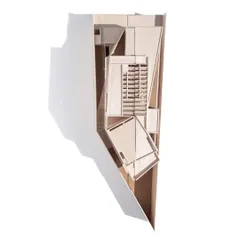
Our Architectural Design Process and Vision
 6
6
Architectural Design and Spatial Visualization
 6
6
Our Architectural Design Process
 13
13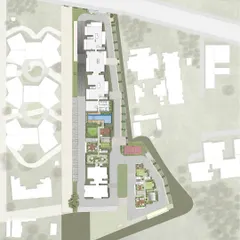
Our Design Process: From Concept to Construction
 10
10
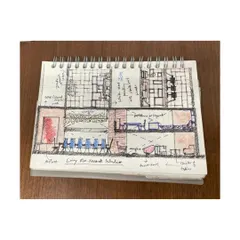
Our Architectural Design Process: From Sketch to Structure
More from Urban Design & Master Planning by Thirdspace
More services by Thirdspace