Our Architectural Design Process: From Sketch to Structure
Architecture is rarely a linear path. We pull back the curtain on how we move from a blank sketchbook to a finished building through constant collaboration and physical exploration.
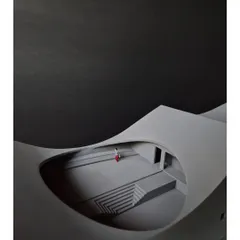
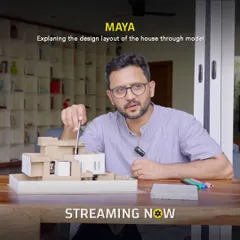
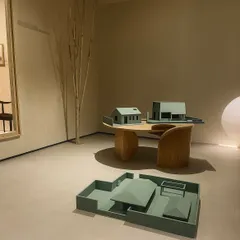
Physical models are an integral part of our design process. This model allows us to study the building's form, facade articulation, and the play of light and shadow in a tangible way that drawings cannot capture.
A conceptual massing model helps us explore the fundamental volumes and relationships of a building's design. It is a tool for quick, intuitive exploration of architectural form.
This detailed facade model allows us to test different material finishes and structural patterns. Working with physical models brings the entire team into a shared conversation, making abstract ideas tangible.
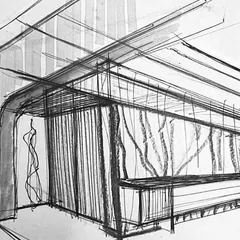
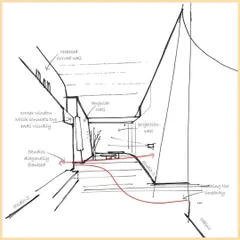
A cross-section sketch from a designer's notebook. These drawings are crucial for working out interior layouts, spatial relationships, and the human scale of a project.
Material selection is a critical step where we define the tactile and visual character of a space. Here, a wide array of glass, wood, and metal samples are reviewed to find the perfect palette.
Our team carefully inspects hardware samples, such as door handles. This meticulous attention to detail ensures that every component of the building, no matter how small, aligns with the overall design vision.
Construction is underway at AWE India School in Rajasthan. This image shows the foundation work, with rebar cages for the columns marking the first transition from design drawings to physical reality.
A closer view of the column footings at the AWE India School construction site. This stage establishes the structural grid that will support the entire building.
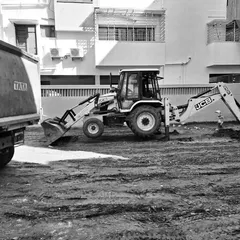
The initial earthwork and site preparation at AWE India School. Every project begins with a deep understanding of the land it will be built upon.
The architect's desk, showing floor plans and a blank sketchbook. This represents the continuous cycle of our work, moving between detailed technical drawings and the open possibilities of a new idea.
About Our Process: From Sketch to Structure
We do not rely solely on digital renders because they can feel static. Instead, we build physical massing models for every project in our Lado Sarai studio. This process is not for client presentation, but for our design team to walk around the building, test how the light hits a facade, and ensure the proportions make sense before a single brick is laid.
The Lifecycle of an Idea
At team3, the journey from a concept to a completed structure is rarely linear. We view our design process as an iterative loop of sketching, building, and debating.
The Power of the Physical
Before we touch CAD software, we spend time at the sketching desk. Cross-sections, floor plans, and spatial layouts begin on paper. Once we have a direction, we move to scale modeling. Whether it is a school in Rajasthan or a private home, these models allow us to study the building's form, facade articulation, and the play of light and shadow in a way that screen-based 3D models cannot capture. It forces us to confront structural realities early.
Materiality and Selection
Design is only as good as the materials that ground it. We hold regular material review sessions where we look at everything from flooring samples like Kota stone to the specific hardware on door handles. We test textures and finishes against real-world lighting conditions, ensuring that what looks good on paper feels right in a space.
From Office to Site
Our process doesn't end at the drawing board. We stay involved through construction, ensuring the vision translates to reality. You will often find our team on-site inspecting column footings or checking the structural grid against our plans. This hands-on involvement—what we call our 'on-site translation'—is how we manage complex builds without losing the intent behind the original design. By bridging the gap between the studio sketches and the construction site, we ensure the final built environment is sustainable, functional, and deeply tied to its context.
Similar work from other experts
Browse through Curated picks from other experts on mytribe
Architectural Design Process: From Idea to Form
Our Architecture Design Process: From Sketch to Built Reality
The Design Journey: From Sketch to Structure
 19
19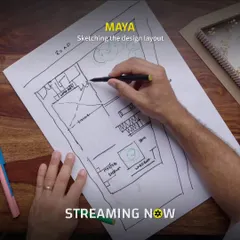
From Sketch to Structure: Our Design Process
The Design Journey: From Sketch to Structure
From Sketch to Structure: Our Architectural Process
More from Institutional Architecture by Team3