Montessori Math: Helping Children Understand Numbers Naturally
At Siksha, we do not use worksheets to teach math. Children learn by holding numbers in their hands, turning abstract concepts into physical reality.
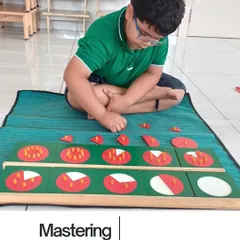
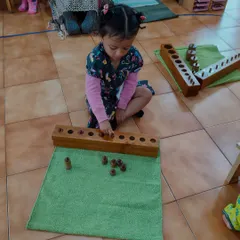
This is the Spindle Box, a key Montessori math material. It helps children connect a numeral with its actual quantity. The empty "0" compartment is a powerful, concrete introduction to the concept of zero.
Cards and Counters is a classic math activity that reinforces number recognition and one-to-one correspondence. By placing the correct number of counters next to each numeral, the child gets a physical sense of quantity.
About Mathematics: Discovering Numbers in the Real World
You will not see rows of desks here. Instead, your child works with concrete materials like the Spindle Box and Cards and Counters to understand quantity. By physically placing objects into compartments, they build an intuitive grasp of math that worksheets simply cannot teach.
In a conventional classroom, math is often a series of abstract symbols on a worksheet. At Siksha, we take a different path. We believe that for a child aged 2.5 to 6, true understanding comes from movement and touch. When a child holds the wooden spindles in the Spindle Box, they are not just memorizing the digit '5'; they are feeling the physical weight of five individual units.
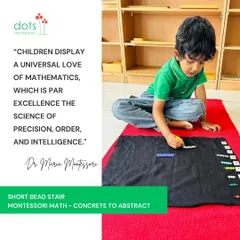
This transition from the concrete to the abstract is the heartbeat of our math program in BTM Layout and S.G. Palya. We use a sequence of specific materials that build number sense layer by layer. First, we introduce the concept of quantity with manipulatives like Cards and Counters. As children progress, these materials grow more complex, leading them naturally into operations like addition and subtraction without the pressure of rote memorization.
We avoid flashcards and rapid-fire drills. Instead, we provide the time for 'work cycles' where your child can focus deeply, uninterrupted. This builds concentration and confidence. Whether it is sorting items to understand odd and even numbers or using the bead materials to grasp decimal systems, our goal is to help your child see math as a logical, orderly part of their world. If you are looking for a foundational approach that respects your child's pace, we would love to show you how our prepared environment makes this possible.
Similar work from other experts
Browse through Curated picks from other experts on mytribe
Montessori Mathematics: Hands-on Learning for Kids
Montessori Language & Math: Hands-On Learning
 59
59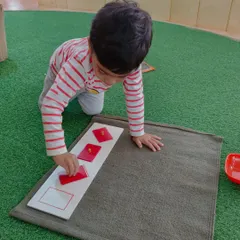
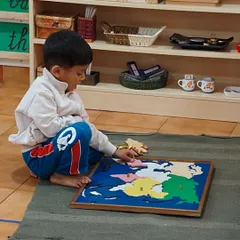
Hands-On Montessori Learning: How Children Build Real Skills
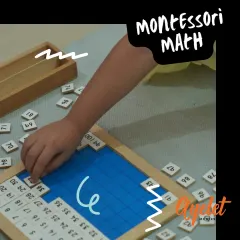
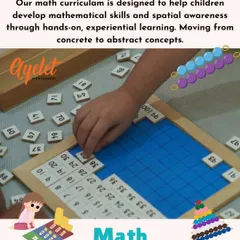
Montessori Learning Materials for Early Childhood
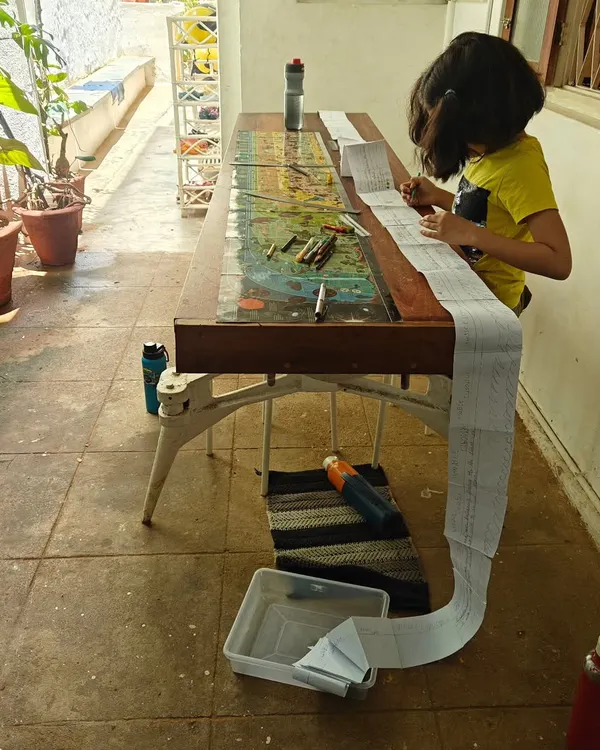 20
20

Learning Mathematics Through Discovery and Wonder
Sensory and Cognitive Learning for Preschoolers
More from Montessori Preschool & Kindergarten (Ages 2.5-6) by Siksha Montessori
More services by Siksha Montessori