Montessori Language & Math: Hands-On Learning
Language and mathematics become intuitive when they are tangible. We use tactile materials like sandpaper letters and bead chains to help children build a concrete understanding of concepts before they ever pick up a pencil.
This video explains why we introduce cursive script first. The continuous flow of cursive writing helps train the brain, prevents letter reversals (like b and d), and develops fine motor dexterity.
An infographic explaining why kids love miniatures. These small, realistic replicas connect play to the real world and make learning vocabulary and letter sounds fun and engaging.
This graphic shows game variations for a coin sorting activity. Asking a child to show a quantity in coins or count a random set turns a simple task into a practical math lesson.
An infographic detailing the Language curriculum, which develops reading, grammar, and handwriting, progressing from sounds to word building with the movable alphabet.
This graphic explains our Mathematics curriculum, where concepts are introduced through bead work and cards, helping children learn operations like addition and subtraction.
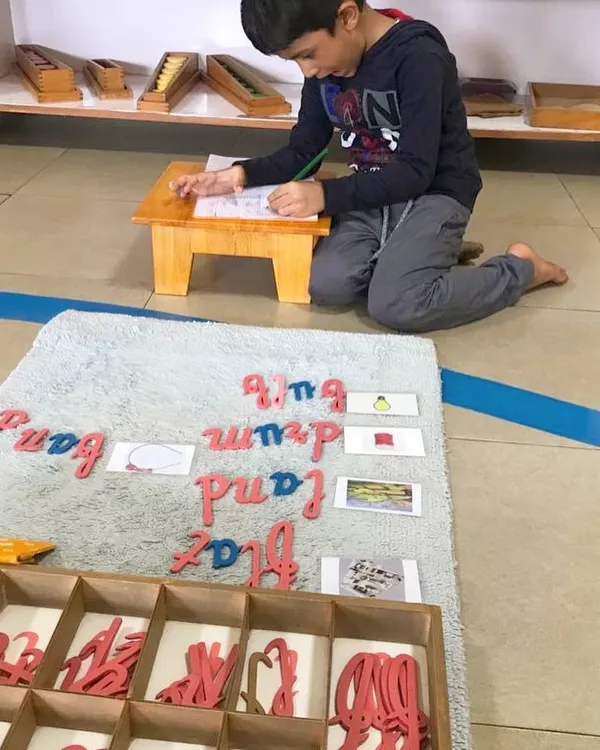
This image explains how children pair language miniatures with the movable alphabet to practice early reading skills, matching objects to their corresponding letter sounds.
An infographic describing a "hide and seek" game with miniatures. This scavenger hunt helps children learn vocabulary and object recognition in a playful way.
This graphic defines Montessori language miniatures as small, realistic replicas of everyday objects used to connect spoken and written language with real-world items.
This image provides instructions for a coin sorting activity, a practical way to help children classify objects and prepare for math work like counting and addition.
An infographic listing the simple materials needed for a coin sorting activity: a tray, bowls, and coins of different values.
About A World of Words & Numbers: Language & Math
We choose to introduce cursive script before print for our early learners. This is because cursive allows for a continuous flow of movement that helps children integrate visual and tactile information more effectively. It also naturally prevents common letter reversals, such as confusing the letters 'b' and 'd', because the pencil does not lift from the page during the initial letter formation.
How We Build Language Skills
In our classrooms, writing does not start with a pencil and paper. It begins with the hand and the senses. We introduce Sandpaper Letters to help children feel the shape of each letter, associating the sound with the physical texture. Once they internalize these shapes, we use the Movable Alphabet. This allows children to compose words and express their thoughts before they have mastered the fine motor control required for handwriting. By using miniatures—small, realistic replicas of objects—we bridge the gap between spoken words and written labels, making vocabulary acquisition a playful, context-driven experience.
Mathematics as a Concrete Reality
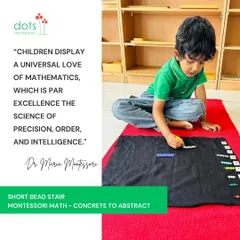
Abstract math concepts can be difficult, so we make them visible. We teach math using concrete materials rather than abstract symbols on a page. When a child learns the decimal system, they work with beads and cards to touch and count quantities. They are not just memorizing that '10' is a number; they are holding a bar of ten beads. This physical engagement helps them grasp operations like addition, subtraction, and multiplication intuitively. They see the relationship between quantity and symbol before they ever write an equation.
The Role of the Environment
Our Kalyan Nagar school provides the structure that allows this self-directed learning to happen. Every material is placed at a height that is accessible to the child, encouraging them to choose their own work and repeat it until they feel confident. This repetition builds concentration and a sense of mastery that goes beyond just learning a subject. It builds a child who believes they are capable of figuring things out for themselves.
Similar work from other experts
Browse through Curated picks from other experts on mytribe
 8
8
Hands-On Montessori Learning for Children
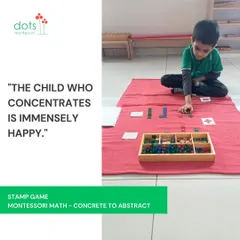
Mastering Montessori Math Concepts
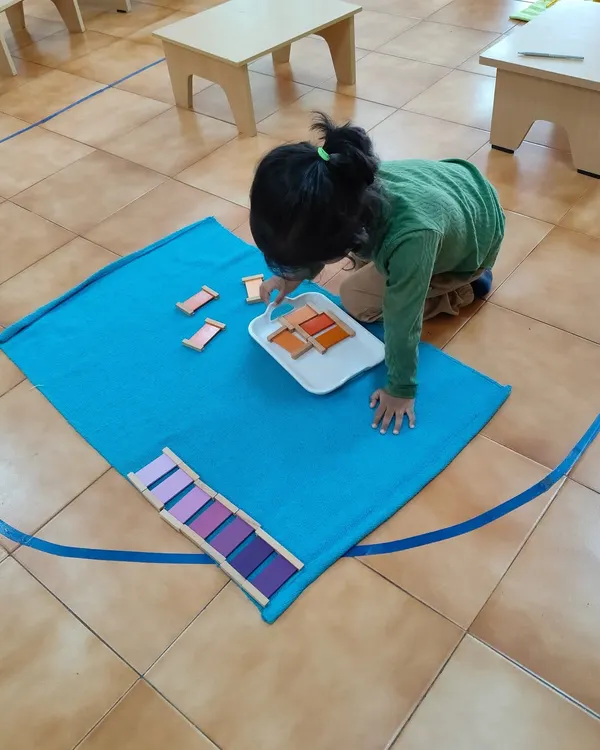 59
59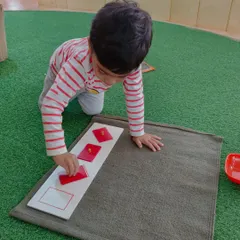
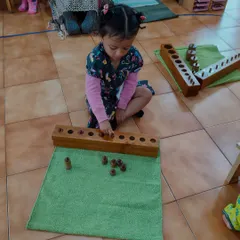
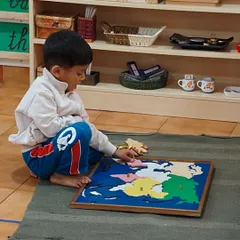
Hands-On Montessori Learning: How Children Build Real Skills
Montessori Academic Foundations in HSR Layout
Sensory and Cognitive Learning for Preschoolers
 37
37
Building Literacy and Numeracy Skills Through Play
More from Montessori School by Kriya Global Montessori
More services by Kriya Global Montessori