Hands-On Montessori Learning: How Children Build Real Skills
Step into our classrooms and see how children use tactile materials to grasp complex concepts like math, geography, and language at their own pace.
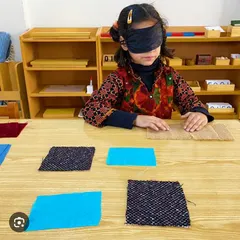
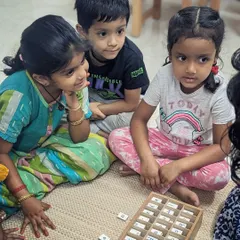
A child works with the color tablets, a classic sensorial material. This activity refines the chromatic sense, helping her to perceive the subtle differences in color shades. It is purposeful work that builds concentration and a keen eye for detail.
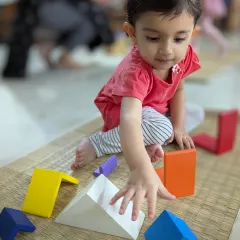
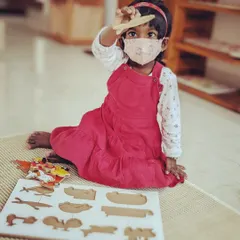
This young learner is focused on a geometric puzzle, developing fine motor skills and visual discrimination. Each piece fits perfectly, giving the child instant feedback and a sense of accomplishment.
Working with the knobbed cylinders, this child is learning to distinguish between different dimensions. This sensorial activity prepares the mind for mathematical concepts of size, order, and sequence.
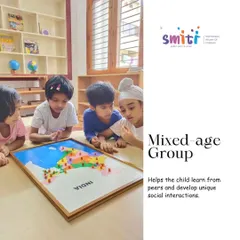
Exploring the world, one continent at a time. The puzzle map is a wonderful hands-on tool for geography, helping children learn the names and shapes of the continents in a tangible way.
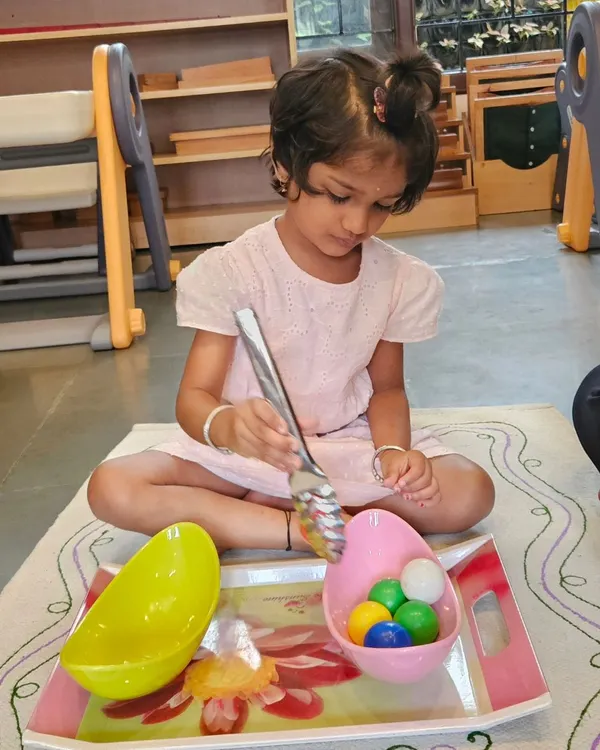
Bead stringing is more than just play. It is a fantastic activity for developing fine motor control, hand-eye coordination, and the ability to follow a pattern.
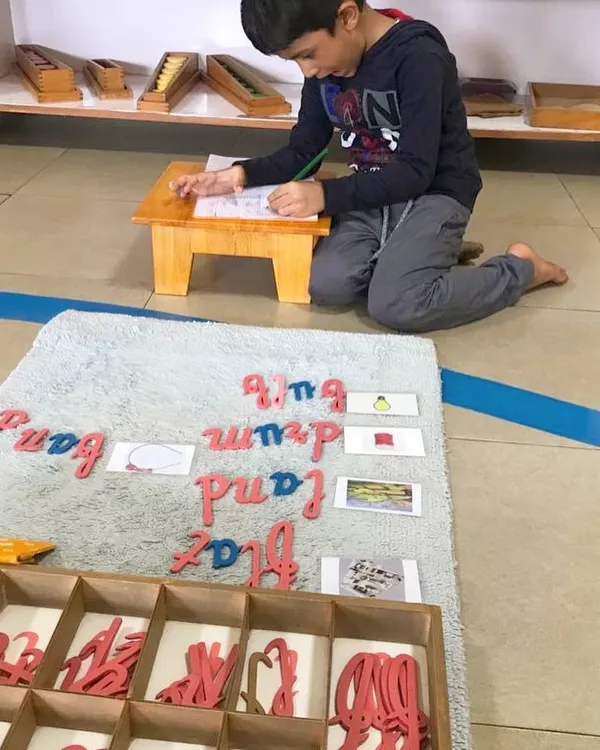
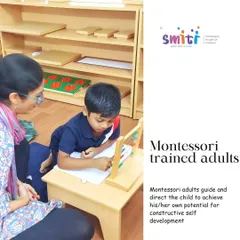
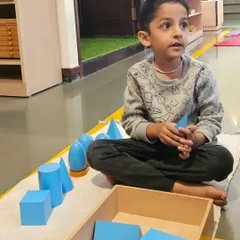
A moment of quiet concentration with a language material. The child is working independently, absorbed in his task. This is the deep, focused learning that the Montessori method nurtures.
This young girl is working with the geometric cabinet, matching shapes to their insets. This sensorial work builds a foundation for geometry and hones visual perception skills.
Visual math makes abstract concepts concrete. Here, a child uses number cards to understand the decimal system, laying out quantities from one to one thousand. This hands-on approach builds a deep, intuitive sense of numbers.
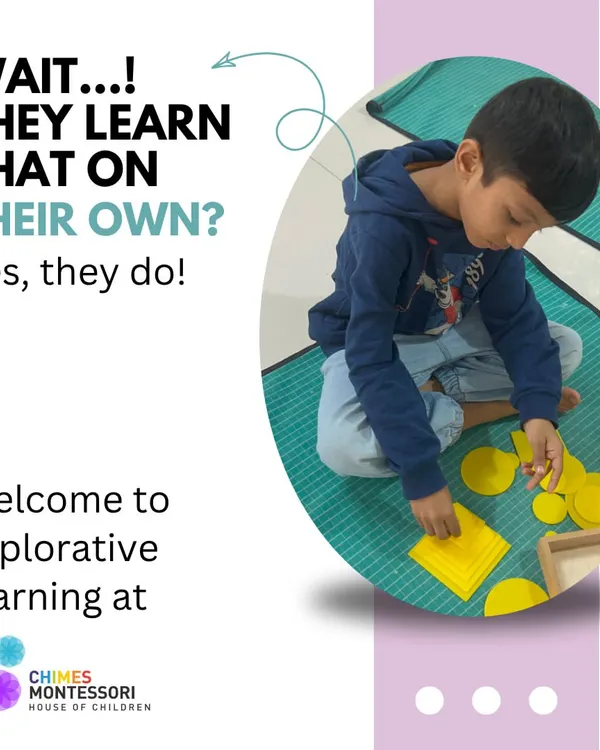
Another example of visual math in action. This child is using materials to explore geometric shapes and their properties, learning through touch and sight rather than just memorization.
Little hands, busy minds. A close-up of a child working with the puzzle map of India, learning about the states and their placement through tactile exploration.
About Hands-On Learning: The Montessori Method in Action
You won't find rows of desks here. Instead, children work with specific wooden materials like the Pink Tower or Golden Beads on mats spread across the floor. This is not just play; it is a deliberate, tactile process where your child explores, moves, and repeats an activity until they truly internalize a concept, rather than just memorizing a rule for a test.
Beyond Rote Learning
In a traditional classroom, a child might look at a picture of a continent or memorize the definition of a fraction. Here in our Sarjapur Road campus, they hold the continent in their hands using our puzzle maps. They physically stack blocks to understand the decimal system. By engaging the senses, the child creates a mental map of the concept that is much harder to forget.
The Purpose Behind the Materials
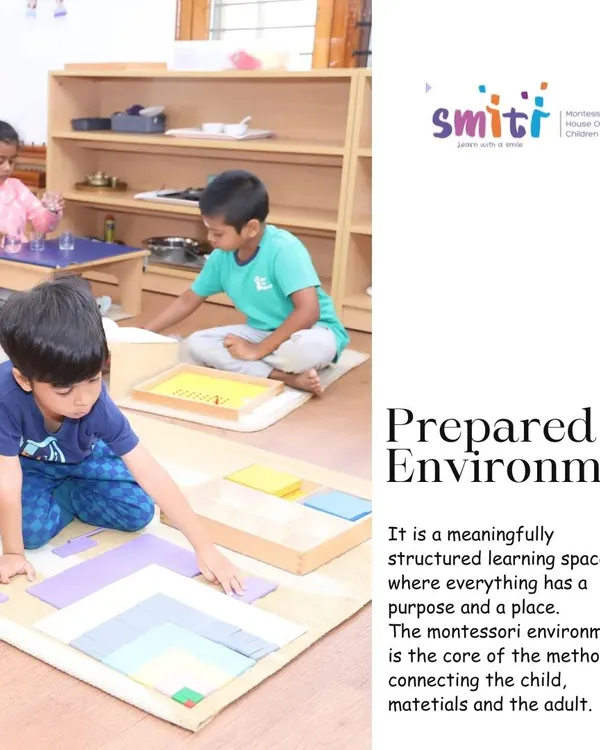
Every item you see on our shelves has a specific purpose. We call this the 'prepared environment'.
- Sensorial Materials: Tools like the knobbed cylinders and color tablets help children classify the world around them, refining their ability to distinguish size, sound, and color.
- Visual Math: When a child uses number cards and beads, they aren't guessing at math; they are seeing it. They learn addition, subtraction, and multiplication by actually manipulating quantities.
- Language Preparation: From sandpaper letters to the movable alphabet, we break language down into sounds and symbols, preparing the hand and mind for writing and reading naturally.
Why This Matters
This hands-on approach builds more than just academic knowledge. It builds concentration, fine motor skills, and confidence. When a child successfully completes a complex task without an adult doing it for them, they gain a sense of independence. That 'I did it myself' moment is the heartbeat of our Montessori method. We are simply here to guide them, providing the environment they need to discover their own potential.
Similar work from other experts
Browse through Curated picks from other experts on mytribe
 66
66
Learning by Doing: The Montessori Way
 8
8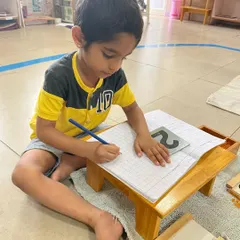
Hands-On Montessori Learning for Children
Hands-On Learning with the Montessori Method
The Montessori Method in Action
 54
54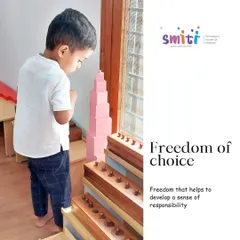
The Montessori Method in Action
 34
34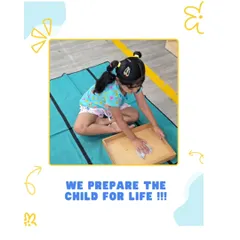
The Montessori Method in Action
More from Montessori Education Program by Nivriti Montessori
More services by Nivriti Montessori