Geometry and Spatial Awareness in Montessori
At Siksha, we don't just teach shapes; we help children feel them. Through hands-on Montessori materials, your child discovers geometry as a real, tangible part of their world.
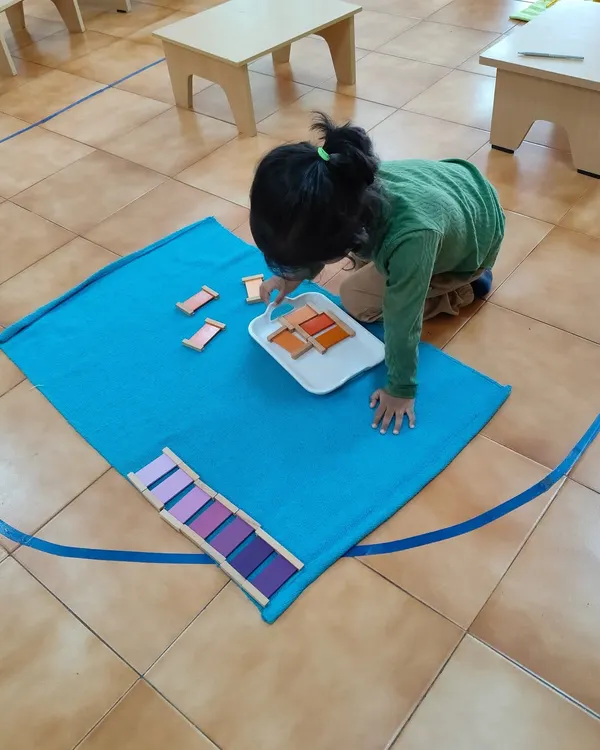
These are the Constructive Triangles. By combining different triangles, this child is discovering how they can form other shapes like squares and rectangles. It's a hands-on, problem-solving approach to learning geometry.
The Geometrical Cabinet is a sensorial introduction to plane geometry. As this child traces and places the shapes, she is learning their names and refining her visual discrimination skills, laying a solid foundation for future math.
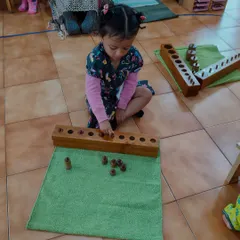
Working with the geometric insets from the cabinet, this child is developing a muscular memory of each shape. This tactile exploration is a key part of how we move from concrete understanding to abstract thought in geometry.
Working with the geometric insets from the cabinet, this child is developing a muscular memory of each shape. This tactile exploration is a key part of how we move from concrete understanding to abstract thought in geometry.
Our classroom is a hub of geometric exploration. This video shows children engaged with various materials, from puzzles to constructive triangles, all designed to build spatial awareness and a love for mathematical patterns.
About Geometry & Spatial Awareness
In our BTM Layout classroom, you will not see children memorizing formulas from textbooks. You will see them handling Constructive Triangles and tracing geometric insets from the Cabinet. By physically manipulating these shapes, they build muscular memory and spatial logic before they ever write a single line on paper.
Moving from Hands to Mind
Geometry is often taught as an abstract, visual subject. At Siksha, we approach it as a sensorial experience. We believe that if a child can hold a triangle, feel its edges, and see how it fits against a square, they internalize the concept far deeper than any worksheet could provide.
The Tools of Discovery
Our shelves are stocked with specific Montessori materials that guide this progression:
- The Geometrical Cabinet: This is where the journey starts. Children trace the wooden insets to build visual discrimination, learning the names of shapes—from circles to trapezoids—through touch.
- Constructive Triangles: These are a favorite in our BTM Layout center. Children take simple triangles and combine them to create new, complex shapes. It is a puzzle that teaches them how parts create a whole.
- The Power of Tactile Learning: By working with these materials, children develop the 'three-finger grip' and fine motor coordination, which are the hidden prerequisites for future writing.
Why This Matters for Your Child
When children explore geometry this way, they aren't just learning math; they are learning how to look at the world. They start noticing patterns in the environment, understanding spatial relationships, and building the patience required for problem-solving. This isn't just about preparing for school; it is about preparing for life, allowing them to bloom into confident, capable thinkers.
Similar work from other experts
Browse through Curated picks from other experts on mytribe
Sensory and Cognitive Learning for Preschoolers
Montessori Learning Materials for Early Childhood
 8
8
Exploring Montessori Materials: Tools for Deeper Learning
 59
59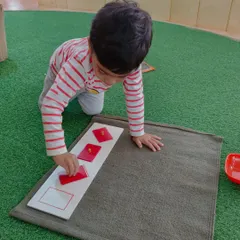
Hands-On Montessori Learning: How Children Build Real Skills
 4
4
Montessori Materials and Tools for Learning
Montessori Mathematics: Hands-on Learning for Kids
More from Montessori Preschool & Kindergarten (Ages 2.5-6) by Siksha Montessori
More services by Siksha Montessori