Scientific Sports Injury Assessment and Biomechanical Testing
Stop guessing with your recovery. At RSF, we use objective strength testing and biomechanical analysis to identify exactly why you are in pain and build a data-driven roadmap back to your sport.
We use a series of isometric hold tests, including the Bunkie Tests, to evaluate the endurance of specific muscular chains and overall core stability, helping us spot hidden imbalances.
For return-to-sport readiness after ACL surgery, we use objective tests like isokinetic strength testing to ensure the quadriceps and hamstrings are contracting optimally, aiming for at least 90% strength symmetry.
We use tools like jump mats to assess an athlete's readiness to return to sport, analyzing metrics like jump height, velocity, and reactive strength index to identify any remaining biomechanical deficits.
If you struggle with squat depth, we use simple mobility tests like the overhead squat and Thomas test to check for limitations in your hip and ankle flexibility that could be restricting your movement.
Our process is simple: we assess and test first. We evaluate your training load, measure recovery markers, and analyze your movement to calibrate a plan based on your real capacity.
Are you experiencing persistent pain or constantly modifying workouts? These are clear indicators that it's time for a professional physiotherapy assessment to get to the root of the problem.
If your recovery plan has become just telling yourself "it's not that bad," it's a sign you need a proper diagnosis. Ignoring pain can turn a small issue into a chronic one.
Pain that has lasted longer than your excuses is your body's signal that something is wrong. A professional assessment can identify the cause before it leads to a long-term setback.
If you find yourself modifying every workout to avoid discomfort, you are working around a problem, not fixing it. This compensation can lead to new imbalances and further injury.
About Our Assessment Process: Finding the Root Cause
We do not rely on intuition or guessing. During an assessment session, we use handheld dynamometers to quantify muscle force in kilograms and the Bunkie Series to rigorously test your core and muscular chain endurance. This objective data helps us pinpoint whether your discomfort stems from a simple muscle strain or a deeper biomechanical imbalance, allowing us to build a rehabilitation program grounded in your actual physical capacity rather than a generic protocol.
Why You Need an Objective Assessment
Many recovery plans fail because they treat the symptom rather than the source. If you have been caught in the pain-rest-repeat cycle, it is usually because the underlying mechanical issue was never identified. Our assessment process at our Koramangala and Jayamahal clinics is designed to provide clarity.
Our Methodology
We break down your assessment into three critical phases:
- Force Quantification: We use digital handheld dynamometers to measure precise muscle output in your quads, hamstrings, and hip muscles. This tells us exactly where you are weak and where you are strong, allowing us to track progress numerically.
- Movement Screening: We analyze your squat depth, single-leg stability, and landing mechanics. We look for signs of knee valgus or dynamic collapse that often lead to recurring injuries in sports like badminton, football, and cricket.
- Endurance Testing: Using the Bunkie Series and other isometric holds, we evaluate the stability of your muscular chains. Poor endurance in these chains is a common culprit for injuries that seem to appear out of nowhere.
Your Injury Roadmap
At the end of your 60-minute diagnostic session, you do not just get a diagnosis. You receive a structured Return-to-Sport timeline. Whether you are dealing with post-surgical ACL recovery, growth-related pain in young athletes, or persistent joint issues, this plan bridges the gap between rehabilitation and high-performance training. We ensure you leave with the knowledge of how to warm up correctly, manage your training load, and maintain your joint health.
Similar work from other experts
Browse through Curated picks from other experts on mytribe
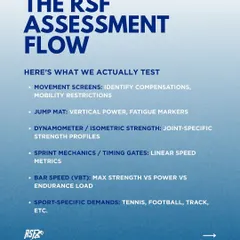
Our Data-Driven Sports Performance Assessment
 9
9

The Arch Method: Evidence-Based Physiotherapy and Injury Rehab
Our Approach: The Science of Movement and Recovery
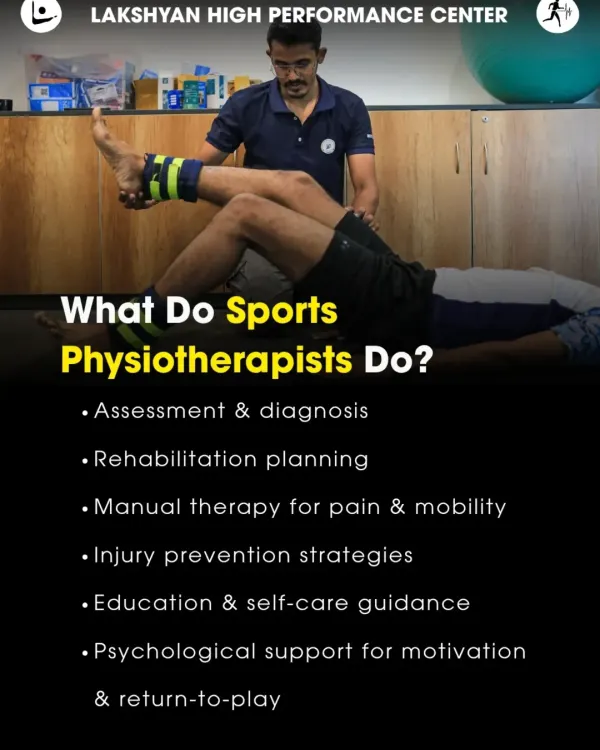 11
11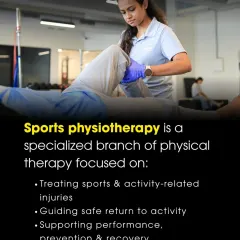


Sports Physiotherapy and Injury Rehabilitation in Bengaluru
Real Results in Injury Recovery and Corrective Training
Professional Physiotherapy and Performance Rehab
More from Physiotherapy & Injury Rehabilitation by Rapid Sport Fitness