Restorative Practice for Stress, Anxiety, and Fatigue
Utilizing the precise Iyengar method, these restorative sessions calm the nervous system and manage fatigue through supported, prop-assisted asanas.
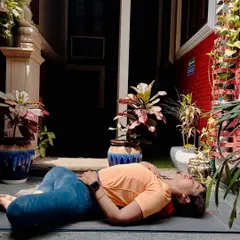
Supported Savasana on a Simhasana Box with weights on the thighs. This setup gently arches the upper back to open the chest, deepens the breath, and grounds the body to calm the nervous system.
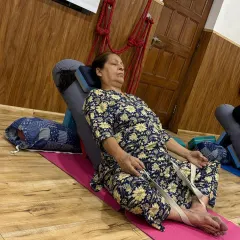
Supported Savasana on a Simhasana Box. This pose elevates Savasana from simply lying down to a therapeutic practice, enabling full surrender without muscular strain and supporting the natural curves of the spine.
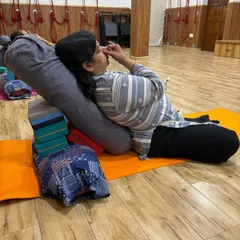
A demonstration of the correct way to enter bolster Setu Bandhasana Sarvangasana (Supported Bridge Pose). Proper entry ensures the spine lengthens, the shoulders release, and the nervous system calms down.
Students resting in Bhishmasana. This pose, designed for cardiac health, anxiety, and depression, elevates the chest to increase circulation and allows for a sense of surrender and letting go.
Setu Bandha Sarvangasana on a Simhasana Box. This asana establishes a healthy connection between body and mind. The brain remains tranquil while the expanded chest awakens the heart, allowing the process of purification to begin.
Part of a de-stress sequence: Adho Mukha Svanasana with head supported on a bolster. Supporting the head allows you to watch yourself from the inside, maintaining a detached attitude towards the body.
Part of a de-stress sequence: Supported Halasana on a chair. This pose calms the brain and nervous system, helping to relieve the physical and mental symptoms of stress.
Part of a de-stress sequence: A deep, supported backbend over a chair and bolsters. This level of support encourages complete relaxation and release, which is essential for managing chronic stress.
Part of a de-stress sequence: A supported forward bend over a chair. This quiets the mind and soothes the organs, creating a state of inner silence.
Part of a de-stress sequence: Supta Virasana (Reclining Hero Pose) over bolsters. This pose opens the chest and abdomen, promoting deep, restful breathing.
About Restorative Practice for Stress, Anxiety & Fatigue
I work with the 'how' of every pose, ensuring you understand why the prop support—whether it is a Simhasana Box or a chair—matters for your specific stress levels. It is a shift from active effort to intentional surrender, and we begin by assessing your current physical and mental state to build a sequence that actually regulates your nervous system, rather than just tiring the body further.
The Science of Support
Restorative yoga is not about passive 'resting'. In the Iyengar tradition, it is an active, methodical process of using props to support the body, allowing the nervous system to shift from the sympathetic (fight-or-flight) state to the parasympathetic (rest-and-digest) state. When you are suffering from chronic fatigue or high anxiety, the body is often locked in a cycle of tension. By using bolsters, blankets, and chairs, we create the necessary space for the chest to expand and the spine to decompress. This is not arbitrary; it is an adjustive science where the prop facilitates an alignment that the body cannot achieve on its own.
Addressing Chronic Fatigue & Anxiety
Whether you are dealing with burnout, hormonal imbalances, or chronic exhaustion, we address these not as abstract concepts but as physical manifestations. For example, poses like Viparita Karani (legs up the wall) are utilized to calm the brain and soothe the endocrine system. We focus on sequences that allow for deeper, restorative breathing, which is essential for quieting the mind. My studio in Katwaria Sarai is equipped with specialized infrastructure for this, but I also adapt these methods for your home using everyday furniture so you can maintain a consistent practice.
Precision in Practice
This is not a one-size-fits-all approach. Every session is an opportunity to observe the body from the inside. We do not rush. We remain alert while performing the asana, watching for the subtle signs of release in the facial muscles and the diaphragm. My role is to hold space and provide the technical cues—the 'why' behind every prop placement—so that you learn to cultivate your own practice of silence and surrender.
Similar work from other experts
Browse through Curated picks from other experts on mytribe
Restorative Yoga for Stress and Anxiety Relief
Restorative Yoga & Mindful Movement
 8
8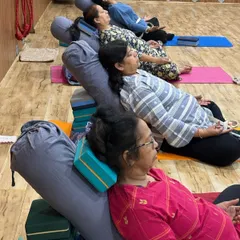
Restorative & Therapy Yoga: Gentle Healing & Relaxation
Yoga for Stress Relief and Mental Calm
 7
7
Meditative & Restorative Yoga to Reduce Stress and Tension
Yoga for Stress, Anxiety, and Deep Sleep
More from Therapeutic Yoga Sessions by Amina Sarkar Bharat Ram
More services by Amina Sarkar Bharat Ram