Sprinting & Starting Blocks Coaching
Mastering the explosive start and race mechanics. We break down your form, reaction time, and acceleration to shave those critical milliseconds off your time.
Athletes exploding from the starting blocks on the track. This is the foundation of a fast sprint.
This magical workout is designed to improve acceleration and the start. Here, athletes practice a chase drill to build explosive speed.
Mastering the 200m curve is a skill. I teach my athletes how to lean in, use their arms, and attack the exit to maintain speed through the turn.
A rainy day does not stop us. Here, my athletes are practicing their starts on a wet track, building mental toughness and adaptability.
Drills to get fast. A group of athletes practicing their sprint starts on the track, focusing on power and form.
Speed drills on the grass, focusing on quick turnover and reaction time. These micro-sprints are essential for building top-end speed.
Sprinting on a curve is about control and momentum. Here, an athlete practices the technique of leaning in and driving through the turn.
This drill is designed to improve reflexes, which are crucial for reacting to the starting gun and making quick adjustments during a race.
A competitive drill to improve acceleration. By having faster runners chase slower ones, everyone is pushed to accelerate at their maximum potential.
Learning the correct 'set' position is critical. I teach my athletes to keep their head up and body aligned to explode out of the blocks efficiently.
About The Art of Speed: Sprinting & Starts
A perfect 100m sprint starts before the gun even goes off. I don't just tell athletes to run faster; I focus on the 'set' position, your head alignment, and how you explode from the blocks. We use video analysis to pinpoint exactly where you are losing momentum, whether it is your arm drive or how you land your first stride. If you want to drop your timing, you have to be willing to break your form down and rebuild it from the ground up.
Building Explosive Power
Getting off the blocks is science, not luck. I train athletes to manage their body angle during the drive phase. If you stand up too early, you lose that explosive power. My drills utilize drag sleds and resistance bands to build the leg strength required to push against the track, not just run on it.
Mastering the Curve
When you hit the 200m or 400m, the curve changes everything. It is about leaning into the turn without breaking your rhythm. I teach kids how to use their arms to counteract centrifugal force, keeping the inside leg stable while attacking the exit. This is a technical skill that many beginners ignore.
Technical Precision
We spend hours on basic mechanics. Video playback at our Vasant Kunj and IIT Delhi tracks allows students to see their posture in real-time. Do you look down at the track or keep your head neutral? Is your arm drive crossing your midline? These small details are the difference between a personal best and a near miss.
The Right Mindset
This is high-intensity training. We do not do 'easy' days here because the track does not care how you feel. We use chase drills and competitive sprints to mimic race pressure, so when you finally stand on the track in a competition, you have already handled the nerves.
Similar work from other experts
Browse through Curated picks from other experts on mytribe
Sprint & Speed Development Coaching
Sprint and Speed Training for Athletes in Gurugram
Track Training and Speed Development
Running Form and Speed Training in Noida
 13
13
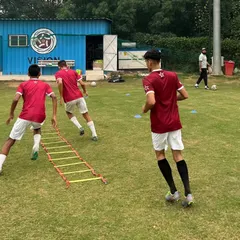
Speed and Agility Football Training in Delhi NCR
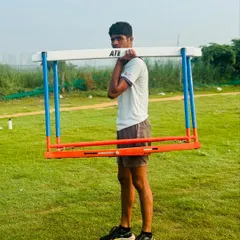
Hurdle Training in Greater Noida: Master Your Technique
More from Youth Athletics Program by Amit Khanna
More services by Amit Khanna