Master Your Handstand: Progressive Drills & Training
Learning to balance on your hands is a skill built with structure, not luck. I break down the process with foundation work, wrist prep, and wall-assisted drills to help you gain the strength and control needed to get upside down safely.
Handstand training isn't linear, it's a skill that needs structure. This video covers four essential drills for beginners, from wrist warm-ups to using the wall effectively. Remember, the wall is a tool, not a crutch.
The toe pull is a key drill for learning to shift your weight and find balance. Here, I demonstrate how to use the wall as a guide to pull your toes off, engage your fingers, and experience a moment of freestanding balance.
Similar to the toe pull, the heel pull teaches you to control your balance by shifting your weight away from the wall. This drill is crucial for developing the proprioception needed to stay balanced in a freestanding handstand.
The chest-to-wall hold is a fundamental exercise for building the right alignment and shoulder endurance for a handstand. This video shows how to properly engage your body to get the most out of the hold.
A straight body line is essential for an efficient handstand. This body line drill, done on the floor, helps you understand and feel the full-body tension required when you're upside down.
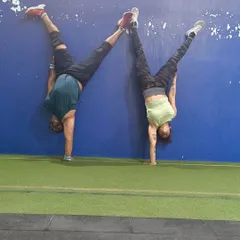
Repetition is key. Here I am practicing chest-to-wall holds, focusing on maintaining a straight line from my hands to my feet. Consistent practice of these foundational drills is what builds a solid handstand.
Kicking up to a handstand can be intimidating, but breaking it down makes it manageable. This tutorial shows the step-by-step mechanics of a proper kick-up, helping you build the coordination and confidence to get upside down.
This is a closer look at the toe pull drill. Notice the subtle shoulder lean and finger pressure required to lift off the wall. Mastering this small movement is a huge step toward finding your balance.
Many people make the mistake of just leaning against the wall in a chest-to-wall hold. This video explains the common errors and shows how to actively push away from the wall to build strength and proper alignment.
At Troop HQ, our handstand classes are small to ensure everyone gets personalized attention. Here, I'm writing out the day's drills, which always include a mix of strength, mobility, and balance work to help you progress safely.
About The Handstand Path: Drills & Progressions
The secret to a freestanding handstand isn't kicking up harder, it is building awareness upside down. We focus on the 'toe pull' drill, learning to shift your weight into your fingers rather than letting your shoulders collapse. In our small group sessions at Troop HQ, I watch your alignment frame-by-frame to correct that subtle lumbar arch before it becomes a habit.
Most people try to jump straight to holding a freestanding handstand in the middle of the room. It rarely works. My own handstand journey took three years of frustration, falls, and consistent, boring repetition. I want to help you skip the three-year trial and error phase by focusing on the fundamentals.
Why we start with the wall
The wall is a diagnostic tool, not a crutch. We use chest-to-wall holds to force your shoulders into an open, overhead position and build the endurance required to stay inverted. If you are just leaning on the wall with your chest, you are not training balance. We teach you to push away, engage your scapula, and keep your ribs tucked.
The drills that move the needle
- Wrist Preparation: Before going upside down, we spend 10 minutes prepping your wrists. They are not used to bearing your full body weight. We build that load tolerance gradually.
- Toe Pulls: This is where you learn to balance. By shifting weight into your fingertips, you learn to peel your toes off the wall and experience true, freestanding alignment.
- Body Line Drills: If your core is soft, your handstand will be shaky. We work on hollow-body tension on the floor so you understand the straight line you need to maintain while upside down.
Progress in calisthenics is rarely linear. You will have days where you feel solid and days where you cannot kick up to save your life. That is completely normal. My job is not to push you until you crash, but to help you build a body that lasts and moves with control.
Similar work from other experts
Browse through Curated picks from other experts on mytribe
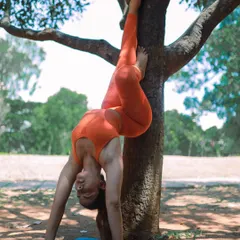
Master the Handstand: Expert Coaching
Master the Handstand and Inversion Training
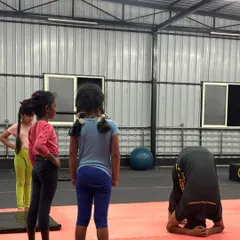
Handstand Drills and Balance Training
Mastering Handstands and Inversions
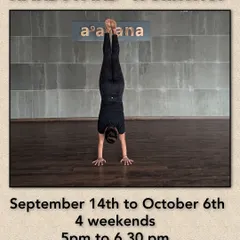

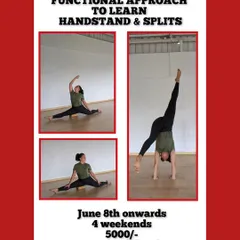
Handstand & Inversion Workshops
Master Your Bodyweight: Gymnastics & Skill Training in Yemalur
More from Gymnastics & Calisthenics Training by The Troop Fit
More services by The Troop Fit