My Handstand Journey: Building Balance from Scratch
It took me three years to find my balance. This is the raw process of learning handstands, the falls, and the discipline it takes to stay upright.
The goal was to hold it for a minute. This was one of my attempts, getting closer each time. Tracking your sessions, even the wobbly ones, is so important for seeing how far you've come.
Practicing handstands on the fittest street in the world in Thailand. The change of scenery was great, but the principles of balance and control remain the same no matter where you are.
A quiet moment of practice at Troop HQ. Some days the training feels great, other days it's a struggle. The key is to just show up and put in the work.
Closing out the year with a solid handstand hold at my own gym. This picture represents a huge personal and professional milestone for me, all built on the foundation of consistency.
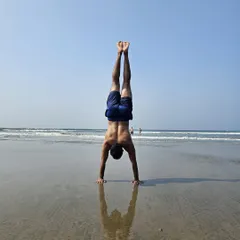
There's nothing like practicing a handstand with an ocean view. Even on vacation, I try to get some practice in. It's a skill that requires constant attention, but the payoff is worth it.
Another handstand in front of the Troop logo. This image is a reminder of how my personal fitness journey and the creation of this community space are completely intertwined.
Balance is starting to feel more natural. In this session, I could feel myself making small corrections to stay up longer. These are the breakthrough moments that make all the practice worthwhile.
This video sums up nearly three years of my handstand journey, from wobbly wall holds to finding balance in the middle of the room. It’s a testament to perseverance and trusting the process.
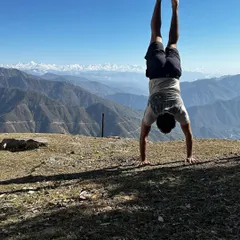
Taking my handstand practice outdoors. Training in nature is a great way to recharge and connect with your movement in a different environment.
A still from my outdoor handstand session. The uneven ground adds an extra challenge, forcing more engagement and focus to maintain balance.
About My Handstand Journey
I didn't start with a free-standing hold. I spent months on wrist preparation and wall-facing holds because rushing leads to tennis elbow, not progress. Every session at Troop HQ starts with the same fundamental wrist and shoulder drills I used to build my own capacity. If you want to own your movement, you have to build the base before you worry about the balance.
The Truth About Handstands
Most people look at a handstand and see a single moment of balance. I look at it and see three years of falling, correcting, and repeating the same drills until they became second nature. My journey wasn't linear. There were months where I felt stuck, weeks with below-average training, and plenty of days where I felt like a total beginner.
My Methodology at Troop HQ
I built this space in Domlur because I wanted a place that focused on sustainable fitness. We don't chase hacks or shortcuts. Here is how I approach handstand training:
- Wrist and Shoulder Prep: This is non-negotiable. Before you go upside down, we condition your wrists and activate your shoulders. This prevents injuries like lateral epicondylitis and prepares your joints for the load.
- Wall-Facing Drills: The wall is your best friend. It teaches you the right alignment, the pelvic tilt, and how to fight the rib flare. It is where you build confidence.
- Balance Development: Once you have the strength, we move to the center of the room. This is where you learn to make the micro-adjustments needed to stay upright.
FAQ
Do I need a gymnastics background to start? No. I started as a complete noob and took three years to master the hold. We scale every drill to your current level.
How often should I train? Consistency beats intensity. Even 15 minutes of dedicated practice at home or in the gym is better than one long, exhausting session once a week.
What if I get injured? We prioritize injury prevention. We use isometric holds and smart, progressive loading to keep you in the game. If you have an existing issue, we adjust the protocol to suit your recovery.
Similar work from other experts
Browse through Curated picks from other experts on mytribe
Defying Gravity: Handstand Coaching & Practice
Master the Handstand: Expert Coaching
Mastering Handstands and Inversions
My 30-Day Inversion Challenge: A Real Journey
Master the Handstand and Inversion Training
Mastering Calisthenics & Handstands
More from Gymnastics & Calisthenics Training by The Troop Fit
More services by The Troop Fit