Biophilic Design & Healing Landscapes for Hospitals
We integrate nature directly into hospital architecture, using light, greenery, and strategic courtyards to reduce stress and actively support the healing process for patients and staff.
The landscaped central courtyard at Paras Yash Kothari Hospital serves as a green lung for the facility. It provides a serene space for reflection and social interaction, while allowing natural light to permeate the surrounding clinical areas.
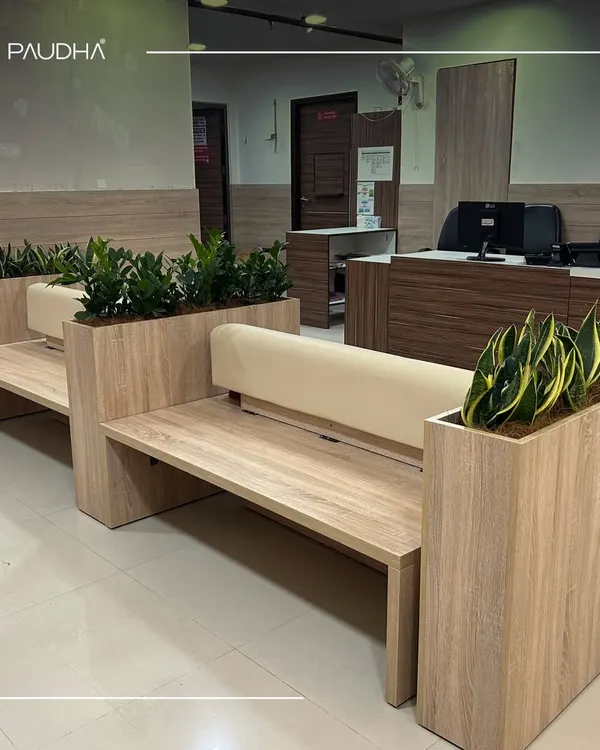
Patients and staff can find a moment of peace in the healing garden at Paras Yash Kothari Hospital. The wooden benches and integrated planters create a tactile, natural environment that encourages rest and reduces stress.
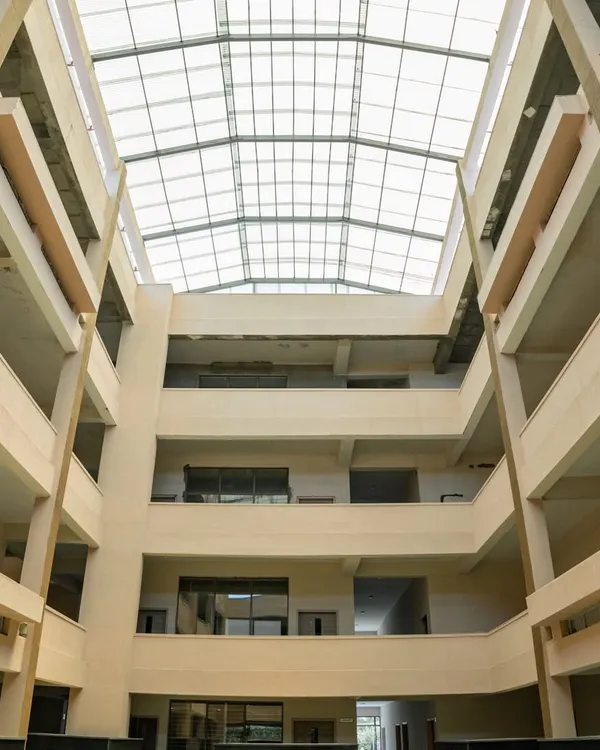
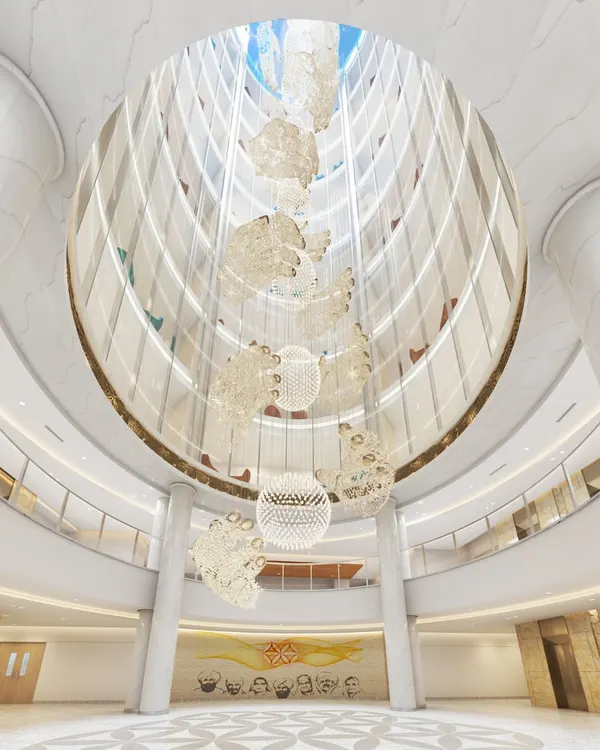
At Pragma Medical Institute, a sunlit central atrium with a glass roof creates a vibrant, year-round garden. This biophilic centerpiece serves as a natural orientation point and a calming destination for patients and visitors.
This image from Pragma Medical Institute demonstrates our use of biophilia to reduce stress. The indoor green space, visible from multiple levels, brings nature indoors and creates a welcoming environment for loved ones to gather.
The open-to-sky central courtyard at Sarvesh Health City provides a vital space for fresh air and natural light. This green oasis anchors the hospital's circulation and offers a visual and emotional respite from clinical interiors.
Another view of the courtyard at Sarvesh Health City, showing how we use landscaping and open space to create community interaction and break from the regulated layouts of hospital interiors.
The courtyard at Sarvesh Health City, surrounded by the building's facade, offers a protected green space for patients and staff. This design ensures that a connection to nature is always just a few steps away.
This video showcases the green terraces integrated into the design of Max Nirogi Hospital. These first-of-its-kind elevated gardens create a restorative environment, offering patients and caregivers a unique connection to nature within a high-rise urban hospital.
Strategic openings and light wells are key to reducing stress through design. This landscaped seating area in a hospital atrium provides a calming, restorative space that alleviates anxiety for patients and caregivers.
Our patient-centered design philosophy focuses on incorporating natural elements and technology. This outdoor seating area provides a space for quiet conversation and connection with nature, which is essential for holistic well-being.
About Biophilic Design & Healing Landscapes
Our approach to biophilic design moves beyond simple aesthetics. By creating central atriums and landscaped courtyards—such as the green lung at Paras Yash Kothari Hospital—we establish a visual connection to nature that is scientifically proven to reduce patient anxiety. These spaces function as vital, non-clinical anchors, providing fresh air and daylight that permeate deep into the hospital's interior, effectively shifting the facility’s atmosphere from a sterile institution to a restorative sanctuary.
The Science of Healing Environments
Our design philosophy is rooted in evidence-based design (EBD). We recognize that a hospital's spatial quality directly impacts clinical outcomes. By utilizing neuro-aesthetics, we manipulate environmental variables—light, texture, and openness—to lower cortisol levels in patients. Research indicates that exposure to nature, even in controlled forms, accelerates recovery times and improves sleep quality for those under care.
Strategic Spatial Planning
Biophilic design is not merely about adding plants; it is a structural commitment. We employ several core strategies to achieve this:
- Central Atriums & Light Wells: We design internal voids that draw natural light deep into the building core, ensuring that even interior-facing rooms receive daylight.
- Visual Access to Nature: Every room is planned to offer views of landscaped terraces or courtyards, reducing feelings of isolation common in high-density urban hospitals.
- Circulation Anchors: By using gardens as orientation points, we make the hospital navigation intuitive. When a patient or family member can look through a glass wall into a green courtyard, the building’s layout becomes legible, significantly reducing the stress of finding one’s way.
Adaptability in Healthcare
Whether we are retrofitting an existing building through adaptive reuse or planning a new medical campus, our biophilic interventions are designed to be scalable. We focus on integrating technology with organic elements, ensuring that infrastructure like telehealth stations or smart wards exists alongside calming, human-centric design. Our goal is to balance the rigorous operational requirements of a tertiary care facility with the emotional necessity of a healing environment.
Similar work from other experts
Browse through Curated picks from other experts on mytribe
 8
8
Biophilic Architecture: Integrating Light, Air, and Nature
 12
12

The Architecture of Healing: Hospital Interiors & Wayfinding
 6
6
Biophilic Design for Healthcare & Wellness Spaces
 7
7
Biophilic Spaces and Nature-Integrated Architecture
 10
10
Biophilic Design: Creating Spaces That Breathe
 14
14

Biophilic Architecture and Green Home Design
More from Healthcare Interior Design by Creative Designer Architects
More services by Creative Designer Architects