Understanding Your Body: Educational Insights
Pain is rarely random, and neither is your recovery. Explore these insights into muscle health, fascia, and the mind-body connection to better understand what your discomfort is telling you.
This graphic introduces a key concept: muscle is medicine. Loss of muscle is a strong predictor of early death, making it the most protective tissue in your body.
Muscle is a living organ that regulates blood sugar, inflammation, metabolism, and hormones. It's not just about strength.
Having more muscle mass lowers your risk of chronic diseases like Type 2 diabetes, heart disease, and Alzheimer's.
Muscle is not optional for longevity. It is your strongest protection against metabolic decline as you age.
It's important to understand the difference between various muscle issues. This guide breaks down strain, sprain, spasm, cramp, atrophy, and imbalance.
A muscle strain is the tearing of muscle fibers due to overstretching or overload, resulting in sharp pain and limited strength.
A sprain is an injury to a ligament, not a muscle, often caused by twisting a joint like the ankle.
A muscle spasm is a sudden, involuntary tightening of a muscle, often feeling like a tight knot.
A muscle cramp is a strong, painful, and sudden muscle contraction, often caused by overuse or dehydration.
Muscle atrophy is the shrinking of muscle due to disuse, injury, or nerve issues. Active rehab is key to rebuilding it.
About Understanding Your Body: Educational Insights
Most people I see in the studio are surprised to learn that their chronic tightness often comes from restricted fascia or muscle imbalances rather than just simple overuse. My goal is to move you past the surface-level symptoms so we can identify the root cause of your pain. If any of these concepts feel familiar, it is time we sat down to map out a recovery plan that actually addresses the source.
Muscle is Medicine
In my practice, I often emphasize that muscle is not just for aesthetics; it is a living organ that regulates your metabolism, blood sugar, and immune response. When we talk about muscle health, we are talking about your longevity. Loss of muscle mass is one of the strongest predictors of metabolic decline as we age.
The Fascia-Lymph Connection
A common question I hear is why some tightness simply will not go away with standard massage. The answer often lies in your fascia. Unlike your blood, your lymphatic system has no pump. It relies entirely on your movement and the health of your fascial tissue to transport waste and immune cells. If your fascia is dehydrated or restricted, lymph fluid stagnates, which leads to the inflammation and stiffness many of my clients experience.
Decoding Your Pain
Patients frequently confuse different types of tissue damage. Knowing the difference changes how we approach rehabilitation:
- Strain: Injury to the muscle fibers themselves, often from overloading.
- Sprain: Injury to a ligament (like in your ankle), which requires a different stabilization protocol.
- Spasm: An involuntary tightening, usually a protective response to underlying instability.
How We Move Forward
I founded Body & Mind Studio in Vidyaranyapura to move beyond the traditional patch-up approach. We use clinical physiotherapy, manual myofascial release, and targeted Pilates to restore your natural movement patterns. Whether you are dealing with tech neck, post-operative recovery, or general joint stiffness, we look at your entire kinetic chain. We don't just treat the pain; we teach you how to maintain the strength that keeps it away.
Similar work from other experts
Browse through Curated picks from other experts on mytribe

Physiotherapy Education & Body Awareness
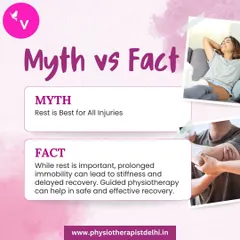


Learn the Truth About Your Pain and Recovery
 18
18

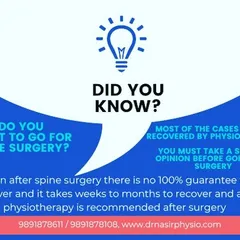
Physiotherapy Guides: Understanding Your Symptoms
 10
10
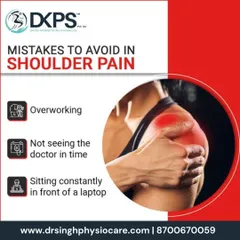
Physiotherapy Health and Wellness Guide
 7
7
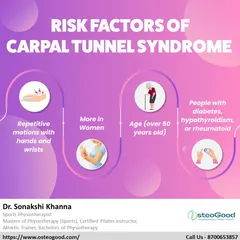

Understanding Your Pain: Drug-Free Physiotherapy in Delhi
Expert-Led Pain Relief & Physiotherapy in Bengaluru
More from Physical Therapy & Rehabilitation by Body & Mind PhysioPilates Studio
More services by Body & Mind PhysioPilates Studio