The Breathe Residence: Sustainable Earth Architecture
A project built on the principles of passive cooling and material honesty, using compressed earth blocks and integrated courtyards.
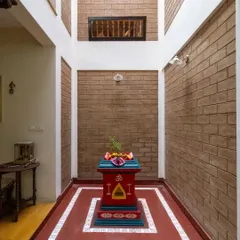
The inner courtyard of the "Breathe" house, which provides thermal comfort and a connection to nature. This space is based on the client's preference for an interior garden, bringing life and light into the core of the home.
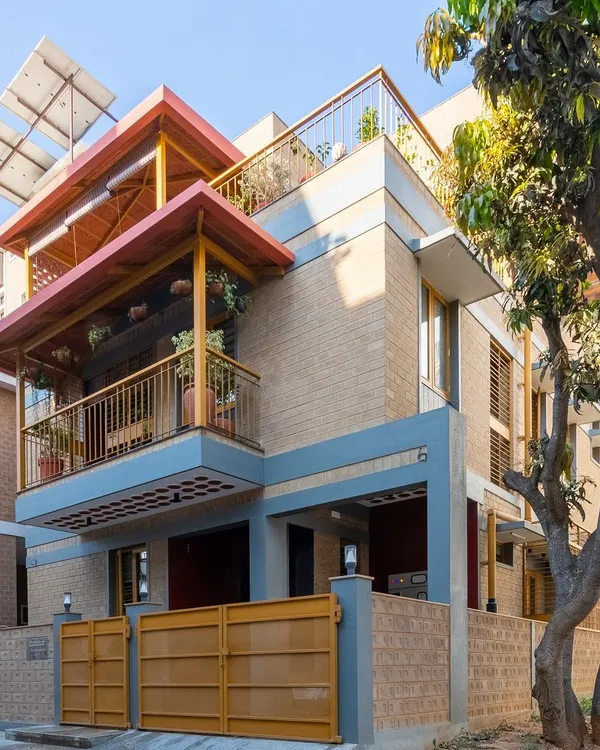
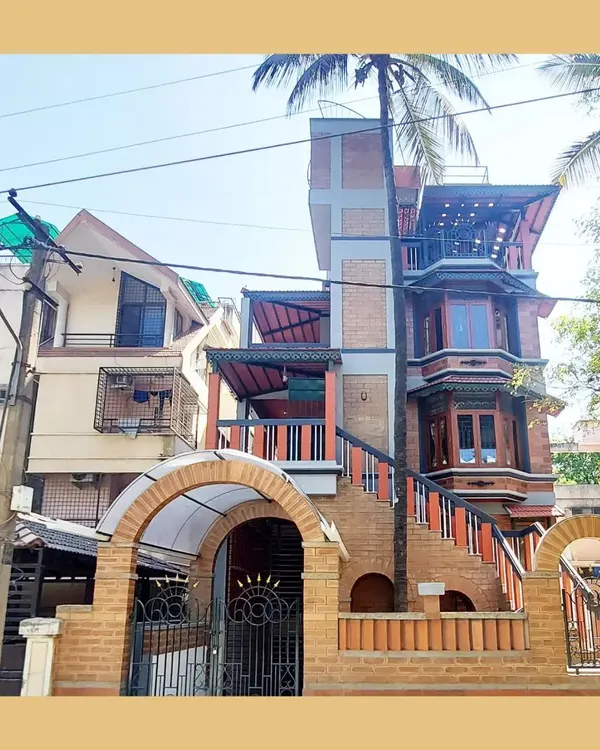
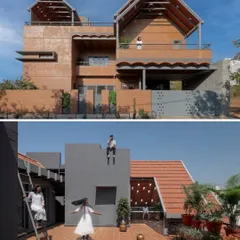
An overview of the "Breathe" residence, an earth house featuring locally made compressed earth blocks, brick jaalis, and internal courtyards. The design is a testament to our commitment to sustainable and context-sensitive architecture.
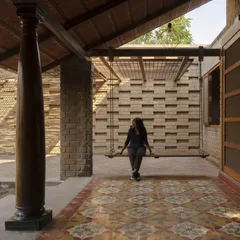
The 'jaali' screen, made from waste granite trims, aids in ventilation and shades the earth walls from the western sun. This feature is a functional element that also adds a delicate, patterned texture to the facade.
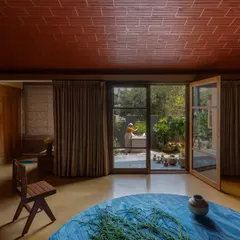
The living room features handmade Athangudi tiles, which provide a beautiful contrast to the muted, rammed earth walls. The design demonstrates how traditional materials can be used to create elegant and modern living spaces.
The materials used in this house were largely locally sourced or upcycled. The living area showcases this philosophy with its earthy walls, traditional floor tiles, and simple, functional furniture made from reclaimed wood.
The kitchen and living room walls are made from compressed stabilised earth blocks. The handmade Athangudi floor tiles, sourced from the Chettinad region, add a layer of craft and history to the project.
The concept of energy efficiency extends to the interior, with a court inside the living room that helps with passive cooling. The kitchen and living room feature walls made of compressed stabilised earth blocks.
The kitchen in "Breathe" features encaustic cement tiles that provide a bold pattern against the raw, muted palette of the rammed earth walls and concrete countertops. This contrast adds a welcome decorative element to the functional space.
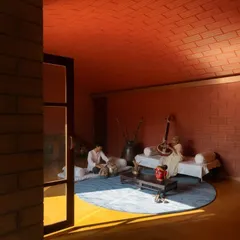
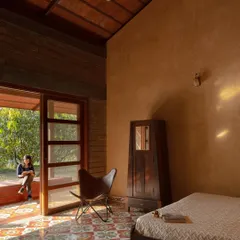
The surrounding rain garden and retention pond help manage water on the site, recharging the groundwater and supporting native plant species. This image shows a bedroom with Athangudi tile flooring and rammed earth walls.
The bedroom furnishings were created using upcycled wood, continuing the theme of sustainability. The home also features a 1,000-litre rainwater harvesting tank on the terrace to water the plants.
About Residential Spaces: The Breathe Residence
The Breathe residence is a technical response to local climate conditions, primarily achieved through passive cooling. By integrating a central courtyard and jaali walls constructed from upcycled granite trims, the design facilitates consistent cross-ventilation throughout the home. This approach naturally regulates indoor temperatures, significantly reducing the dependency on air conditioning while maintaining a seamless connection between the interior living spaces and the surrounding landscape.
Architecture as a Dialogue with Nature
At the core of the Breathe residence lies a commitment to material honesty and energy efficiency. We moved away from conventional construction methods to utilize Compressed Stabilized Earth Blocks (CSEB) and rammed earth. These materials provide high thermal mass, which helps keep the interiors cool in the tropical climate of Karnataka.
Material Palette and Craft
Every element in this house tells a story of reuse and local sourcing:
- Flooring: We used handmade Athangudi tiles from the Chettinad region, providing a vibrant, traditional counterpoint to the muted, raw walls.
- Upcycling: Much of the wooden furniture was crafted from reclaimed timber, minimizing the need for new resources.
- Water Management: The site features a rain garden and retention pond designed to manage surface water and recharge groundwater, supporting native plant species.
Functional Design
The layout is dictated by the movement of air and light. The 'jaali' screens serve a dual purpose: they provide privacy and filter harsh western sunlight while allowing the building to 'breathe.' The inclusion of a 1,000-litre rainwater harvesting system ensures that the terrace garden and landscape remain self-sufficient. This project serves as a model for how contemporary urban housing can exist in balance with its ecological context, proving that comfort does not have to come at the cost of the environment.
Similar work from other experts
Browse through Curated picks from other experts on mytribe
 123
123
Audumbara: Sustainable Living Built from the Earth
 42
42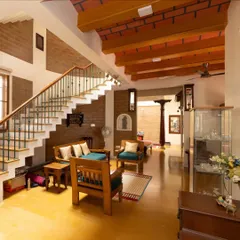
Project Spotlight: A Home in Basavanagudi
 35
35
Climate-Responsive Home Designs and Sustainable Architecture
Sustainable Earthy Homes and Architecture
 5
5
Homes That Breathe: Sustainable Design in Bangalore
 9
9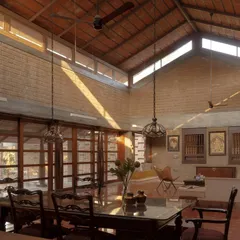
Kaattu Veedu: A House of Wind & Earth
More from Interior Design by Betweenlines
More services by Betweenlines