Yoga Through Pregnancy and Motherhood: A Real Ashtanga Journey
Ashtanga practice didn't stop when I became a mother; it evolved. Here is how I modified my practice through pregnancy and postpartum, embracing the messy, real, and changing nature of my body.
Holding my daughter, Emi. I used to see motherhood as an obstacle to my practice and travels, but now I only want to share this beautiful world with her.
Motherhood has been my greatest teacher. It has shown me my ego, my anger, and my capacity for love. It has made me more relaxed and taught me that there is a time for everything.
My practice during the first trimester at 8 weeks pregnant. I modified my practice from day one, avoiding deep twists, abdominal work, and pressure on the belly to ensure safety.
Practicing Kapotasana at 28 weeks. I focused on opening the chest and shoulders while creating space for my belly, using modifications to avoid any compression.
This video shows my practice at 6 weeks pregnant. Even early on, I listened to my body and my teacher's guidance to practice safely, removing any intense abdominal contractions.
Practicing Bakasana (Crow Pose) at 8 weeks pregnant. The key was to engage my arms and back muscles without putting pressure on my core, adapting the pose for this special time.
My postpartum practice reality. Finding time and energy is the hardest part, often practicing in short bursts between feeding and caring for my baby.
My first Sun Salutations six weeks after my C-section. It was a humbling experience to reconnect with my body, feeling both the weakness and the joy of simply moving again.
About Yoga Through Pregnancy & Motherhood
Many practitioners fear they must stop Ashtanga completely during the first trimester or immediately after childbirth, but I don't agree. Through careful modifications—such as avoiding deep twists and abdominal contractions, and focusing on breath rather than force—I maintained a consistent practice safely. It is not about holding the same poses you did before; it is about respecting your changing physiology while keeping your habit alive.
When I was pregnant with my daughter Amy, the most common question I faced was whether I should just stop everything. There is a lot of fear around Ashtanga yoga during pregnancy, often fueled by the myth that you need to be perfect or that you must hold intense postures. My experience taught me otherwise.
Adapting Your Practice
My approach is grounded in safety and listening. During pregnancy, I modified postures to avoid pressure on the belly and removed deep twists or bandha engagement. It is not about forcing your body into shapes; it is about creating space. I documented these changes not to show off, but to provide a roadmap for others. Whether it was avoiding abdominal work in the first trimester or adjusting how I entered jump-backs, each modification was a lesson in humility.
The Postpartum Reality
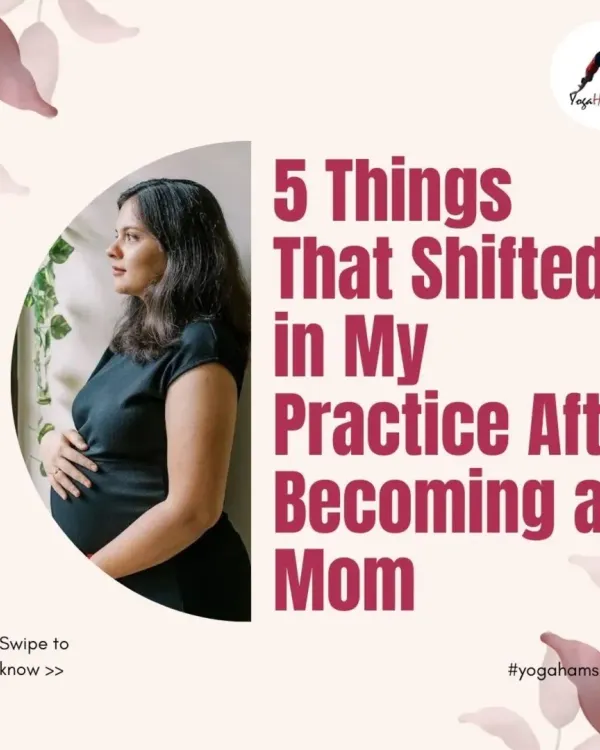
After the birth, the challenge shifted. It was no longer just about physical limits; it was about time management and the emotional weight of recovery. Returning to the mat six weeks post-cesarean was humbling. My core felt weak, my flexibility had changed, and my schedule was entirely dictated by my baby. I often practiced in broken segments, fitting asanas between feedings. This is the truth of home practice: it is rarely the aesthetic, two-hour block we see on social media. It is imperfect, messy, and necessary for sanity.
Why This Approach Works
My teaching for pregnancy and motherhood focuses on this realness. We do not just copy poses. We dig into the why and how of your body right now. If you are a new mom or expecting, we work on:
- Safety modifications for every trimester.
- Core-friendly transitions that respect healing tissues.
- Mental frameworks to stop chasing perfect and start finding consistent.
You are not a bad yogi if you are tired, or if you cannot touch your toes today. You are just a human practicing in a different season of life.
Similar work from other experts
Browse through Curated picks from other experts on mytribe
 14
14
My Personal Yoga Journey: Motherhood Reimagined
Yoga for Motherhood: Pregnancy & Postpartum Recovery
Prenatal and Postnatal Yoga Journey
Yoga for Modern Mothers: Finding Balance in the Chaos
Prenatal and Postnatal Yoga for Mothers
My Path with Yoga: A Practice That Evolves With You
More from Online Ashtanga for Beginners Course by Tanya Lymar
More services by Tanya Lymar