The Art & Philosophy of Yoga Practice
Yoga is more than physical shapes. It is a moving meditation and a path of self-inquiry that helps you understand your body and mind beyond the mat.
Practicing Pincha Mayurasana (Forearm Stand) inside a historic Indian temple. The stability and focus required for inversions feel amplified in such a powerful, ancient space.
Being a student requires an open mind. Every day on the mat is a new opportunity to explore our reactions and expand our limits, with humility and courage.
The simple ability to move can bring so much joy and peace. Sometimes we just need to get on the mat, start moving, and see where the practice takes us.
Working on Hanumanasana (the splits). This pose teaches patience and the gradual opening of the body over time.
A standing forward bend variation using the wall for support. Props can be wonderful tools for exploring alignment and finding more depth in a pose.
Attention is the key to a conscious life. In yoga, we practice concentrating our attention on the body's movements and the mind's reactions, bringing it into balance.
The second trimester of pregnancy is often called the "golden period" for practice. My body felt soft and open, but it also required more control to avoid overstretching.
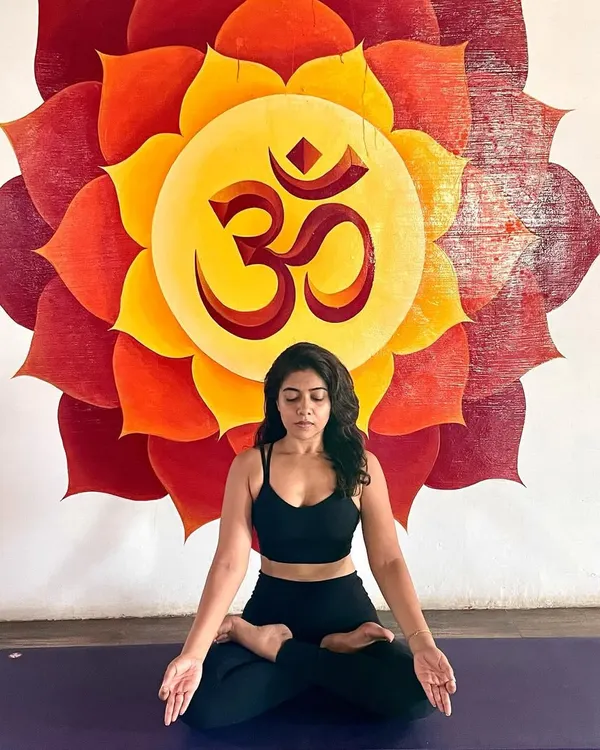
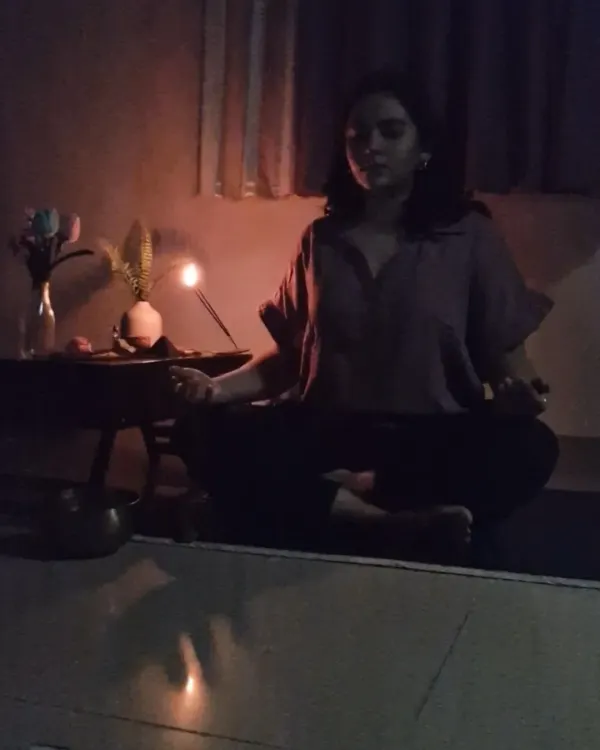
A moment of quiet contemplation in Padmasana (Lotus Pose) at a temple. The physical practice prepares the body and mind for stillness and meditation.
Practicing in Varanasi, overlooking the Ganges river. The energy of this sacred place adds a profound dimension to the practice, connecting movement with spirit.
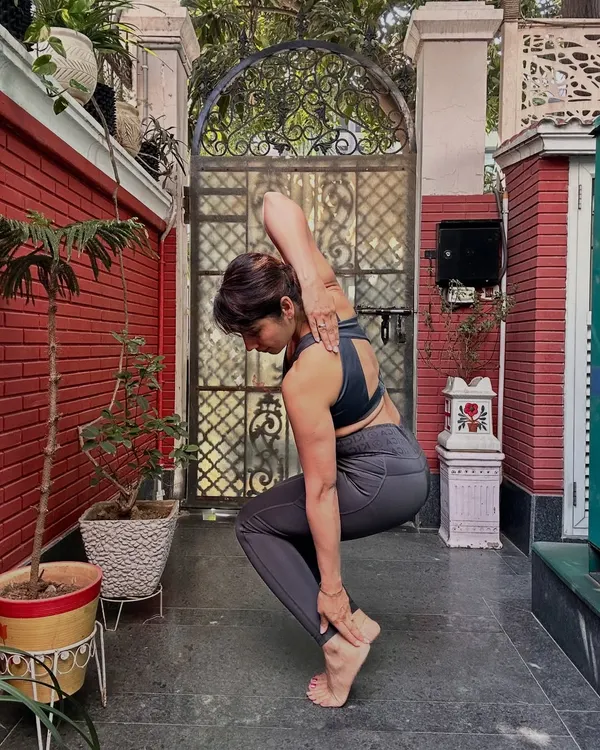
How meditation solved my chest pain. By paying close attention, I realized a nervous habit of raising my arm was causing a physical issue. This is the power of awareness cultivated through yoga and meditation.
About The Art & Philosophy of Practice
Yoga is often mistaken for a mere workout. However, the true practice is found in where you direct your attention. Whether holding a difficult posture or managing a busy day, the Ashtanga principles of Drishti (gaze) and Ujjayi (breath) shift you from reaction to conscious choice. When the practice feels like just another task on your to-do list, it is time to reconnect with the specific why behind your movement.
For me, yoga is not about the final shape of a pose. It is about the process. When I teach, we focus on Tristhana: the integration of breath, posture, and gaze. This is not about aesthetics; it is about building a system you can sustain regardless of what your day looks like.
Ashtanga is a rigorous system, but that rigor is designed to reveal your patterns. We look at alignment not to be perfect, but to be safe and efficient. Many of my students come to me having tried generic yoga classes that left them feeling uninspired. They find that by learning the foundations of Mysore-style practice, they gain a sense of agency over their physical and mental state.
Whether you are a new parent trying to fit 15 minutes of movement between tasks or a long-time practitioner looking for a deeper connection to the lineage, the philosophy remains the same: practice is not what you do when life is perfect. It is what you do when life is messy. We build the habit by understanding the technical basics so that the practice becomes a tool you can use anywhere, from your living room floor to a busy studio.
Similar work from other experts
Browse through Curated picks from other experts on mytribe
The Path of Asana: Movement as Meditation
 9
9Aishwarya's Yoga Journey & Philosophy
Moments from my personal yoga practice
Featured Yoga Moments: Real Practice from My Mat
 9
9
Yoga Practice and Philosophy: Finding Stillness in Motion
 5
5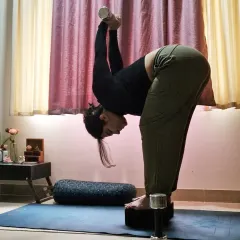
My Asana Practice: Yoga Beyond Just Poses
More from Online Ashtanga for Beginners Course by Tanya Lymar
More services by Tanya Lymar