My 30-Day Inversion Challenge: A Real Journey
Think inversions are only for the flexible? This challenge wasn't about landing the perfect pose. It was about showing up for 30 days, through the falling, the frustration, and the actual, messy progress of learning to fly.
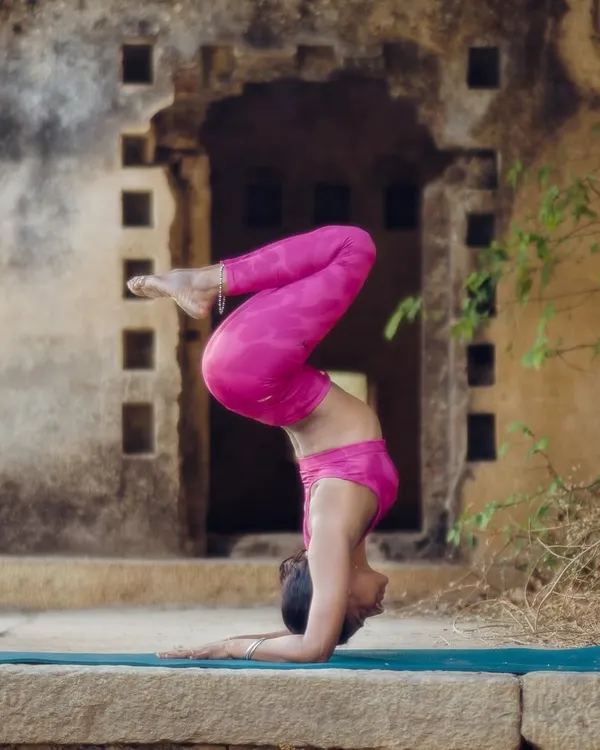
Day 1 of my 30-Day Inversion Challenge. Kicking it off with a press pincha and backbend transition. This journey is about mastering strength, control, and grace, not just the final pose.
Day 2: Pincha progress with extra cuteness. My little one decided to join the practice, adding about 20kg of weight to my forearm stand. It was a joyful test of power, play, and presence.
Inversion challenge day 3. This session included a funky forearm balance using blocks and a handstand, playing with different ways to get upside down.
Day 4 of the inversion challenge. Practicing Pincha Mayurasana at home with my furry supervisor, followed by a headstand variation using blocks to deepen the shoulder opening.
Day 5: Try this transition. A fun flow from a roll-up into Astavakrasana (Eight-Angle Pose). Challenges like this keep the practice interesting.
Day 6: Transition alert. Practicing handstand to crow pose transitions on an uneven grassy surface. It's tricky but a great way to challenge your balance.
Day 7 of the inversion challenge. If you think you've mastered your headstand, try these leg switches. They test your balance, core control, and focus.
Day 8: Varmahalaxmi vibes. Even on a festive day, I made time for my inversion practice, holding a Pincha Mayurasana with my dog watching over.
Day 9: A day full of celebrations with pooja, Rakhi, and my husband's birthday, but I still got my inversion in. Balance is as much about life as it is about yoga.
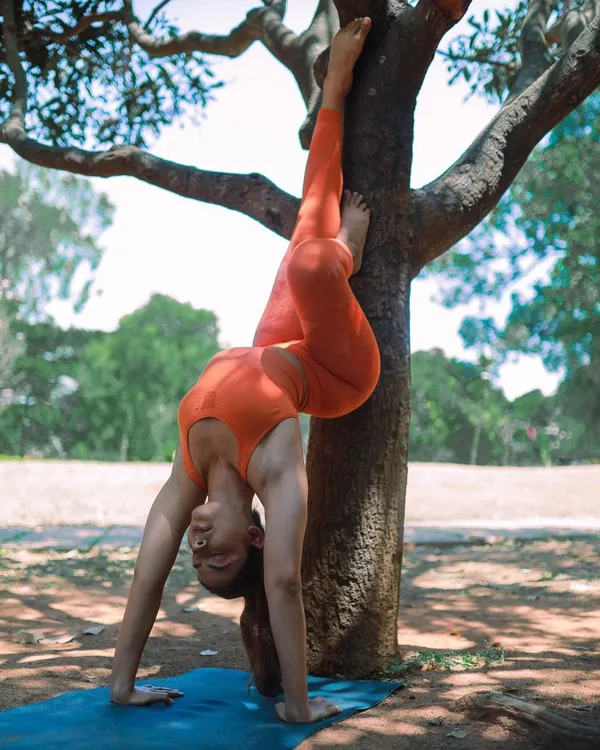
Day 10 of my inversion challenge took me outdoors. I found nature's own aerial yoga setup in the roots of a banyan tree. A playful way to hang upside down.
About My 30-Day Inversion Challenge
Most people think inversions are just about strength. They are not. They are about understanding your anatomy, specifically how your shoulders and core work together to keep you safe. My 30-day challenge was designed to show you that progress does not look like a magazine cover. It looks like daily drills, using props like blocks for stability, and learning how to fall without hurting yourself.
I started this 30-day inversion challenge to strip away the myth that yoga is about perfect, static shapes. When you see me in these videos, you see the real work—the wall-assisted drills, the moments I struggle to hold my core, and the days I just need to use a belt for support.
Why Anatomy Matters
In my training, we stop chasing 'fancy' and start chasing understanding. We break down the biomechanics of every inversion. Whether it is Sirsasana or Pincha Mayurasana, we focus on the relationship between your agonist and antagonist muscles. If you do not understand how your joints move, you are just guessing.
The Reality of the Practice
My students often ask, 'Shashi, will I ever get there?' and my answer is always the same: if you practice consistently, yes. But you have to be willing to be a beginner again. In these 30 days, I documented everything—the good, the bad, and the days my dog joined the mat.
What to Expect
If you are looking for a quick fix, this is not it. This is for students ready to:
- Use props like blocks and walls to build confidence.
- Learn safe exit strategies so you can fall without fear.
- Work on mobility drills that actually build strength.
My approach is straightforward. I provide the technical knowledge and the discipline; you bring the willingness to show up. We use a combination of pre-recorded anatomy modules and weekly live sessions where I will personally correct your alignment. Are you ready to get upside down, safely?
Similar work from other experts
Browse through Curated picks from other experts on mytribe
 89
89Inversions: Finding Balance Upside Down
Finding Strength Upside Down: Inversions & Arm Balances
Handstand Training: My 3-Year Journey to a Freestanding Balance
Exploring Advanced Yoga Postures: A Journey of Patience & Practice
Defying Gravity: Handstand Coaching & Practice
 10
10
Master Handstands and Arm Balances Safely
More from Advanced Yoga Anatomy & Asana Course (Online) by Shashi Prabha Dwivedi
More services by Shashi Prabha Dwivedi