Master Backbends and Deep Flexibility Safely
Backbends are not about how far you can arch your spine; they are about understanding your anatomy. We prioritize safe biomechanics and hip mobility to help you progress without injury.
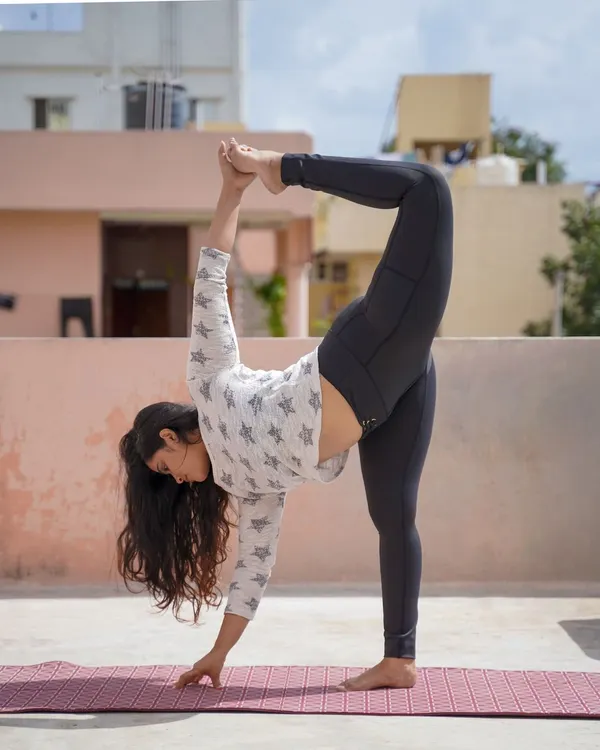
Natarajasana, or Lord of the Dance Pose. This beautiful backbend is a challenging combination of balance, flexibility, and strength. It opens the shoulders and chest while strengthening the legs and core.
Maturity in your yoga journey isn't about achieving a perfect split. It's when you stop chasing poses and start enjoying the process, when you ask what the asana is teaching you today. True success on the mat is the ability to breathe calmly and honor your body's timing.
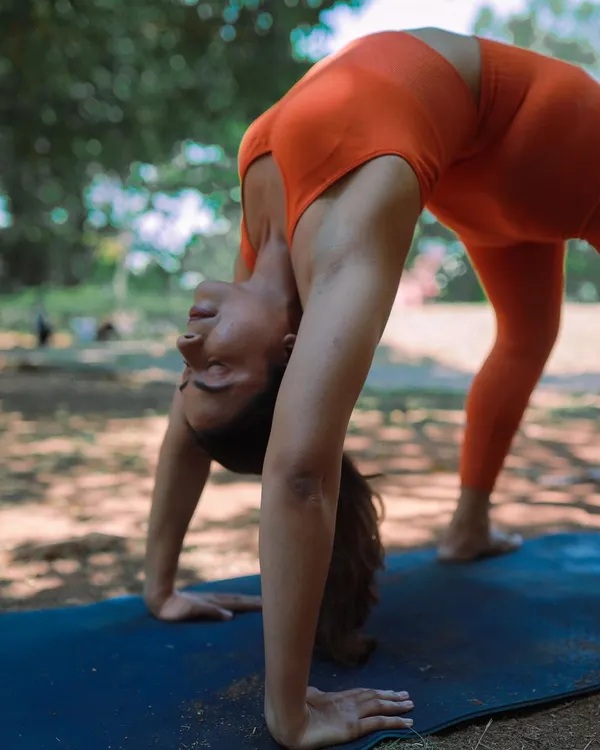
This is Dwi Pada Viparita Dandasana, or Forearm Wheel Pose. It's a very deep backbend that requires significant shoulder and thoracic spine flexibility, as well as strong legs to support the pose.
A standing backbend, grabbing the ankle in a variation of Natarajasana (Dancer's Pose). This requires balance and a deep opening in the quadriceps and psoas muscles.
Using a chair to work on shoulder opening for backbends. This is an excellent and safe way to increase flexibility in the upper back and shoulders, which is essential for poses like wheel and kapotasana.
Eka Pada Rajakapotasana II, a deep backbend that combines a lunge with a quad stretch. Using a pad under the knee helps make the pose more comfortable and accessible.
Eka Pada Rajakapotasana, or One-Legged King Pigeon Pose. This advanced backbend requires open hips, flexible quadriceps, and a very mobile spine. It's a pose that takes years of patient practice.
A deep low lunge backbend (Anjaneyasana). This pose is a fantastic preparation for deeper backbends, as it opens the hip flexors and begins to arch the spine.
Ustrasana, or Camel Pose, practiced outdoors. This backbend opens the entire front of the body, including the chest, abdomen, and quadriceps. It's known for being an energizing and heart-opening pose.
Finding my Hanumanasana (splits) in a tree. Practicing in nature adds a playful and grounding element to the challenge of deep flexibility poses.
About Backbends & Deep Flexibility
You do not need an incredibly flexible back to start backbending. Most people fail because they crunch their lower lumbar spine instead of opening the shoulders and hip flexors. I use props like yoga blocks and chairs to teach you where the movement should actually happen, so you can breathe and hold the pose instead of just collapsing into it.
Understand the 'How' Behind the Bend
Many students come to me wanting to master Hanumanasana or Ustrasana, but they ignore the foundation. Backbending is not just about the spine; it requires deep work in the quadriceps, psoas, and thoracic region. If you ignore the anatomy, you end up with lower back pain rather than a deeper practice.
Why Props Are Mandatory
I insist on using props. A chair is not a crutch for beginners; it is a tool for alignment. When we use props for shoulder opening or to assist in Camel Pose, we allow the body to understand the pose before we remove the support. This is how we build long-term flexibility without the risk of overstretching.
My Approach to Your Progress
I treat my students like family, which means I will tell you the truth. If your alignment is sloppy, I will call it out. Expect my 'daant' (scolding) if you are rushing through your movements. My training is designed for those who are serious about learning the mechanics of their own body.
- Safe Progression: We start with mobility drills before attempting peak poses.
- Anatomical Focus: Learn why your muscles are inhibiting your depth and how to change that.
- Discipline: You must be willing to show up consistently.
This is not a quick fix for Instagram photos. This is technical training for people who want to understand their practice.
Similar work from other experts
Browse through Curated picks from other experts on mytribe
Advanced Backbends and Splits Yoga Training
 11
11
Deep Flexibility: Backbends and Splits
Master Deep Backbends and Spinal Flexibility
 16
16
Advanced Flexibility Training: Splits and Backbends
Unlocking Your Spine: Backbends & Splits
Backbends & Flexibility: Safe, Prop-Based Training in Janakpuri
More from Advanced Yoga Anatomy & Asana Course (Online) by Shashi Prabha Dwivedi
More services by Shashi Prabha Dwivedi