Conceptual Architectural Narratives and Unbuilt Designs
Architecture begins as a question. These concepts explore the narratives, unbuilt visions, and spatial journeys we design before the first brick is ever laid.
For a museum competition in Nagpur, we proposed a building as a spatial journey. This rendering shows an alternative approach with a stepped bamboo skin, representing an amphitheater and public court, creating a layered, open-ended experience.
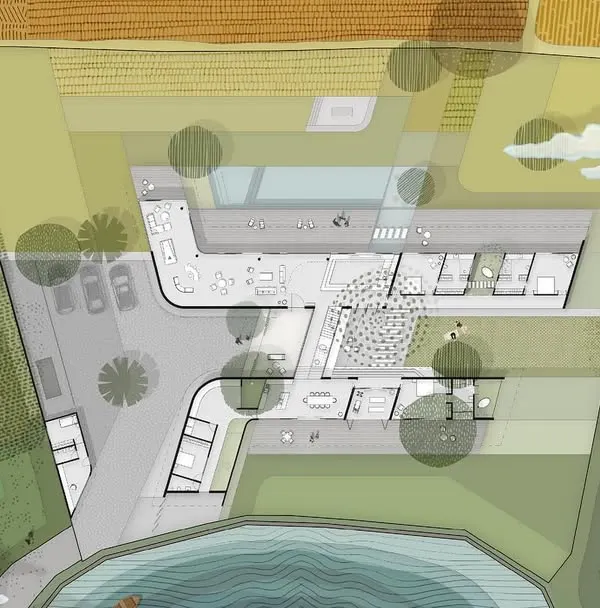
The Ramparts is our unbuilt vision for a housing project in Goa, inspired by the region's history. This illustration shows how four unique home typologies, including the Lighthouse and Battery House, converge to form a single, narrative-driven community.
This conceptual video for a wellness home in Atlanta explores the Indian way of storytelling. The design draws metaphors from stepped wells and ghats, using steel and exposed brick to create a structure that merges harmoniously with the lakeside landscape.
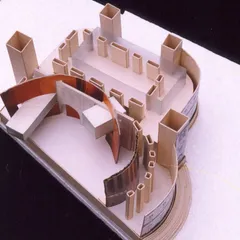
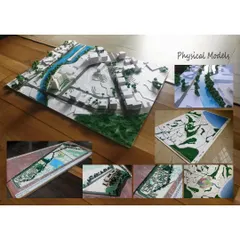
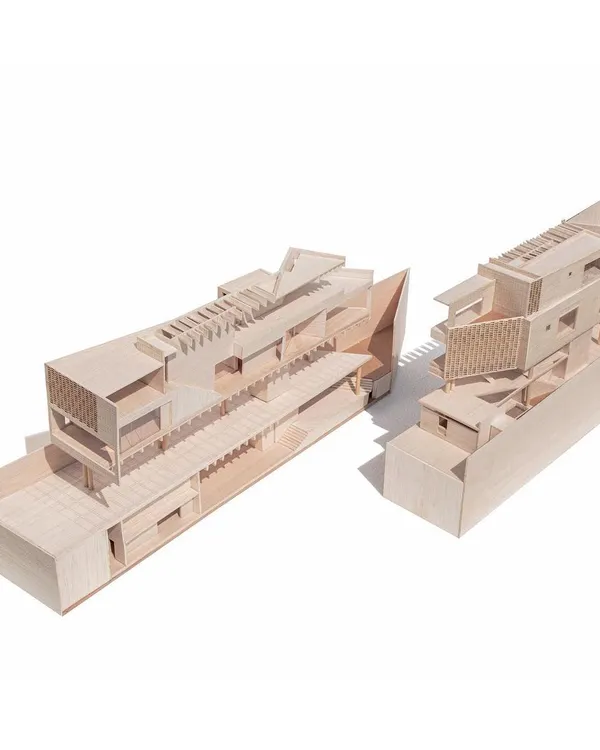
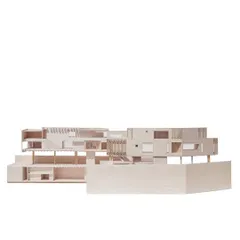
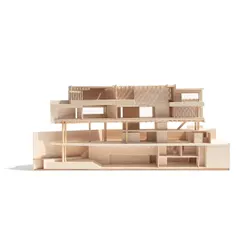
We use physical models to test our ideas and understand the spatial qualities of a design. This model for a Performing Arts Center in Bengaluru shows how we assemble a 'kit of parts' to create a complex, multi-layered structure.
For this retreat concept, we choreographed a journey along a defined path. The rammed earth walls guide the visitor through a series of spaces that compress and expand, ultimately opening up to a spectacular mountain view.
About Conceptual Narratives & Unbuilt Worlds
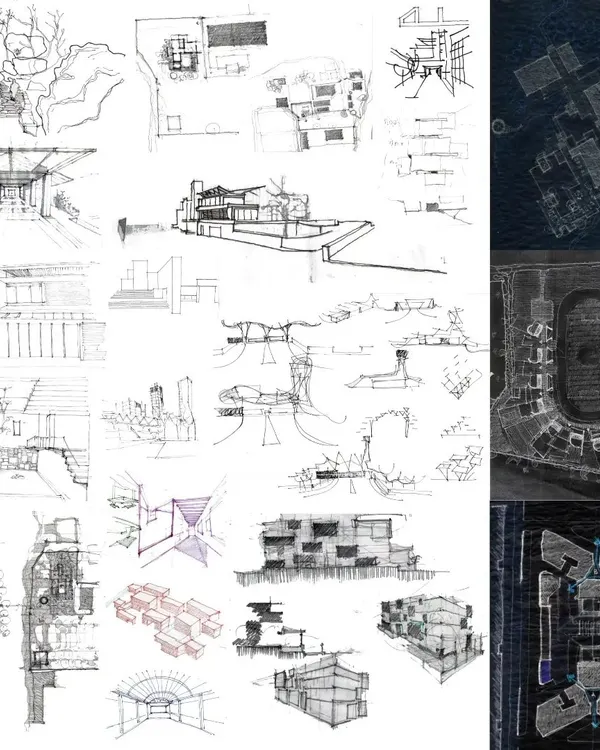
We believe in building before we build. Every concept here begins with hand-crafted scale models in wood or cardboard, allowing us to test light, shadow, and volume in three dimensions. This is not just a design step; it is our way of ensuring that the story of the space feels right in the palm of our hands before it ever meets the site. By working this way, we uncover structural possibilities that digital software often hides.
The unbuilt work displayed here represents the core of our architectural thinking. While these projects remain concepts, they are the testing grounds for the techniques we eventually bring to our built environments. We look at the 'unbuilt' not as a failure of execution, but as a space for pure experimentation.
Why We Design This Way
- Narrative as Foundation: For us, a building is a spatial journey. Whether it is a museum in Nagpur or a residential community in Goa, we start by scripting a story. We define how a person moves through the space, where they pause, and what they experience at different times of the day.
- Material Honesty: Even in our conceptual phase, we think in terms of brick, black stone, bamboo, and rammed earth. We simulate these textures to understand how they weather, how they catch the sun, and how they define the 'breath' of a building.
- Contextual Sensitivity: We reject generic blueprints. Our conceptual designs are always tied to topography, sun paths, and local heritage. We map the site first, then let the landscape dictate the structure.
Our Process
Our studio approach is non-linear. We oscillate between 3D renderings and physical models to ensure our concepts are technically sound. We look for 'porosity' in our designs—creating voids and courtyards that invite the environment in. This way of thinking helps us create spaces that are not just beautiful, but deeply connected to their location. Whether you are planning a private residence or a large institutional campus, we bring this same obsession with narrative and materiality to your project.
Similar work from other experts
Browse through Curated picks from other experts on mytribe
 58
58
From Concept to Construction: The Architectural Process
 14
14
Unbuilt Architectural Concepts and Design Explorations
 5
5
From Concept to Creation: Our Architectural Design Process
Architectural Concept Design and Structural Studies
 13
13
Our Design Process: From Concept to Construction
 8
8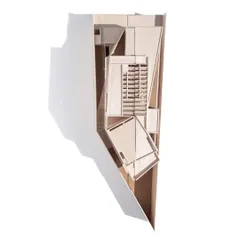
Our Architectural Design Process and Vision
More from Architectural Design by The Purple Ink Studio
More services by The Purple Ink Studio