Climate-Responsive & Sustainable Architecture
Design that works with nature, not against it. We use passive cooling and smart material choices to create comfortable, resilient spaces that lower energy consumption.
Buildings account for nearly 40% of global energy use. We focus on three key areas to improve energy performance: prioritizing passive cooling, choosing low-impact materials, and using surface-level interventions like green pavers.
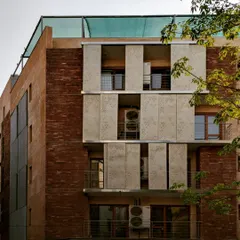
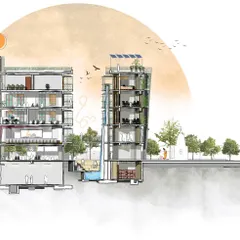
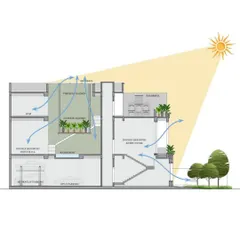
Passive cooling is our first line of defense against heat. Strategies like the deep slab projections and adaptive facades seen here reduce heat gain and enhance performance without relying on energy-intensive mechanical systems.
We choose low-impact, high-performance materials. Acetylated wood offers durability, moisture resistance, and a lower carbon footprint, making it a long-lasting and sustainable alternative to conventional materials.
Green pavers, made from recycled materials, are a simple but effective tool for urban cooling. They allow water permeability to reduce runoff and support vegetation, helping to mitigate the urban heat island effect.
Windows can be a major source of heat gain. For the Creacions high-rise in Gurugram, we conducted a detailed solar study to inform a responsive facade strategy that combines shutters, louvres, and shading devices.
This animation details one of the window types used at Creacions. The design incorporates fixed louvres and openable shutters to give residents control over light and ventilation while minimizing heat gain.
This second window type demonstrates another layered shading solution. By combining different elements, we create a facade with character that performs efficiently in the local climate, lowering energy loads for cooling.
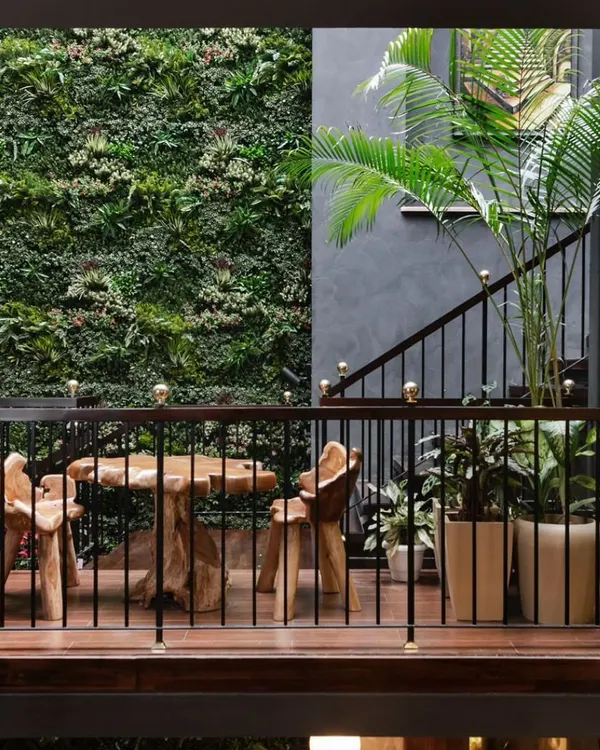
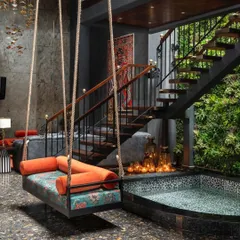
Biophilic design is about blurring the line between indoors and outdoors. We use landscaping, natural materials, and views of nature to create spaces that connect occupants to their environment, promoting well-being.
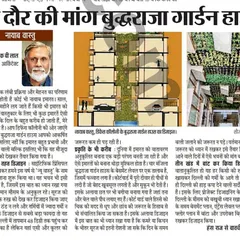
In a feature with ETV Bharat, our partner Shubhra Dahiya discussed biophilic living. Integrating natural light, ventilation, and greenery helps reduce stress and cultivates an environment where people can thrive.
With urban heat rising, are we designing spaces that can keep up? Our approach is to let nature lead, using green buffers and passive cooling to craft environments that remain comfortable even in peak summer.
About Climate-Responsive & Sustainable Design
We don't believe in relying on heavy air conditioning to stay comfortable. Our approach begins with rigorous solar studies to map the sun's path across your site, which lets us design facade elements that block harsh heat while welcoming soft, natural light. This reduces energy loads before construction even begins.
Passive cooling is the backbone of our climate-responsive architecture. By understanding local topography and wind patterns, we position buildings to breathe naturally. For instance, at our Creacions project in Gurugram, we developed a responsive facade using fixed louvres and openable shutters. This keeps interiors cool even during peak summer by reducing solar heat gain through windows by a significant margin.
Sustainability isn't just about labels. We focus on materials that have a lower carbon footprint and higher performance. Acetylated wood, for example, offers moisture resistance and long-term durability without the environmental cost of conventional timber treatments. We also integrate green pavers and permeable surfaces to support water runoff, a technique we implemented at Utsodhaara Township to manage monsoon drainage effectively.
We see biophilic design as a necessity rather than an aesthetic choice. Integrating vegetation into balconies and terraces provides a natural buffer against urban heat. These green pockets do more than look good; they cool the air through evapotranspiration, creating a micro-environment that remains comfortable long after the sun goes down.
Every design decision is backed by data. We use digital simulations alongside traditional sketches to ensure our technical details, like deep overhangs and wall thicknesses, perform exactly as intended. Architecture should last, and building in harmony with the local environment is the most honest way to achieve that.
Similar work from other experts
Browse through Curated picks from other experts on mytribe
 8
8
Sustainable and Climate-Responsive Architectural Design
 10
10
Climate-Responsive Architecture and Passive Design
Net-Zero & Climate-Responsive Homes
 7
7
Sustainable Architectural Design for Modern Homes
 18
18
Pioneering Sustainable Design in Architecture
 14
14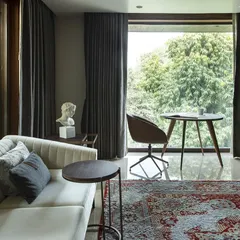
Biophilic & Climate-Responsive Architectural Design
More from Residential Architecture by Team3