Exploring Montessori Materials: Tools for Deeper Learning
In a Montessori environment, materials are not just objects; they are keys that unlock complex concepts. Discover how concrete, hands-on work bridges the gap between experience and understanding.
These zoology nomenclature cards show the four-chambered heart of a bird. They do more than teach vocabulary; they help children see patterns in nature and connect details to the grand story of evolution.
A card from our zoology curriculum illustrating the two-chambered heart of a fish. Children learn to build precise language while exploring how life evolves and adapts across different vertebrates.
The four-chambered heart of a mammal, as shown on a Montessori nomenclature card. This material helps children understand the circulatory system and our own place within the animal kingdom.
This card shows the three-chambered heart of an amphibian. By comparing these cards, children begin to grasp the concept of evolution and the beautiful complexity of life.
The three-chambered heart of a reptile. These cards are tools for building scientific vocabulary and seeing the interconnectedness of all living things.
The Pythagorean plates are more than a geometry material; they are a time machine. As children explore a² + b² = c², they retrace the steps of ancient thinkers, connecting math to history and geography.
Where in the universe are we? This "Cosmic Address" material helps elementary children explore their place in the cosmos, zooming in from the Universe to their own street, fostering a sense of wonder and interconnectedness.
A simple and magical science experiment using red cabbage juice as a natural pH indicator. This is one of the many hands-on activities we explore in our Elementary Course to make learning chemistry tangible and fun.
About Exploring Montessori Materials
We often see schools invest heavily in materials that simply gather dust on shelves because the educators have not been shown how to use them with intent. The true value of Montessori materials, from geometry plates to zoology cards, is not found in the object itself but in the interaction. Unless the adult understands the specific sequence and purpose of a material, it remains a toy rather than a tool for cognitive development. We bridge this gap by training educators to guide that interaction without disrupting the child's concentration.
Beyond the Surface: The Philosophy of Materials
Montessori materials are designed to follow a child's natural development, moving from the concrete to the abstract. Whether it is exploring geometry through Pythagorean plates or understanding evolution via zoology nomenclature cards, every item serves a specific purpose. These are not merely aids for memorization; they are diagnostic tools for the child to measure their own progress.
Why Teachers Need Support
Many educators struggle with the 'nitty-gritty' of classroom management—balancing freedom with discipline and maintaining the flow of a work cycle. Our mentorship programs go beyond theory. We help teachers refine their presentations, ensuring that the introduction of a material is as precise as the material itself. A misplaced demonstration can confuse a child, whereas a prepared, confident guide empowers them.
Our Approach to School Environment
We don't just sell curricula; we audit environments. At our Cooke Town, Bengaluru centre, we work with school heads to look at shelf heights, material sequencing, and traffic flow. If the environment is cluttered or the materials are not maintained, the child's ability to focus is compromised. We help you create a space that breathes, where materials are accessible, clean, and organized, facilitating a calm, productive atmosphere.
Bringing Philosophy into Practice
From Anganwadis to top-tier IB schools, we have seen that the child's capacity for deep work is universal. Whether we are conducting sessions in Kannada or English, our focus remains on the same principle: trust the child. We train adults to step back, observe, and provide only what is necessary to ignite that spark of curiosity.
Similar work from other experts
Browse through Curated picks from other experts on mytribe
 4
4
Montessori Materials and Tools for Learning
Montessori Learning Materials for Early Childhood
 59
59
Hands-On Montessori Learning: How Children Build Real Skills
 35
35
Sensorial Learning in Montessori Education
 10
10

Hands-On Montessori Materials and Learning Activities
 84
84
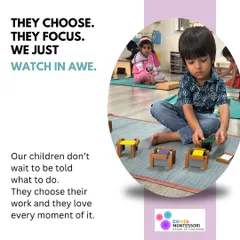
The Montessori Way: Learning in Action
More from Educational Consulting for Schools & Organizations by SchoolScape
More services by SchoolScape