Practical Life Skills and Child Independence
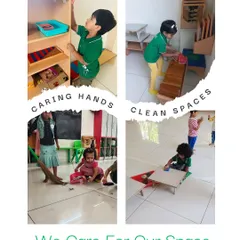
In my classroom, learning isn't just books. It is about doing. From cutting vegetables to caring for our shared space, these tasks give children the confidence to navigate the world around them.
Using a child-safe knife, this student is carefully cutting a cucumber. This practical life activity is fantastic for developing fine motor skills, concentration, and the independence that comes from preparing one's own food.
A child practices rolling dough, a wonderful sensorial and practical life activity. This simple kitchen task helps strengthen hand muscles for writing, teaches following a sequence, and offers the joy of creating something with his own hands.
At-home learning continues with practical life skills. Here, a child is rolling out dough for a sweet treat, practicing the coordination and strength needed for many other academic and life activities.
A sibling watches as her brother engages in a cookery activity. Learning at home provides wonderful opportunities for family involvement and for older children to model concentration and skill.
Proudly presenting the sweet delicacy he made himself. The smile of accomplishment is the true reward of practical life activities, building self-esteem and a positive attitude towards contributing.
A student proudly shows off the aloo tikkis she made. Involving children in cooking not only teaches them a valuable life skill but also encourages them to try new and healthy foods.
This video montage shows the joy and concentration involved in a home cookery activity. Children are seen preparing and enjoying a parfait, practicing skills like layering, spooning, and of course, tasting their delicious creation.
Learning extends beyond the classroom walls. Here, a child connects with his guide and classmates over a video call to share the laddoos he made, blending technology with timeless hands-on learning.
Enjoying the fruits of his labor. This child is eating an aloo tikki he prepared, experiencing the full cycle of work from preparation to enjoyment, which is a core tenet of Montessori education.
Dressed in traditional attire, this child proudly holds a plate of sweets he helped prepare. Cookery activities are often tied to cultural celebrations, making the experience even more meaningful.
About Practical Life Skills: Building Independence
When a child uses a safe knife to slice a cucumber or rolls dough for a snack, they are doing much more than just cooking. They are refining their hand-eye coordination and learning the sequence of a task. In my BTM Layout center, I prioritize these moments because they turn abstract concepts into tangible experiences. When a child sees that their effort results in a finished, edible creation they can share with family, it builds a sense of capability that classroom lectures simply cannot replicate.
The Foundation of Independence
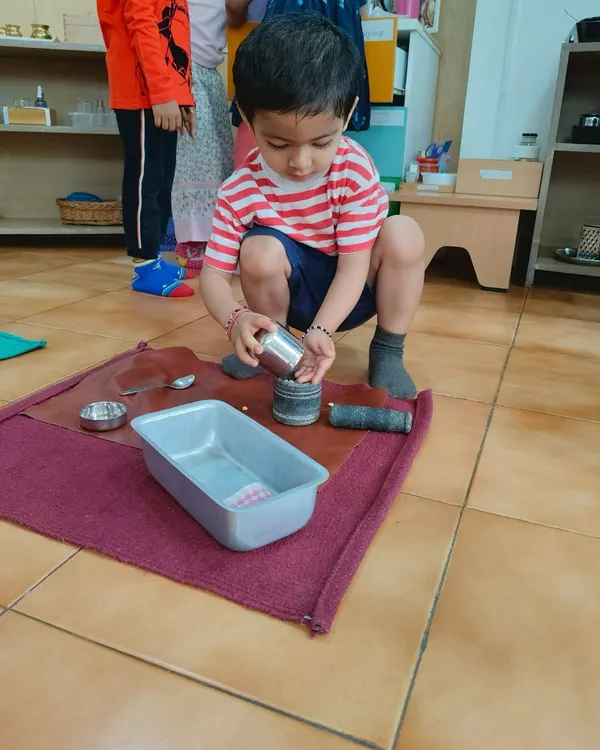
Practical life exercises are the bedrock of my Montessori program. At this age, children possess an intense desire to mimic the adults around them. Instead of giving them plastic toys to pretend, I provide real tools: child-sized brooms, pitchers for pouring water, and utensils for preparing simple meals. This is not just play, it is foundational training for the brain.
Developing Focus and Coordination
Whether a student is polishing a wooden tray or folding their own napkin, they are engaging in a process that demands precision. These activities significantly lengthen their concentration span. If you watch a child engaged in these tasks, you will notice a stillness and focus that is rare to see in traditional settings. By completing a cycle of work, from gathering ingredients to cleaning their workspace, children learn that they are capable and autonomous individuals.
Connecting Home and School
My philosophy at Siksha extends beyond the classroom walls. I encourage parents to let their children participate in household chores, like setting the table or sorting laundry. When children practice at home what they learn at school, it reinforces their independence. We do not just teach the skill, we teach the child to respect their environment and their own ability to contribute. This builds a natural, unforced confidence that carries over into their academic work, making them ready to handle more complex challenges in language and mathematics.
Similar work from other experts
Browse through Curated picks from other experts on mytribe
 37
37
Building Independence Through Montessori Practical Life Skills
 22
22
Practical Life Skills: Building Independence in Children
Practical Life Skills: Montessori Learning in Action
Practical Life Skills for Early Independence
Practical Life Skills: Montessori Learning by Doing
Building Independence Through Practical Life Skills
More from Montessori Elementary School Program (Ages 6+) by Siksha Montessori
More services by Siksha Montessori