Hands-On Montessori Learning for Children
See how we use tactile, specialized materials to help children move from concrete exploration to confident, abstract understanding.
The Moveable Alphabet is where writing begins. Here, a child uses wooden cursive letters to build words, transforming his thoughts into written language before he has even mastered holding a pencil.
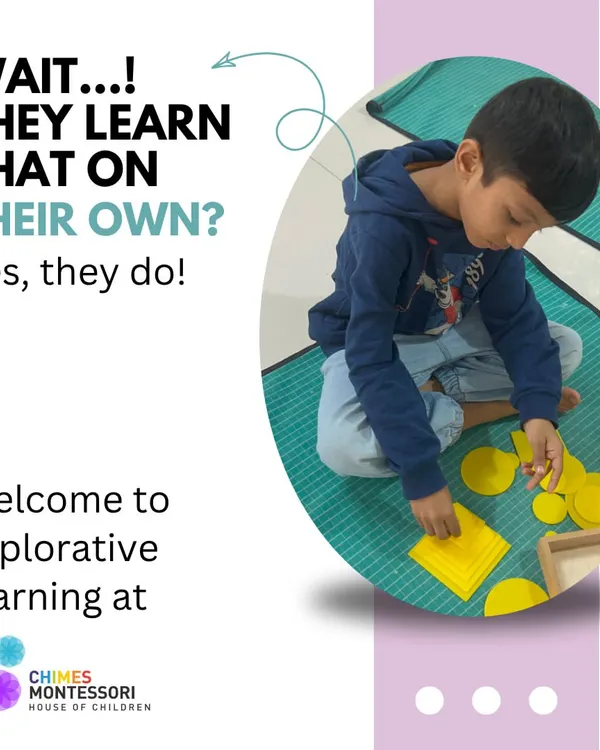
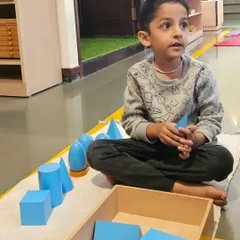
This video shows our geometry curriculum in action. Children are seen working with various materials like the drawing insets and constructive triangles, internalizing geometric properties through hands-on, sensorial exploration.
Writing is a natural progression, not a forced exercise. This child is practicing number formation, building on countless earlier activities that strengthened his hand muscles and developed his concentration.
A blindfolded child uses her sense of touch to match different fabric textures. This classic Montessori sensorial activity refines the tactile sense, builds vocabulary for description, and develops concentration.
A student works with the Moveable Alphabet and corresponding picture cards. This activity helps children analyze the phonetic sounds in words and physically construct them, creating a solid foundation for reading and spelling.
A student completes the Decanomial Square at home. This advanced sensorial material provides a concrete basis for understanding squaring and the decimal system, bridging the gap between sensorial learning and abstract mathematics.
Using a sandpaper number as a guide, this child practices writing numerals. The tactile experience of tracing the rough number helps to create muscle memory, making the abstract shape of the number concrete.
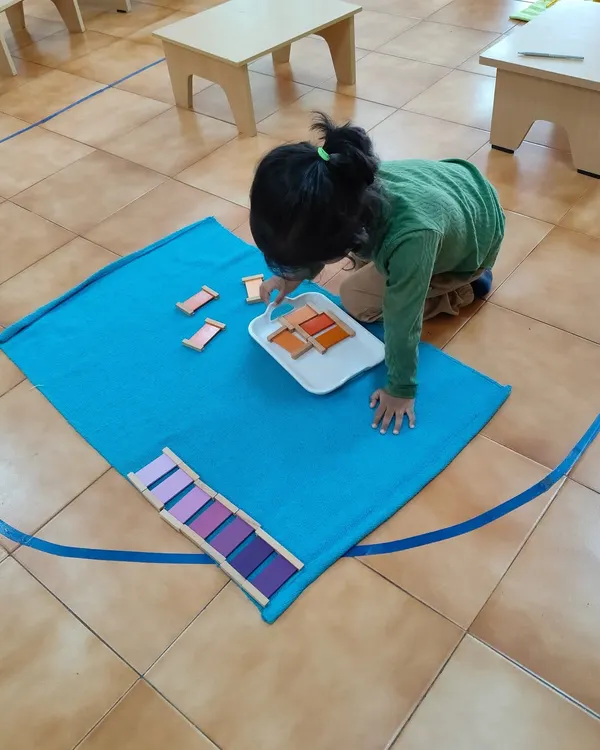
A child works on his homemade Decanomial Square. This activity, part of our distance learning program, shows how Montessori principles can be applied at home to teach color, size discrimination, and early math concepts.
About Hands-On Academics: Learning by Doing
When you see a child using the Moveable Alphabet, you are not just seeing spelling practice. You are seeing a child construct sentences with wooden letters before they have even mastered a pencil grip. This is how we teach. We do not force them to write; we prepare their hands and minds so that writing happens naturally when they are truly ready.
Our classroom in BTM Layout is organized around the idea that learning should be a physical experience. For a child, abstract concepts like geometry or complex sentence structure can be overwhelming when presented on a flat page. We bridge that gap with tangible, scientifically designed materials.
Take our math curriculum: children work with the Decanomial Square, a sensorial material that allows them to touch and manipulate components of numbers before they ever encounter a worksheet. This approach builds logical reasoning, fine motor control, and deep concentration. We maintain a high teacher-student ratio of 1:15, allowing our IMC-trained guides to observe each child closely and introduce challenges only when the child demonstrates readiness.
From phonetics to spatial reasoning, we create a prepared environment where the child is free to explore, make mistakes, and correct them independently. This is not about rote memorization or checking boxes in a workbook. It is about fostering a deep, intuitive understanding of the world. Whether it is matching fabric textures to build vocabulary or using constructive triangles to understand geometry, every activity is a step toward independent, confident thinking.
Similar work from other experts
Browse through Curated picks from other experts on mytribe
Montessori Academic Foundations in HSR Layout
 59
59
Hands-On Montessori Learning: How Children Build Real Skills
 66
66
Learning by Doing: The Montessori Way
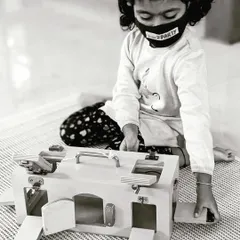
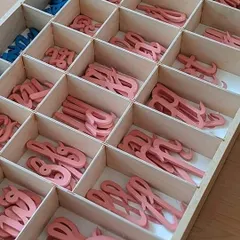
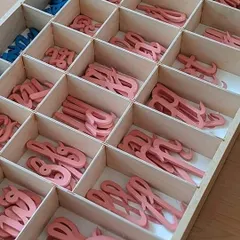
Hands-on Montessori Learning Materials
Montessori Language & Math: Hands-On Learning
 34
34
The Montessori Method in Action
More from Montessori Elementary School Program (Ages 6+) by Siksha Montessori
More services by Siksha Montessori