Building Independence Through Practical Life Skills
Watch your child gain real-world confidence through purposeful work. From pouring water to sewing buttons, these Montessori activities build deep concentration and self-reliance.
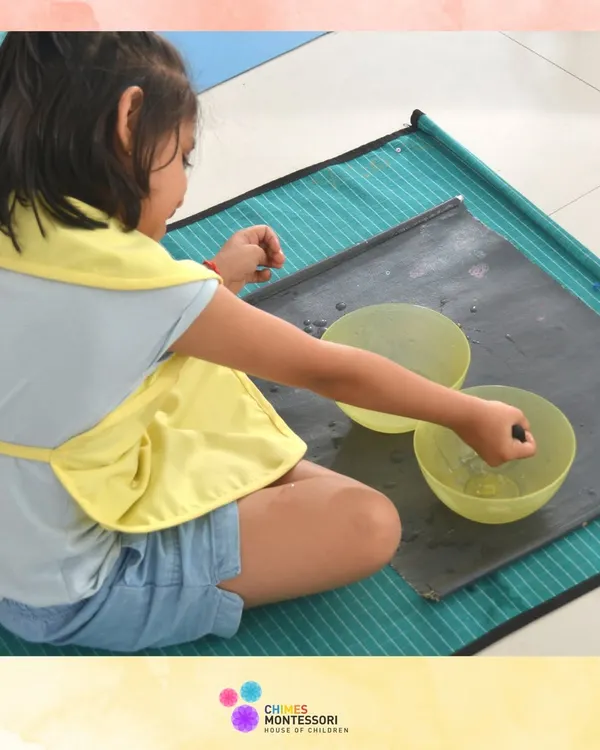
Look at the incredible control and focus as this child pours water. This simple activity, repeated over time, is fundamental for developing steady hands, precision, and hand-eye coordination, which are essential for writing and other complex tasks.
"Show me how to do it and watch me excel." This child is carefully chopping vegetables with a child-safe knife. This practical life skill builds concentration, develops fine motor control, and gives children a sense of capability and independence.
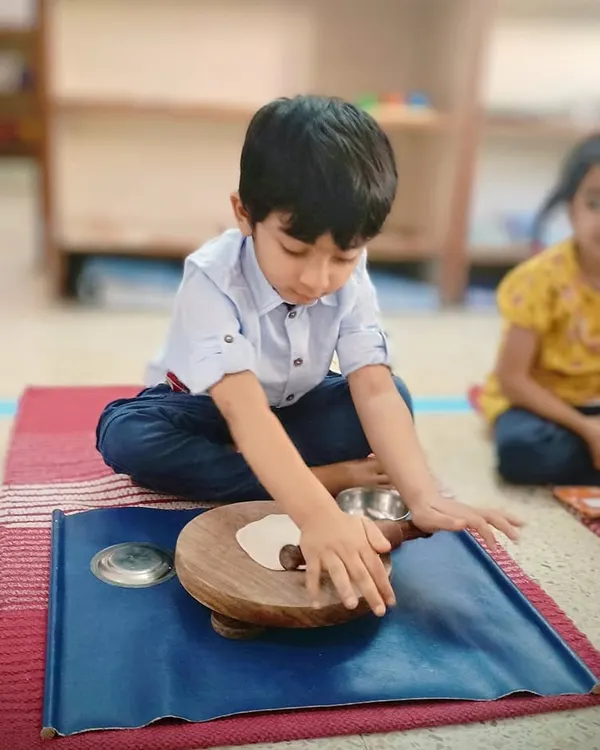
Using a traditional grinding stone connects us to our culture and offers a wonderful sensorial experience. The focus required for this activity is immense, as the child coordinates their movements to grind grain into flour, learning through purposeful work.
This collection shows the variety of our practical life activities. You can see children engaged in peeling carrots, sweeping with a dustpan, and hanging cloths with pegs. Each task is a complete cycle of work that builds real-world skills and independence.
The button frame requires immense concentration and dexterity. Here, a child is working diligently to master the skill of buttoning, a practical life exercise that prepares them for dressing themselves and develops pincer grasp.
Repetition is the key to mastery in a Montessori environment. Whether pouring water or grains, children are allowed to repeat an activity as many times as they need to perfect their movements and build deep concentration.
Coordination of movement is a key focus in our environment. This video shows children practicing pouring and carefully building with the Pink Tower, demonstrating how they refine their gross and fine motor skills through self-chosen activities.
This young child demonstrates excellent hand-eye coordination while pouring rice. Notice how he is focused on the task, correcting small spills, which is a natural part of the learning process.
Even a simple act like rolling and unrolling a mat is a lesson in large body movement and order. Children learn to define their workspace and take care of their environment, which builds respect and self-discipline.
Pouring activities are a cornerstone of practical life. Here, children of different ages practice pouring liquids and solids into various containers, each working at their own level to refine their hand-eye coordination and control.
About Building Independence with Practical Life Skills
What looks like a simple chore to an adult is a profound developmental milestone for a child. When you see a student repeatedly pouring water or grinding ragi, they are not just making a mess or working in the kitchen; they are refining their hand-eye coordination, building the patience required for future complex tasks, and learning to correct their own mistakes without frustration. We provide the authentic, child-sized tools, then step back, allowing them to master these tasks through their own trial and error.
In a pure Montessori environment, practical life skills are the foundation of all future learning. We view activities like grain sorting, stone grinding, and buttoning not as busy work, but as purposeful actions that organize the mind and prepare the body.
The Importance of the 'Work Cycle'
By focusing on the cycle of work—chopping a banana with a safe knife or sweeping with a small broom—children develop order, coordination, and a sense of responsibility toward their environment. Montessori is not about 'helping' the child do it; it is about providing the tools so they can do it themselves.
Why We Emphasize Practical Skills
The child naturally yearns to do what adults do. When we provide them with functioning tools—like a stone grinder for ragi or a real needle for sewing—they transition from observer to participant. The intense concentration you see in these images is the natural outcome of a child being given the agency to complete a task from start to finish. They are not chasing a 'correct' answer; they are learning the process.
The Haralur Learning Environment
At our Haralur campus, we nurture this independence by maintaining a 1:10 adult-to-child ratio, ensuring each child has the space and time to repeat an activity until they feel the quiet satisfaction of mastery. It is a slow, beautiful process that helps children understand their own capabilities. We believe that when a child masters a skill as fundamental as buttoning their own shirt, they carry that success with them into their academics and their relationships.
Similar work from other experts
Browse through Curated picks from other experts on mytribe
 37
37
Building Independence Through Montessori Practical Life Skills
 54
54
Practical Life Exercises for Early Childhood Independence
Practical Life Skills for Toddler Independence
 17
17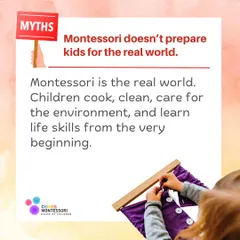
Building Capable Children Through Practical Montessori Skills
Practical Life Skills: Montessori Learning by Doing
Developing Essential Life Skills with Montessori
More from Montessori Summer Camp by Ken Montessori
More services by Ken Montessori