Our Architectural Design Process
Architecture begins with a question. Here is a glimpse into the sketches, diagrams, and models that define our process, where we move from the first abstract thought to a physical space that truly breathes.
A quote from Sanjay Mohe on our design philosophy for IIM Bangalore. Our goal is to make a quiet but strong presence, integrating harmoniously with the existing architectural language rather than merely replicating it.
Floor plans for the IIM-B hostel, showing the variation in levels and the addition of double-height breakout spaces. This strategy breaks the monotony of typical double-loaded corridors and fosters interaction.
Conceptual diagrams for the IIM married students' housing, illustrating the staggered, split-level arrangement. This was our solution to avoid a conventional stacked apartment block and create more dynamic, private units.
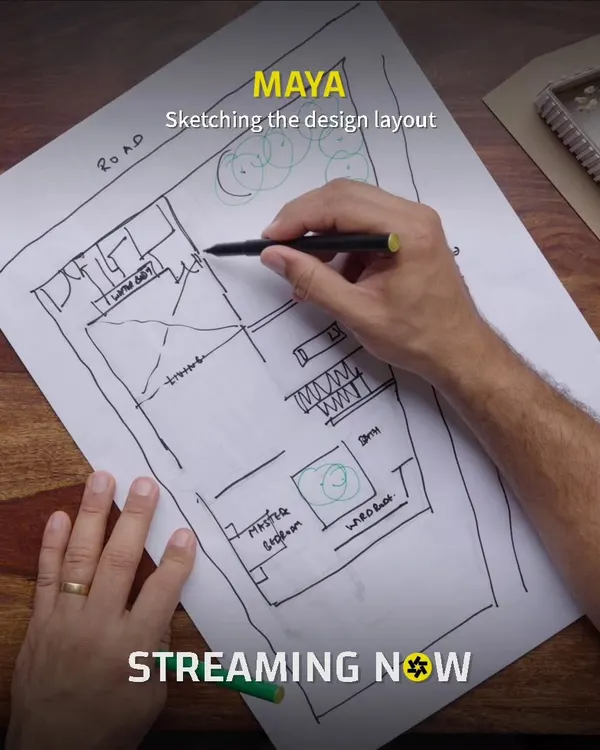
An early hand sketch exploring the interior of a split-level unit. Sketching is a critical part of our process for thinking through spatial relationships and human experience.
A conceptual graphic for Svamitva Terravana, illustrating the project's focus on holistic well-being at the scale of the house, the neighborhood, and the community.
An animated diagram showing how the villa designs at Svamitva Terravana respond to the site's slope. The design integrates private yards and creates a clear separation between pedestrian and vehicular paths.
A sectional drawing through the communal node of the Karunashraya extension. It shows the relationship between the amphitheater, classrooms, atrium, and auditorium, all designed as interconnected, multi-functional spaces.
An axonometric view of the Karunashraya training center, illustrating the flow of movement through the central open area. The design encourages informal interactions and flexible use of space.
A 3D diagram showing the distribution of amenities at Brigade Parkside East. This visualization helps explain how we create a lively community by spreading activities across the entire project.
The ground floor plan for Parkside Retirement Homes, showing the layout of common facilities like the dining area, library, and gym around a central amphitheater and green space.
About From Concept to Creation
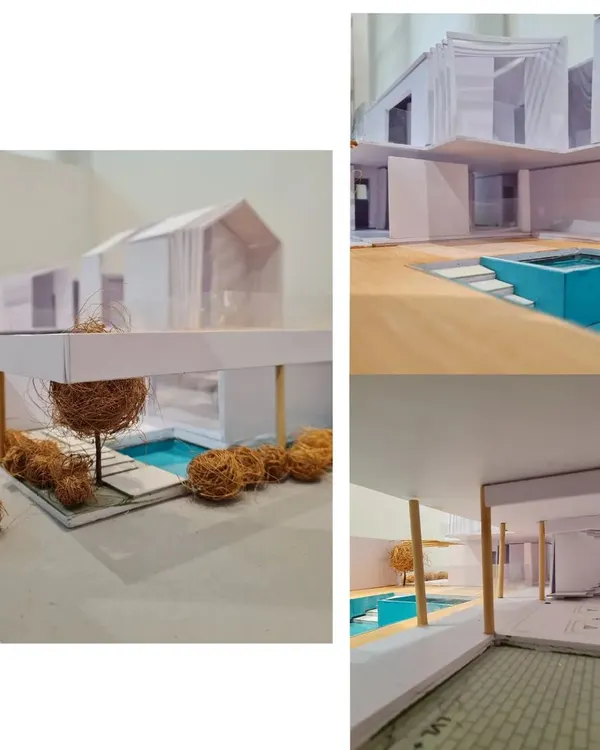
When we design, we start with hand sketches and physical models, not software. For projects like the IIM hostel, we built sectional models to test how light hits corridors and how double-height spaces foster interaction. This physical exploration allows us to see how a person will actually move through the building before a single foundation is laid, ensuring that our technical strategies align with human comfort and site logic.
The Logic Behind the Form
Design is an inquiry, not an immediate imposition. We look for the quiet solution that respects the existing context, whether we are working within an internationally acclaimed campus or developing a residential villa community. Our diagrams and models are tools for this investigation.
Why We Use Physical Models
Digital software can create a false sense of perfection. We build sectional models to understand the 'porosity' of a space. For the IIM-B projects, these models helped us verify that double-loaded corridors would not feel suffocating. By removing rooms to create breakout spaces and testing sightlines across levels, we ensured the building felt open and light.
From Concept to Section
Our design process often relies on staggered, split-level arrangements to avoid the monotony of stacked apartments. We translate these concepts into technical drawings that address:
- Topographical Analysis: We study contours to use the natural slope, reducing the need for extensive cutting and filling.
- Climate Responsiveness: Diagrams help us determine block orientation to minimize western heat gain while maximizing natural ventilation.
- Community Nodes: We map out where people will interact, ensuring that amenities are spread out rather than packed into a single, isolated zone.
Materiality and Context
Every project requires a different language. In our villa communities, like Svamitva Terravana, the models help us visualize how mud plaster and Kota stone interact with the light. We are not just building structures; we are creating a backdrop for life to unfold. Whether it is a training center extension at Karunashraya or a master plan for a residential campus, our sketches are always about finding the balance between the built form and the nature that surrounds it. This is how we ensure that our buildings do not just stand on the land, but belong to it.
Similar work from other experts
Browse through Curated picks from other experts on mytribe
 17
17
Our Architectural Design Process: From Sketch to Site
 10
10
Our Architectural Design Process: From Concept to Reality
 14
14
From Concept Sketches to Construction: Our Design Process
 5
5
Our Architectural Design Process: From Sketches to Construction
 10
10
From Concept to Reality: Our Design Journey
 47
47
From Concept to Creation: Our Architectural Process
More from Multi-Family Residential Architecture by Mindspace
More services by Mindspace