Designing for Dignity and Active Aging
Senior living requires more than just safety features. We create environments where active aging is encouraged through architecture that fosters community, connection, and independence.
The central atrium at Parkside Retirement Homes, featuring a water body that reflects the multi-level structure. This space is the social heart of the building, connecting various activity zones and providing a serene environment for residents.
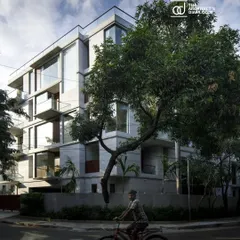
The exterior facade of Parkside Retirement Homes is articulated with overlapping, double-height volumes and color accents. This design strategy visually breaks down the building's scale, creating a more dynamic and less imposing presence.
A sun study of the central atrium, showing how the skylight was designed to capture natural light throughout the day. The play of light and shadow animates the common areas, creating a bright and uplifting atmosphere for residents.
This diagram illustrates the accessibility planning for a two-bedroom unit, ensuring ample space for wheelchair movement. Every home is designed with wide corridors and safety features to support the specific needs of senior residents.
Another view of the two-bedroom unit layout at Parkside, showing the visual connectivity from a central point to different areas of the home. This open planning enhances the sense of space and ease of movement.
We incorporate thoughtful details to enhance daily life, such as resting places along corridors and a small platform at the entrance of each unit. These features provide convenience and support for residents.
A closer look at the design details for resident comfort. The provision of seating in common areas and ledges by apartment doors are small but significant gestures that contribute to a supportive living environment.
This animated diagram shows our activity-centric design approach. Instead of a single clubhouse, we distributed facilities like a library, lounge, and craft rooms across different floors to encourage participation and make them easily accessible.
The podium level includes an amphitheater that opens into the central atrium. This space is designed for cultural events, yoga, and meditation, connecting directly to the adjacent temple plaza.
An upward view of the atrium, showcasing the staggered openings and perforated walls that create an intricate play of light. This architectural detail adds visual interest and contributes to the building's bright, airy feel.
About Designing for Dignity and Active Aging
Instead of packing all recreational facilities into a single isolated clubhouse, we distribute these activity hubs across different floors. This design decision transforms corridors from mere transit zones into active social streets, ensuring that residents, regardless of their mobility levels, remain visually and physically connected to the heart of the community.
Architecture as a Supportive Framework
Designing for seniors is not merely about compliance with building codes or installing grab rails. It is about understanding the psychological and physical needs of the elderly and translating those into spatial configurations. When we approach projects like Parkside at Brigade Orchards, our intent is to move away from the institutional rigidity often found in senior housing.
The Social Atrium and Visual Connectivity
We utilize central atriums not just for light, but as the social lungs of the building. By designing staggered openings and using perforated screens, we create visual links between levels. A resident on an upper floor can see the activity in the atrium below, which reduces the sense of isolation and encourages spontaneous social engagement. This transparency is fundamental to creating a secure and vibrant environment.
Integrating the Context
Every site presents unique opportunities. At our Parkside project, we responded to the surrounding context—the temple to the north and the airport to the south—by creating a stepped podium that connects directly to these landmarks. This allows residents to remain part of the broader community fabric rather than being confined within the project boundary. We also integrate wayfinding through architectural landmarks, ensuring that navigation is intuitive rather than reliant on signage alone.
Technical Accessibility
Our approach integrates universal accessibility seamlessly. We avoid stark, hospital-like interventions, preferring to design wide, generous corridors that function as interior streets. Seating alcoves are embedded directly into these pathways, providing frequent rest stops that enable residents to move comfortably through their home environment. By designing with this level of empathy, we ensure that the architecture itself acts as a support system for active, dignified aging.
Similar work from other experts
Browse through Curated picks from other experts on mytribe
 10
10
Architecture for Community and Urban Living
 11
11
Designing Communal Spaces with Purpose
 4
4
High-Rise Residential Communities
 12
12
Designing Urban and Multi-Family Housing
 7
7
Community Housing Design: Spaces That Build Interaction
 15
15
Urban Living Reimagined: Designing Sustainable Apartment Homes
More from Multi-Family Residential Architecture by Mindspace
More services by Mindspace