Master the Potter's Wheel
Find your rhythm on the potter's wheel in my peaceful Uttarahalli studio. Whether you are curious about your first spin or ready to refine your technique, I will guide you through every step of the process.
Learning to throw on the wheel takes practice and patience, but it is so rewarding. As a beginner, it's not always as calming as it looks, but you eventually find your rhythm.
Watch as I throw a tall vase on the wheel, pulling the clay upwards to create height and a graceful form. This is one of the skills we practice in my level 2 wheel course.
Here is the process of throwing and trimming a pasta bowl. The wheel allows for creating perfectly symmetrical and functional tableware with a professional finish.
My first attempt at making a one-piece chips and dip bowl on the wheel. It's always fun to challenge myself with new forms and techniques.
Creating a donut vase on the potter's wheel is a multi-step process. This video shows the initial throwing of the closed form, which is later altered and trimmed.
This video shows how I throw a double-wall mug. This technique involves creating two separate walls and joining them, which provides great insulation.
Making a set of goblets on the wheel. Each piece is thrown in two parts, the cup and the stem, and then joined together when the clay is leather-hard.
Here's how I create a complete teapot set on the wheel. Each component, the body, spout, lid, and cups, is thrown individually before being assembled.
A satisfying video of creating a spiral mug on the wheel. By moving my fingers up the clay in a spiral motion, I can create this lovely texture.
Trimming is the final step in shaping a wheel-thrown piece. It's where I refine the base and overall form of the vase, and it's one of my favorite parts of the process.
About The Potter's Wheel Experience
Wheel throwing requires more than just technique; it is a lesson in patience and letting go. In my sessions, we focus on the rhythm of centering the clay and the gentle pressure needed to pull walls upward. You might wobble or collapse your first few pieces, but that is part of the learning. I keep my batches small so I can stand right beside you, helping you find that balance where the clay stops resisting and starts responding.
Finding Your Flow
There is a specific kind of silence that happens when you are at the wheel. It is just you, the spinning clay, and the wet sound of water against earth. Many people come to my studio in Uttarahalli expecting to make a perfect bowl on their first try. The reality is a little messier and much more fun.
My wheel-throwing courses are designed to take you from 'clay-in-a-lump' to a finished, functional piece. We start by learning the physical mechanics of centering—the most critical stage. If the clay isn't centered, nothing else happens. Once we master that, we move to opening the clay and pulling the walls, which is where you really start to shape your own aesthetic, whether you prefer tall, sleek vases or sturdy, organic bowls.
What You Will Learn
- Preparation: How to wedge clay properly to remove air bubbles.
- Centering: Finding the center of the wheel so your pieces aren't lopsided.
- Forming: Pulling the walls of a mug, vase, or bowl.
- Trimming: This is the 'sculpting' phase where we refine the base, add foot rings, and define the final shape.
- Glazing: Preparing your leather-hard work for the kiln.
The Process After the Wheel
Pottery is a slow craft. After you finish your piece on the wheel, it needs to dry slowly. I then fire it in my kiln (bisque firing), glaze it, and fire it a second time for that durable, glossy finish. You will not walk out with a wet piece in your hand, but you will come back a few weeks later to collect something you made entirely from scratch.
We work with stoneware clay because it is durable and food-safe. Whether you are signing up for my intensive 15-day program or a shorter session, the goal is always the same: to step away from the noise of the city and make something real.
Similar work from other experts
Browse through Curated picks from other experts on mytribe
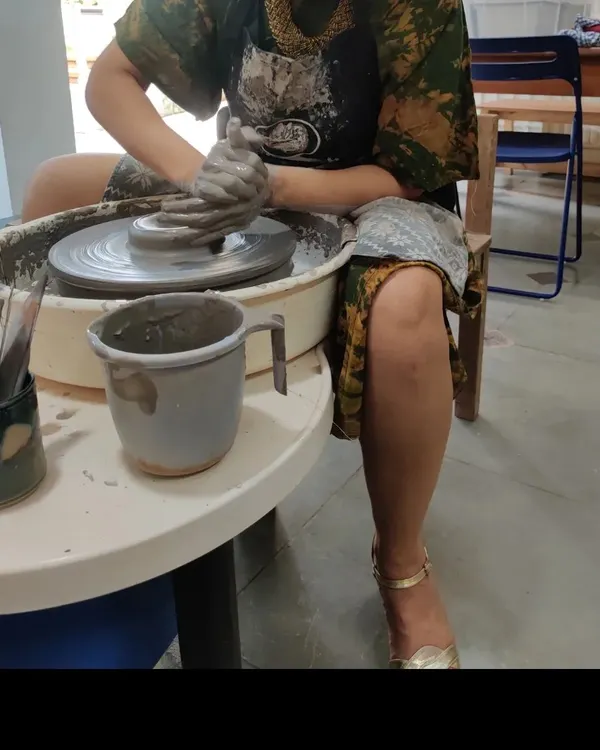
The Art of the Wheel: Master Pottery in Bengaluru
 7
7Learn Pottery on the Wheel in Bengaluru
Wheel Throwing for Beginners in North Bangalore
Potter's Wheel Experience in HSR Layout
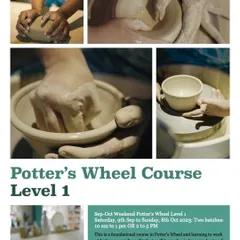
Mastering the Potter's Wheel: From Basics to Advanced Forms
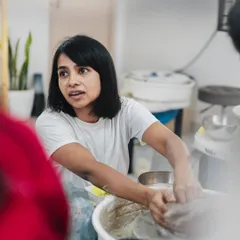
Wheel Throwing Classes in HSR Layout
More from Pottery Classes and Workshops by Ihalo Studio
More services by Ihalo Studio